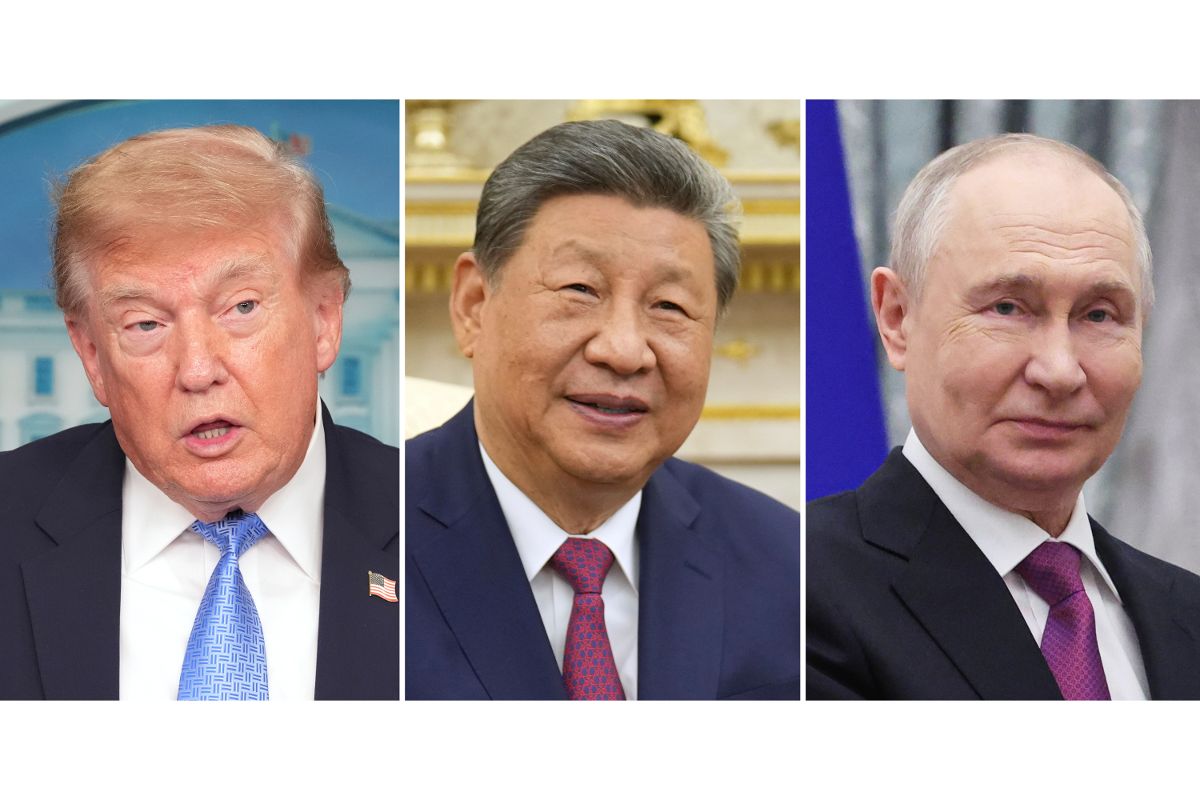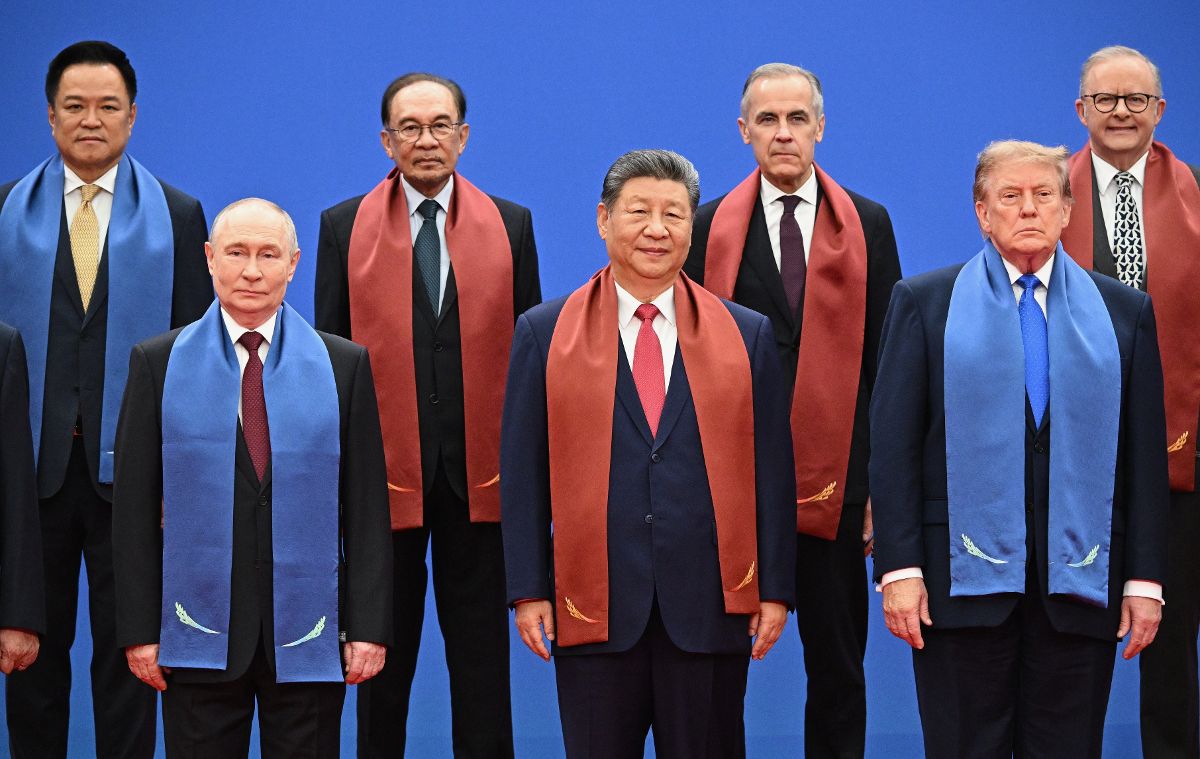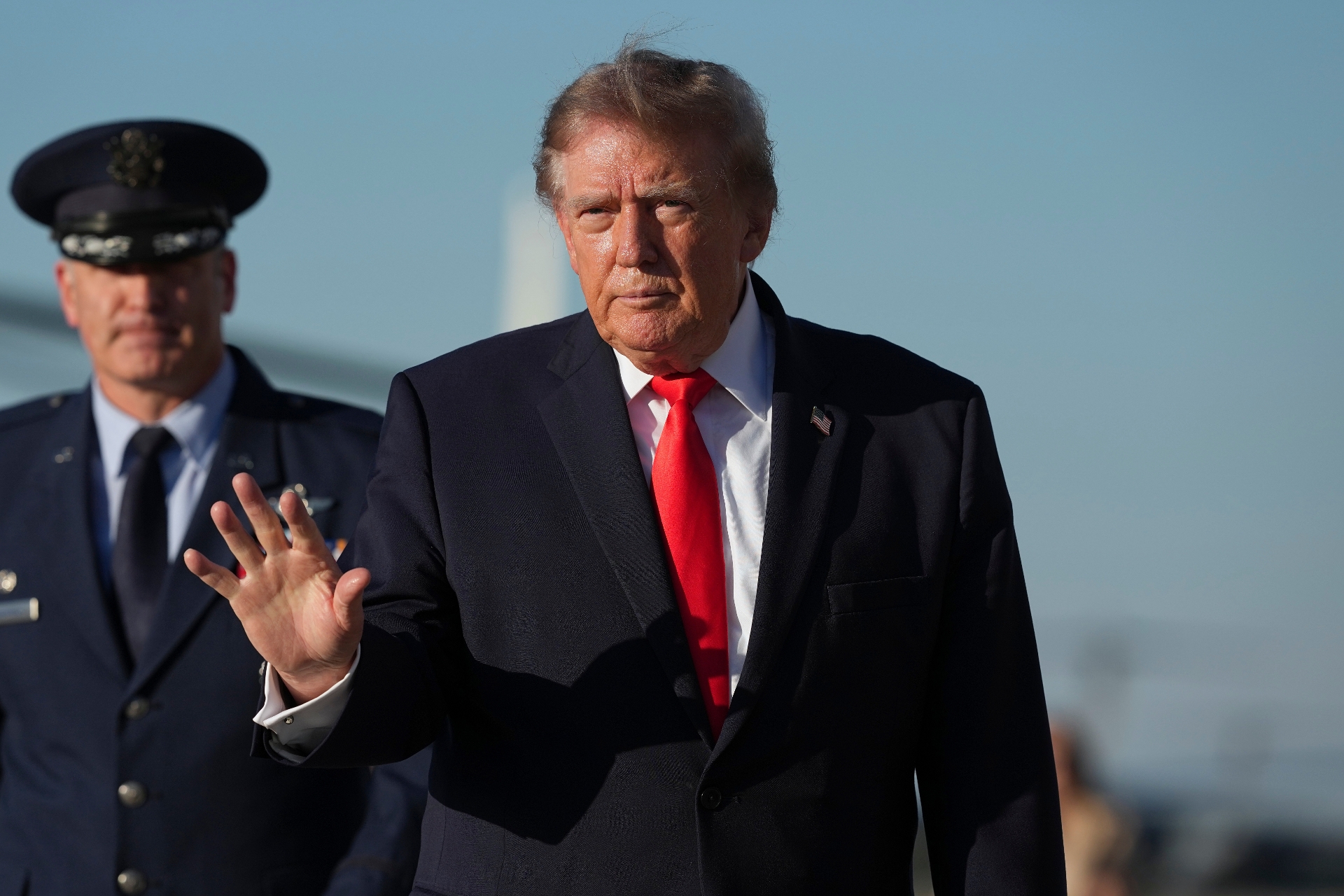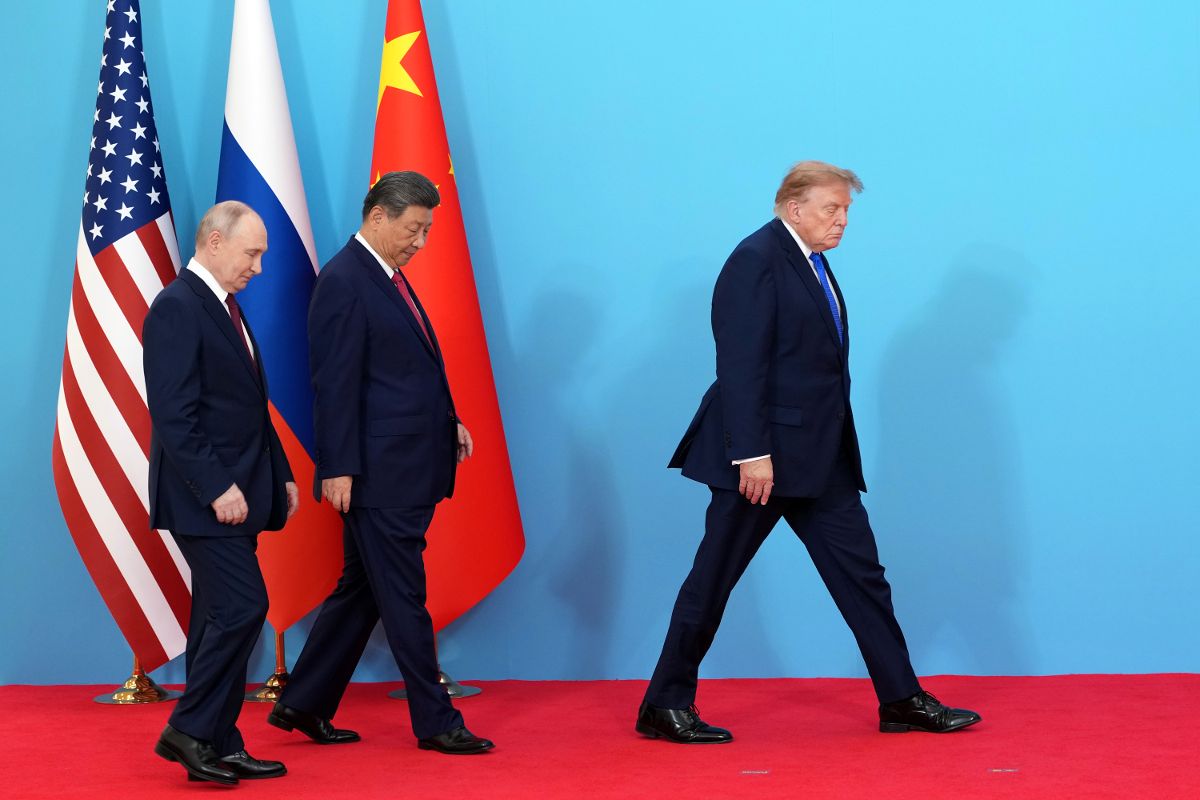
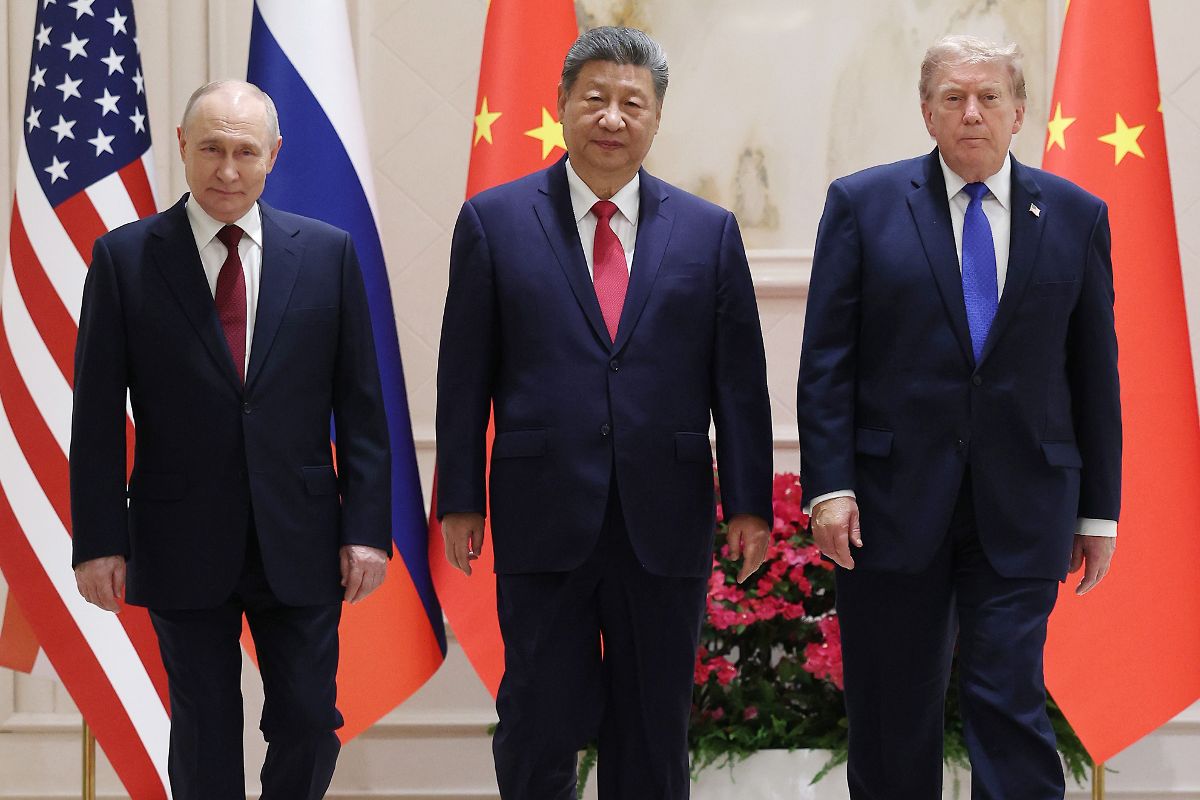
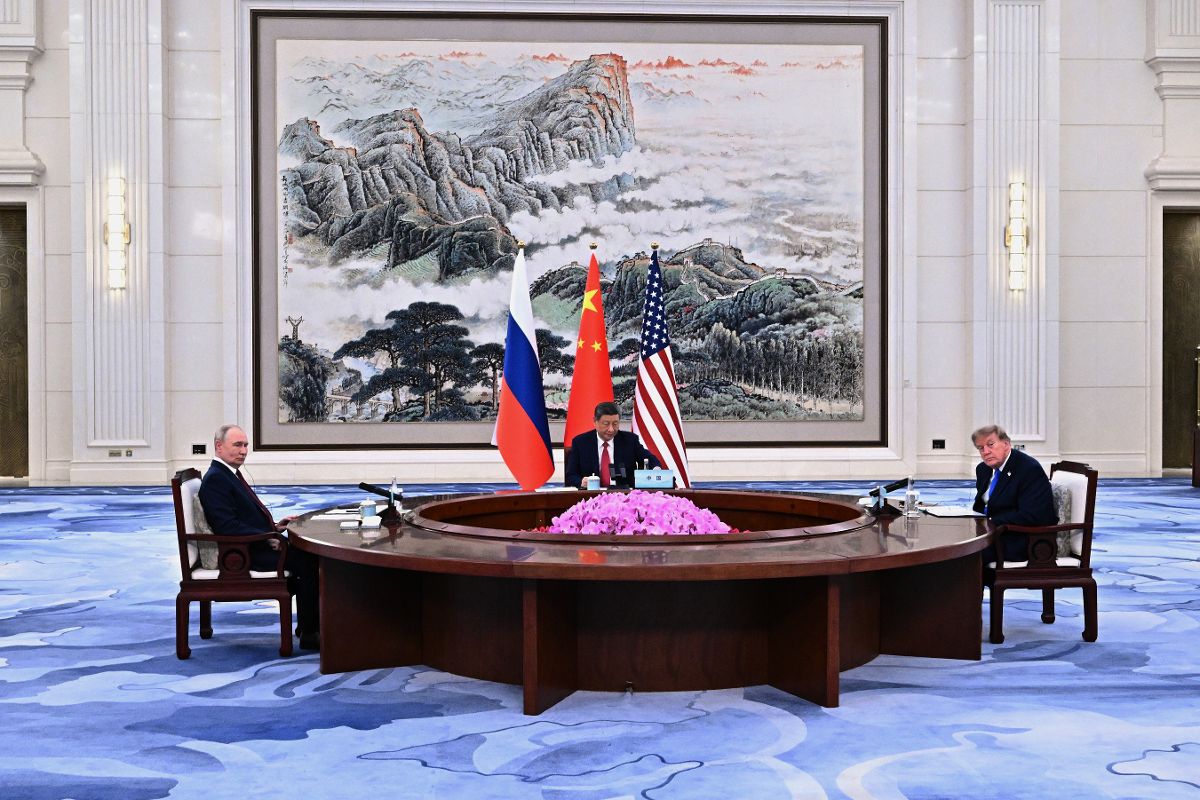
WASHINGTON (AP) — Beijing is building nuclear weapons at a “hot and heavy” pace, President Donald Trump said Friday, a day after he met Chinese leader Xi Jinping and Russian President Vladimir Putin and the three countries agreed to talks on preventing nuclear proliferation.
While Russia and the U.S. lead the world by each possessing thousands of nuclear weapons, China is rapidly expanding its nuclear arsenal. In its annual review of China’s military buildup, the Pentagon said China’s stockpile of nuclear warheads remained in the low 600s through 2024, but the country was on track to have more than 1,000 warheads by 2030.
Get The Latest News!
Don't miss our top stories and need-to-know news everyday in your inbox.
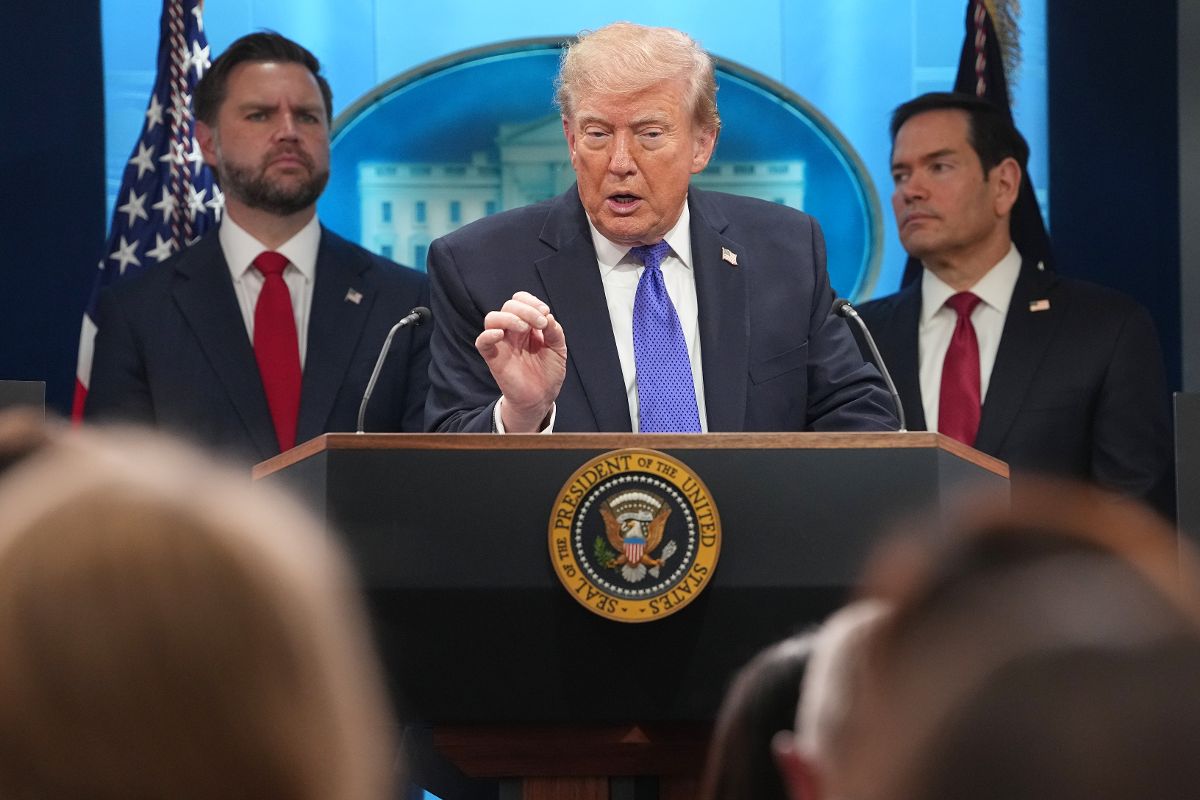
“They'll catch us within 10 years,” Trump said of China's nuclear buildup during a news conference at the White House. “They're going at it hot and heavy, but they have a lot.”
Trump's public remarks were his first since his controversial summit with Xi and Putin, leaders of countries long considered U.S. rivals, in the southern Chinese city of Shenzhen on Thursday. Secretary of State Marco Rubio, who spoke to reporters alongside Trump on Friday, said it was imperative for the three nuclear powers to talk.
“These three countries possess the overwhelming majority of nuclear weapons on this planet," Rubio said. “The idea that these three leaders should not engage on a regular basis is not just absurd, it’s dangerous.”
After the trilateral meeting, the leaders issued a joint statement, saying they “affirmed that a nuclear war cannot be won and must never be fought" and “will conduct a dialogue on reducing nuclear risks and preventing the proliferation of nuclear weapons.”
Prior to the meeting, observers had doubted that China would agree to nuclear talks. With a much smaller nuclear arsenal, Beijing had resisted joining nuclear arms control talks with the U.S. and Russia.
Experts believe it is a positive sign that the three leaders intended to avoid nuclear war. “This statement is far from meaningful arms control. But it’s still a reasonable down payment on stability,” wrote Erin D. Dumbacher, director of the Defense and National Security Program at the Council on Foreign Relations.
The Chinese Embassy didn’t immediately respond to a request for comment. Chinese foreign ministry spokesperson Mao Ning said in July that Beijing keeps “its nuclear capabilities at the minimum level required for safeguarding national security" and “does not engage in any form of nuclear arms race.”
Aside from nuclear security, Trump said he and Xi also agreed to “do some joint guardrails” on artificial intelligence but offered no details. The agreement comes as warnings grow about the potential for the rapidly developing technology to cause catastrophic harm or even wipe out humanity.
The leaders agreed to some safeguards "because there really is no third place," Trump said, but still stressed the need for the U.S. to win the AI race. “Whoever wins, that side wins.”
Ilaria Mazzocco, a senior fellow at the Center for Strategic and International Studies, a Washington-based think tank, said it is a challenging task for the two countries to set up AI safety rules.
"It’s technically difficult, trust is very low, and geopolitically there’s not a lot of incentive in agreeing to doing anything that might restrict your own capabilities if you don’t believe your competitor will also do it,” she said.
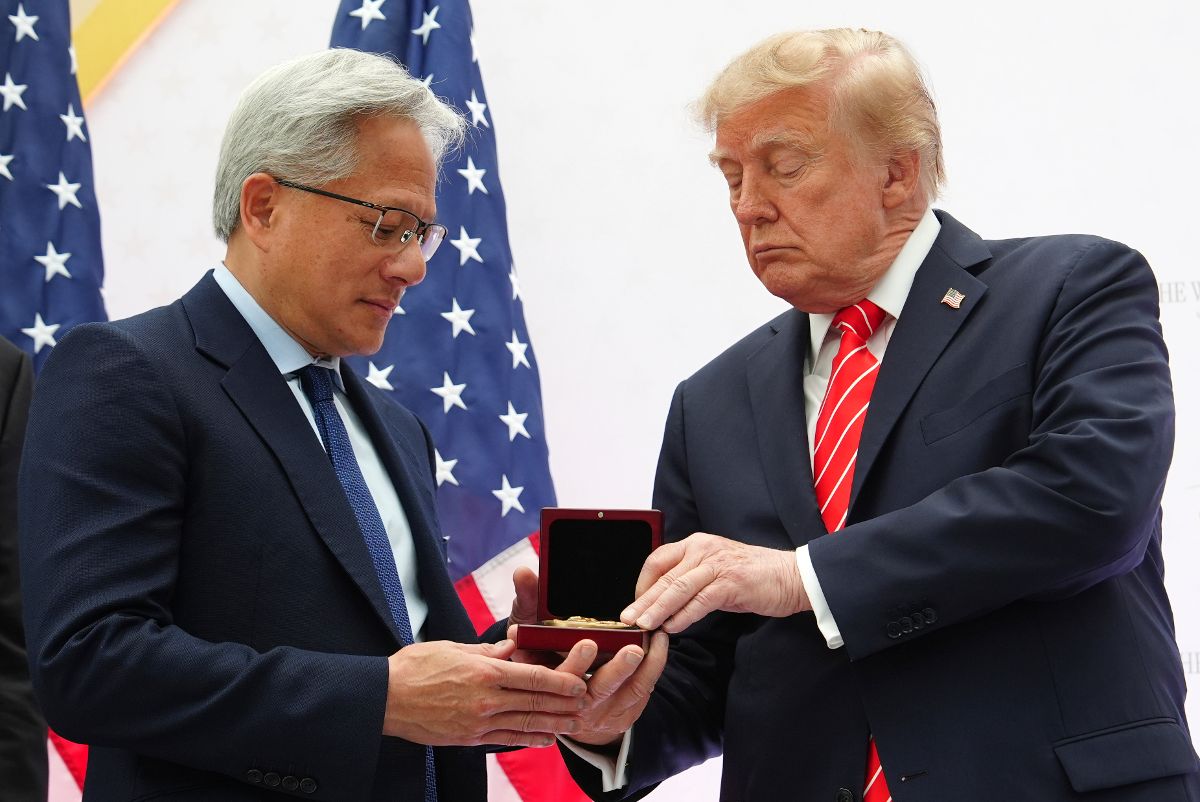
Trump said he also brought up Jensen Huang, the co-founder of the U.S. chipmaker Nvidia, saying the Chinese leader agreed that Huang was “a brilliant man.”
Critical in the AI race is access to advanced computing chips made by companies such as Nvidia. To maintain a competitive edge, the U.S. bans sales of the country's most advanced chips to China.
Huang resigned this month over his ties with a former Chinese executive of a Singapore-based company suspected of diverting Nvidia chips to China. She has been accused of being a Chinese government agent, which Beijing denies.
Huang “put us in a position where we are literally 10 years advanced over other companies,” Trump said, suggesting that the Nvidia co-founder should be given a second chance.
“I think the company, if they were smart, they take that brilliant man, accept an apology and let him go back to work,” the president said.
The Trump administration this week issued new rules to restrict remote access to advanced chips and servers.
Trump said there was “great electricity” when he met Xi and Putin, noting that “the relationship was fantastic between the three of us.”
Trump said he gets along with the leaders of both Russia and China, suggesting that his good relationship with Xi was the reason China has pulled back from its influence efforts in Latin America. The Trump administration has vowed to restore U.S. predominance in the Western Hemisphere.
“They were nibbling on the edge of Venezuela, and I asked them to leave, and they left,” Trump said of China. “They were very much involved with the Panama Canal, and I said, you have to leave."
Trump says Russia also had influence over the South American country, whose then-leader, Nicolás Maduro, was captured by U.S. forces in January.
“Russia was very much involved with Venezuela. They’re not there anymore, and China is not there anymore,” Trump said. "But we are."