Many of you may have recently heard about governor Blagojevich�s proposed �Gross-Receipts Tax,� which I have read is very likely to pass. You probably dismissed it because it is a tax on businesses and so it really doesn�t affect you anyway. Well it is time to listen carefully. This is a very important change to the state�s revenue stream.
The governor explained the benefits of his proposal earlier this month. He described how the additional income of about $6 billion a year would be used to pay for universal health care, education and capital projects. It would be paid by large businesses including some, the governor points out, that have failed to pay any income tax. The tax is easy to calculate. Businesses will have to pay .5% or 1.8% (depending on the type) on all sales of goods and services. This will be in lieu of the current 7.3% on profit or gain.
The governor declared that �the choice is simple,� this is a tax on corporations not paying their �fair share,� and it is a �moral imperative.� So if you were to take the governor�s comments at face value, this is a perfect solution. It boils down to greedy corporations vs. the common working man. Yet there are just a few issues the governor failed to share with us, not to mention he forgot to let us know about this plan while he was campaigning.
This is a tax that affects all Illinois consumers, employees and employers. It has long term consequences and doesn�t address the state�s problems with poor financial planning, overspending and funds used inefficiently.
The tax is levied regardless of the cost of goods sold. So if a company buys a widget from a wholesaler for $90 and sells it to you for $100, he is making a $10 profit (not taking into account any business operating expenses). Currently he�d have to pay 7.3% of that: 73 cents. With the new tax he will have to pay $1.80.
There are three things to point out about this. The first, and one of the biggest arguments against this tax, is the widget wholesaler had to also pay the state .5% of $90. And so did his suppliers when they sold him the raw materials of the widget. So the same goods are being taxed over and over as they move through the chain to the consumer.
The second is that the governor boasts he is not raising taxes, in fact he is lowering the tax from 7.3% to 1.8%. Raising an additional $6 billion a year through a new tax and saying it is not a tax increase? My example shows nearly a 150% increase. To be fair if the widget was bought from the wholesaler for $75, the 7.3% tax on the $25 profit would come to $1.80 so there would be no tax increase. In order for this tax to not be an increase, a company has to be making more than 25% profit.
And who will see the biggest raise in taxes? Businesses operating on small margins may be the most greatly affected. They are already likely selling their goods and services as high as the market will bear and purchasing supplies as cheaply as possible. So they will be the business owners who will have to absorb the cost and that could be devastating. These are the ones the governor says are the corporations that have not been paying any taxes because they have found tax loopholes and create expenses in order to not show a profit. Here�s an idea. Close the loopholes instead of punishing the honest business owners with low profit.
Thirdly, (this is where you need to listen up) you the consumer is likely to bear the burden of this tax as companies increase prices to cover this cost. Does anyone really believe that the corporations will be paying this additional cost on all sales? You and I will be the ones who pay, which is exactly what the governor says he is trying to avoid in an effort to earn your support. The resulting higher prices will then not be attributed to this tax but labeled �inflation.�
We do have to realize that Illinois corporations are our employers and they do contribute to the economy. This tax does not encourage businesses to open or stay in our state. In a community like the Riverbend that hopes to see revitalization and growth, our �Chicago� governor is doing us no favors. Let�s hope the legislators see the variety of negative affects this tax will have here and across the state.
Did you know Riverbender.com is free for you thanks to our awesome advertisers? We noticed you're using an ad block software. Please give our sponsors some exposure by disabling your ad blocking service for Riverbender.com.

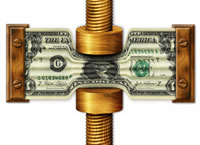 Many of you may have recently heard about governor Blagojevich�s proposed �Gross-Receipts Tax,� which I have read is very likely to pass. You probably dismissed it because it is a tax on businesses and so it really doesn�t affect you anyway. Well it is time to listen carefully. This is a very important change to the state�s revenue stream.
