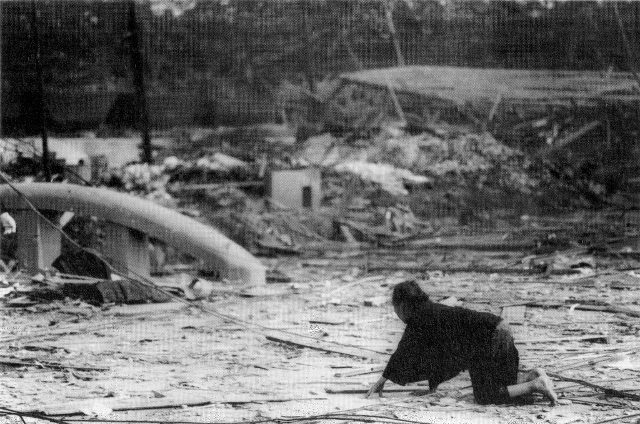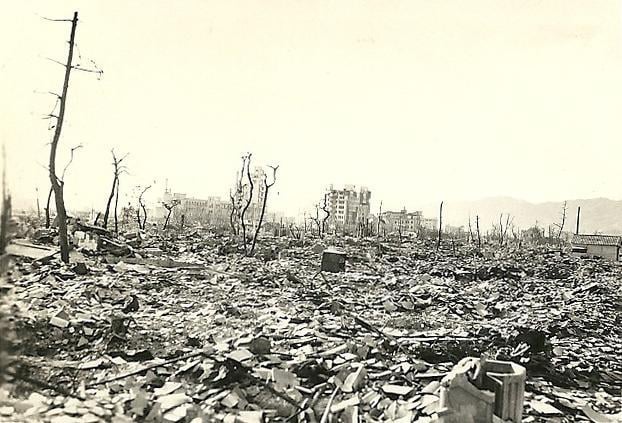
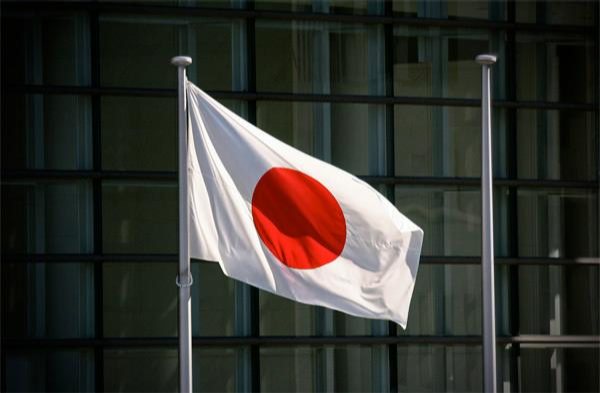
On August 10, 1945, Japan signaled its willingness to accept surrender terms that would lead to the end of the Second World War. Coming just days after the atomic bombings of Hiroshima and Nagasaki and after the Soviet Union entered the war against Japan, this was one of the most important turning points ever linked to this date. At the time, it marked the beginning of the end of a global conflict that had caused destruction on a scale few had imagined. It still matters today because it reshaped international politics, led to the formal close of the deadliest war in history, and continues to influence debates about war, peace, nuclear weapons, and civilian suffering.
Get The Latest News!
Don't miss our top stories and need-to-know news everyday in your inbox.
The road to that moment had been long and brutal. By the summer of 1945, Germany had already surrendered in Europe, but fighting in Asia and the Pacific continued. Japan faced heavy bombing, naval blockade, and growing military pressure. On August 10, after the bombing of Nagasaki and with Soviet forces advancing in Manchuria, the Japanese government informed the Allies that it was prepared to accept the Potsdam Declaration, with conditions related to the emperor’s position. This message did not end the war instantly, but it opened the final stage of surrender negotiations. Within days, Japan accepted Allied terms, and the formal surrender followed in September. The significance of August 10 lies in how it captured the moment when total war gave way to an uneasy peace.
Nearly five centuries earlier, another August 10 changed the map of Eurasia. In 1519, Ferdinand Magellan’s expedition departed from Seville, beginning the voyage that became the first circumnavigation of the globe. Magellan himself would not survive the journey, but the expedition returned to Spain in 1522 under Juan Sebastián Elcano. At the time, the voyage was driven by trade, empire, and the search for western sea routes to Asia. Its longer legacy was much larger: it demonstrated in practical terms the global connectedness of oceans, expanded European geographic knowledge, and marked a major phase in the history of exploration and colonial expansion.
A very different kind of conflict unfolded on August 10, 1792, when revolutionaries in Paris stormed the Tuileries Palace during the French Revolution. The attack led to the collapse of the French monarchy in practical terms and the suspension of King Louis XVI. This was not the beginning of the revolution, but it was one of its decisive breaks with the old order. It mattered because it pushed France toward republican government, radical political change, and a wider period of instability that would shape Europe for years. The events of that day showed how quickly public anger, war, and political mistrust could overturn long-standing institutions.
In Latin America, August 10, 1809 became a landmark date in the history of independence movements. On that day, leaders in Quito launched a revolt against Spanish rule. Although the uprising was eventually suppressed, it is often remembered as an early cry for independence in Spanish South America. The movement emerged from wider tensions within the Spanish Empire, including disputes over authority, local identity, and the effects of upheaval in Europe after Napoleon’s invasion of Spain. Its immediate outcome was limited, but its memory inspired later generations seeking self-rule.
Science and technology also left their mark on this date. On August 10, 1846, the Smithsonian Institution was founded in the United States after Congress accepted the bequest of British scientist James Smithson. The institution was created for “the increase and diffusion of knowledge,” a goal that would make it one of the world’s best-known centers for research, museums, collections, and public education. While its beginnings were tied to one nation, its influence became international through science, preservation, and access to historical and natural knowledge.
Later in the nineteenth century, August 10, 1876 saw the first successful long-distance telephone call made by Alexander Graham Bell in Ontario, Canada, to Brantford. Earlier demonstrations had shown that voice could travel over wires, but this event helped prove the telephone’s practical potential over greater distances. Communication technology would soon transform business, government, journalism, and personal life. What began as a technical experiment became part of a broader communications revolution that eventually connected people across continents in ways earlier generations could barely imagine.
Culture and media history gained one of their defining moments on August 10, 1920, when the Treaty of Sèvres was signed between the Allied powers and the Ottoman Empire. Though later replaced in key ways by the Treaty of Lausanne, Sèvres reflected the postwar attempt to redraw territory and power after the First World War. Its terms contributed to political resistance in Anatolia and became part of the larger story of the end of the Ottoman Empire and the emergence of modern Turkey. The treaty matters because it shows how peace settlements can create as many tensions as they resolve.
Film history took a major step on this date in 1937 with the world premiere of The Life of Emile Zola, one of the era’s important prestige films and later winner of the Academy Award for Best Picture. The movie reflected Hollywood’s growing interest in historical biography and public issues, using the story of French writer Émile Zola and the Dreyfus Affair to reach a wide audience. In a period when cinema was becoming a global cultural force, films like this helped shape how mass audiences understood history, justice, and public conscience.
Among notable births, August 10 brought into the world Herbert Hoover in 1874. Before becoming the 31st president of the United States, Hoover built an international reputation as an engineer and humanitarian, especially for his work in organizing food relief during and after the First World War. His presidency became closely associated with the start of the Great Depression, but his larger historical place includes both public service and the limits of leadership during economic crisis.
A very different public figure was born on this date in 1948: Ian Anderson, the Scottish musician best known as the leader of Jethro Tull. His work stood out for blending rock with folk and classical influences, and for making the flute an unlikely but recognizable lead instrument in popular music. Anderson’s career reflects the creative experimentation that shaped late twentieth-century music.
Another notable birth came in 1982 with Devon Aoki, an American model and actor whose career reflected the growing crossover between fashion, film, and global celebrity culture. Her prominence in international modeling and screen roles captured changes in media visibility and representation at the turn of the twenty-first century.
This date also marks the births of important people in science and performance such as Michael Bivins, born in 1968, a key figure in popular music through New Edition and Bell Biv DeVoe, whose work helped define the sound of contemporary R&B and new jack swing. His career shows how group performance, production, and popular media can shape a generation’s musical identity.
August 10 is also associated with the deaths of several major figures. In 1915, Henry Moseley died while serving in the First World War. He was a British physicist whose work on atomic numbers helped reorganize the periodic table on a more accurate scientific basis. Although his life was cut short at a young age, his research had lasting importance for chemistry and physics.
In 2008, Isaac Hayes died, leaving behind a major legacy in soul music, songwriting, and film music. His deep voice, orchestral arrangements, and work on Shaft made him one of the defining musicians of his era. Hayes helped expand the sound and reach of Black popular music in the United States and beyond.
Looking across August 10, the day ties together war and peace, revolution and discovery, art and public life.