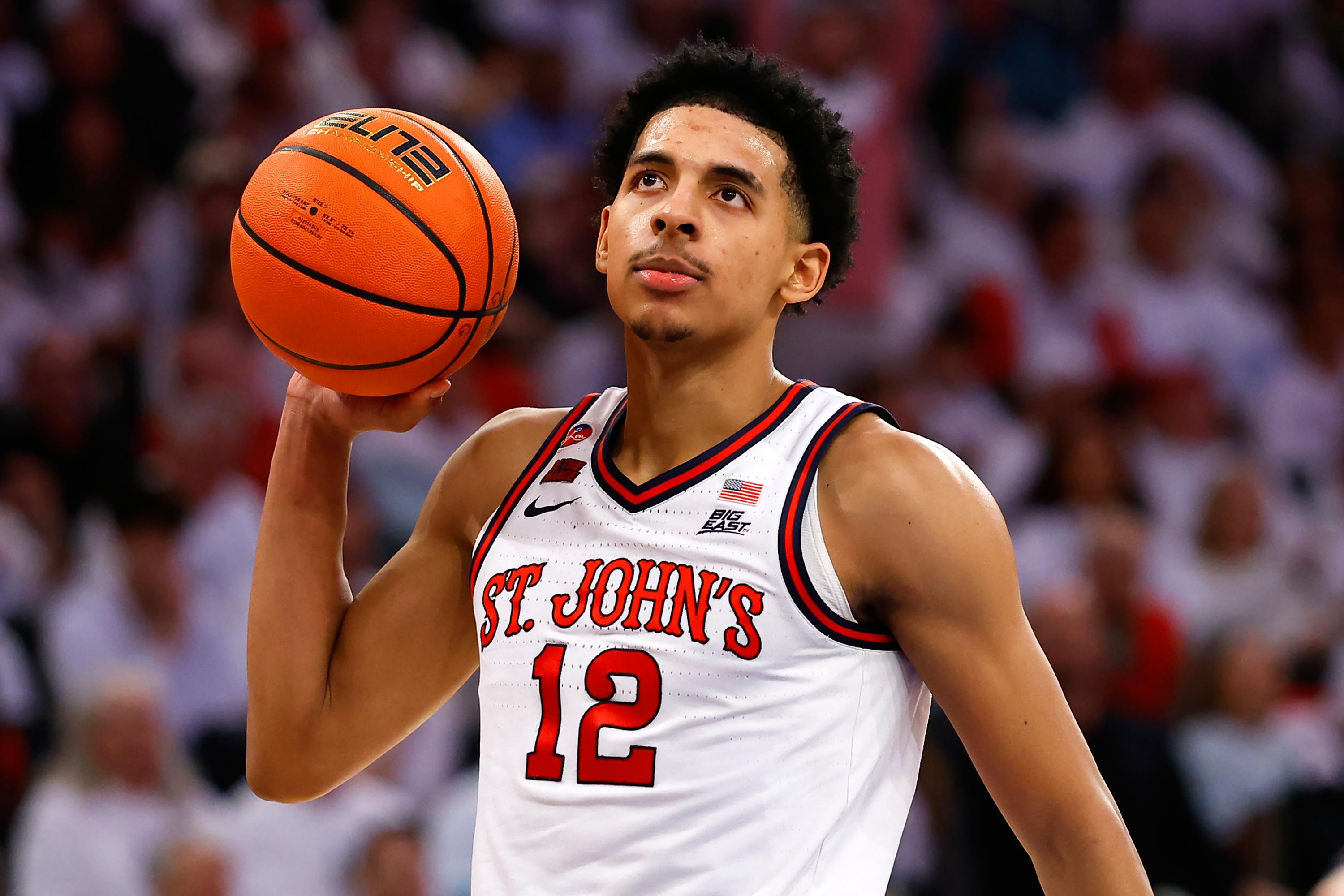
A group representing college athletes partnered with Tennessee basketball players to release the most detailed vision yet of what a collective-bargaining agreement in college sports could look like.
The model for the term sheet released Tuesday by Athletes.org does not carry the weight of a signed agreement but is unusual in that it comes with the support of school leadership. It outlines guidelines for paying players, the transfer portal, academics and ways to enforce rules in an industry that pays millions to athletes under the guise that the money is for things other than playing sports.
Get The Latest News!
Don't miss our top stories and need-to-know news everyday in your inbox.
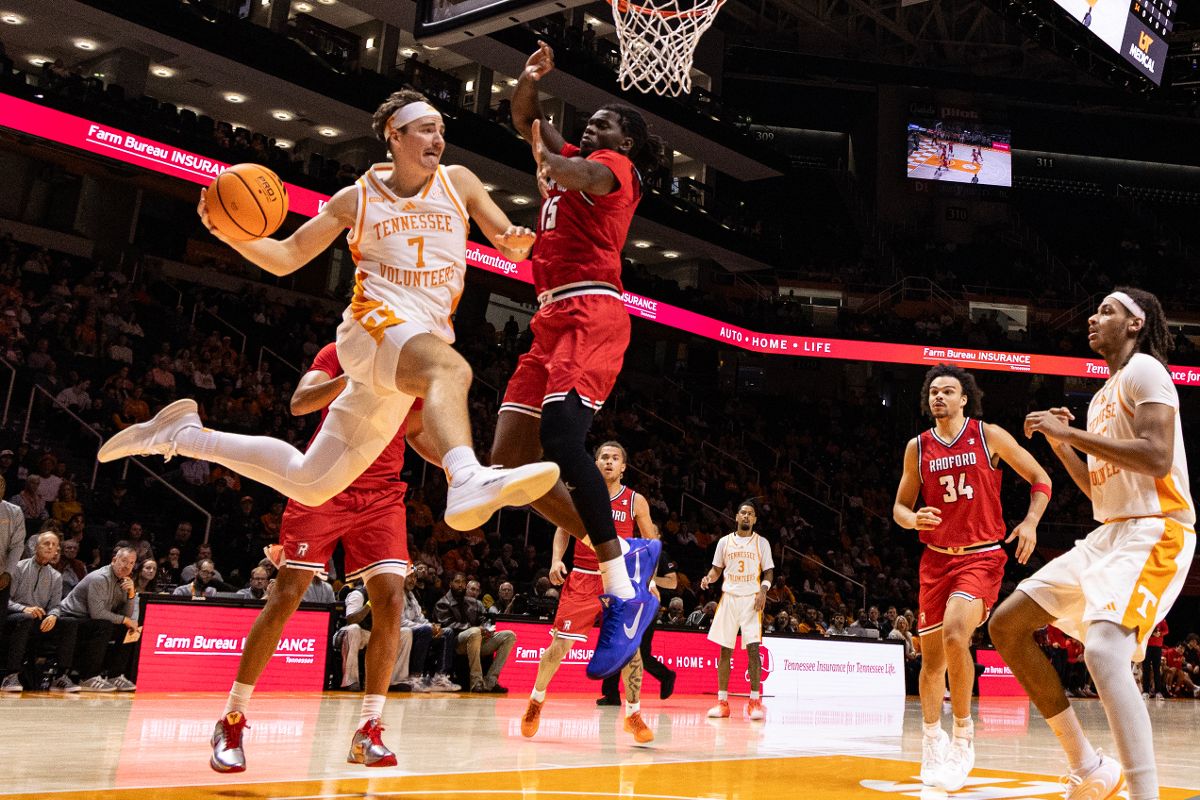
“We know what we want and how we want to move forward,” said DeWayne Brown II, a freshman for the 11th-ranked Volunteers and one of three team organizers. “Working through the collective bargaining process has been great and I hope it’s just a steppingstone for more college athletes to replicate our process with their own schools.”
A CBA that would offer some union-like protections is one of the most divisive issues in college sports, which has never had a union for athletes. A bid to unionize the Northwestern football team failed because opponents in the Big Ten Conference include public schools that aren’t under the jurisdiction of the National Labor Relations Board. Similar efforts at Dartmouth and Southern California have gone nowhere.
But the landscape has dramatically changed in favor of the athletes, who have won multiple court fights to be able to transfer without penalty and are seeing millions come their way via revenue sharing and name, image and likeness deals.
Supporters of the CBA idea, including Tennessee athletic director Danny White, believe it's the most direct way to save an industry under increasing financial pressure in a world of $50 million football rosters. Opponents view it as a possibly illegal cash grab that could bankrupt the athletic departments that fund all their sports teams with revenue generated by football and basketball.
Among the key differences between the Tennessee model and the rules governing college sports are that it would replace frameworks that vary from school to school with a universal agreement on total player compensation. It would do away with the idea that players are being paid for promoting or sponsoring some product, as opposed to simply being paid to play, which is forbidden under NCAA rules.
In fact, under this model, NIL deals would no longer be used as recruiting inducements and the deals themselves would ultimately be replaced by a salary structure, including spending caps and floors for schools, that would more resemble what exists in professional leagues.
The current maximum a school can share with players is $21.5 million per year, though most major programs blow past that cap via third-party NIL deals, many of which are brokered by third parties associated with the schools.
White said it is “intellectually dishonest" to believe most players earn the bulk of their money for use of their actual name, image and likeness.
“We're paying them to play sports," said White, a former Notre Dame basketball player and longtime college administrator. "We're doing that because we lost several court cases that said we're violating antitrust law by not doing so. We need to accept our legal reality. By not accepting it, we've created this system that's the most inefficient way I can think of for building rosters and organizing this thing.”
Athletes.org approached the Tennessee players in June, knowing they played at a school where leadership generally agreed with the notion that a CBA would eventually need to replace the current structure.
The group negotiated directly with leadership at Tennessee, then the player reps — Tyler Lundblade, Campbell Duncan and Brown — brought the agreement to their teammates. The deal was agreed to on Oct. 1.
“It does away with the idea that athletes are too tired, or don’t care, or aren’t mature enough to do this," Athletes.org executive director Brandon Copeland said in addressing another longstanding argument by opponents. "They did it. And they worked extremely hard to not only look into the perspective of what’s best for them, but what’s best for the industry.”
To garner support from Democrats, the issue of a CBA or players becoming employees was largely left unaddressed in the Protect College Sports Act, the bill that passed the Senate last month and is awaiting action in the House.
Were some concept like a CBA to overcome opposition from athletic conferences and the NCAA, some skeptics suggest it could still take years to come together.
Randy Levine, the president of the New York Yankees who played a role in crafting the legislation, said recently that “people who continue to go down that path, need to be honest and basically say that in order to do that, you have to change not only the National Labor Relations Act” but a host of state laws.
This deal proposes a centralized employer model, the likes of which has been used by Major League Soccer to give athletes an entity not affiliated with the state through which to bargain. Copeland says such an arrangement would not require new laws or for Congress to get involved. White compared it to college students working on campus at, say, a unionized food-service company that has headquarters in a different state.
“There are examples of students all over higher ed in this country that also have jobs,” he said. “Those who say it's impossible are looking at it through the lens of the athletes being employees of the universities. But that's not what I've been suggesting for four years now. I think a central employment entity is critical to the model.”
Around this time last year, Athletes.org launched its first model CBA that contained many elements in the framework it rolled out with the Tennessee players.
The group considers getting actual teams to sign on with the blessing of their school a next step at an important time — with Congress looking at passing a law and the conferences looking at alternatives if there's no action in Washington.
“It hopefully proves to the industry that this can happen in college sports,” Copeland said.
The move comes a little more than three months after another players group, the College Football Players Association, announced Stanford had become the first team to organize a player-led chapter.
___
Sign up for Top 25 poll alerts here, visit the Top 25 here and see AP’s full college football coverage here