More heavy rainfall produced flash flooding and mandatory evacuations in a wide swath of the Southwest on Sunday, including in a Colorado tourist town bracing for its main river to rise to historic levels, as weary residents in the normally arid region deal with another massive drenching.
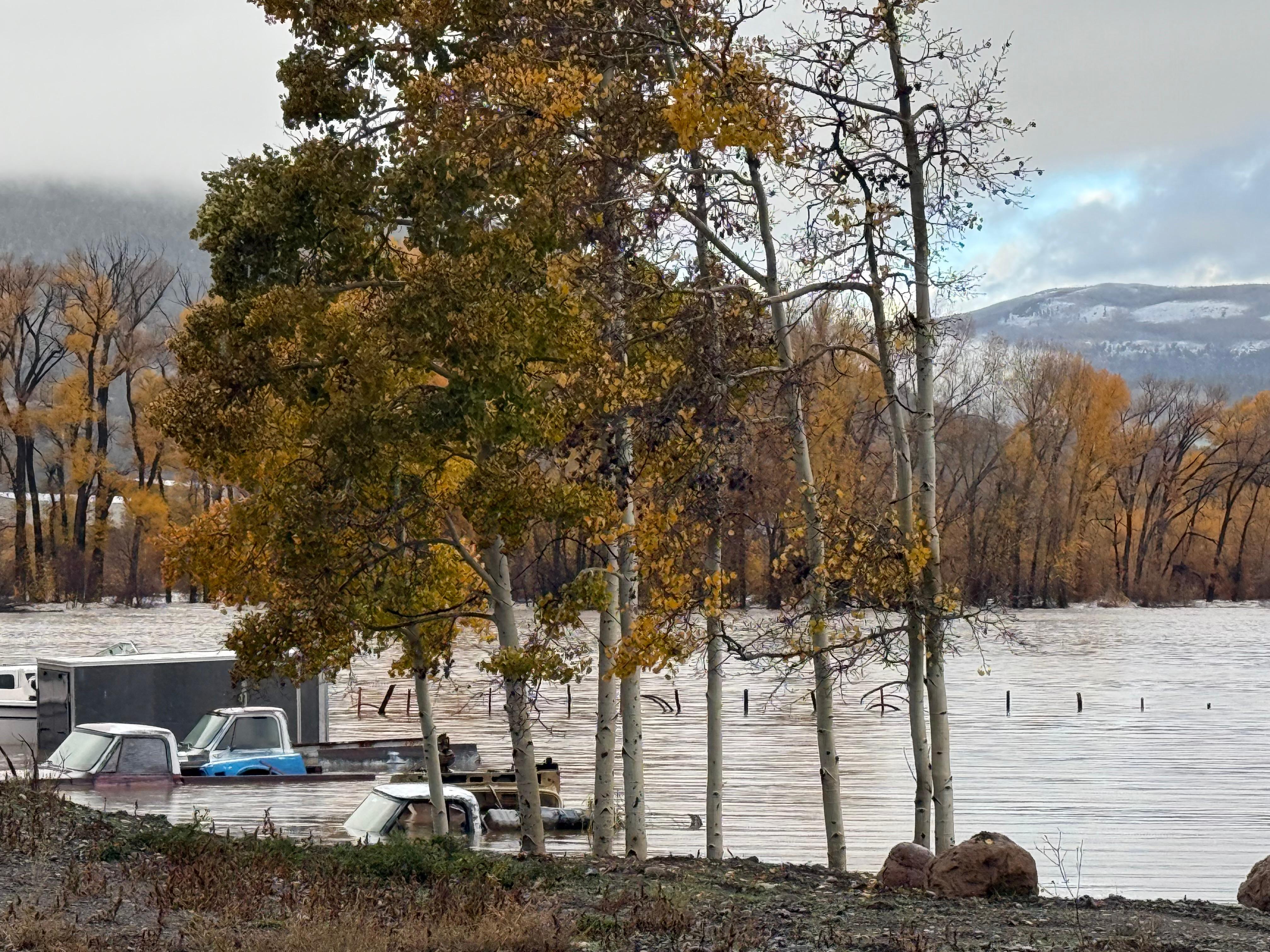
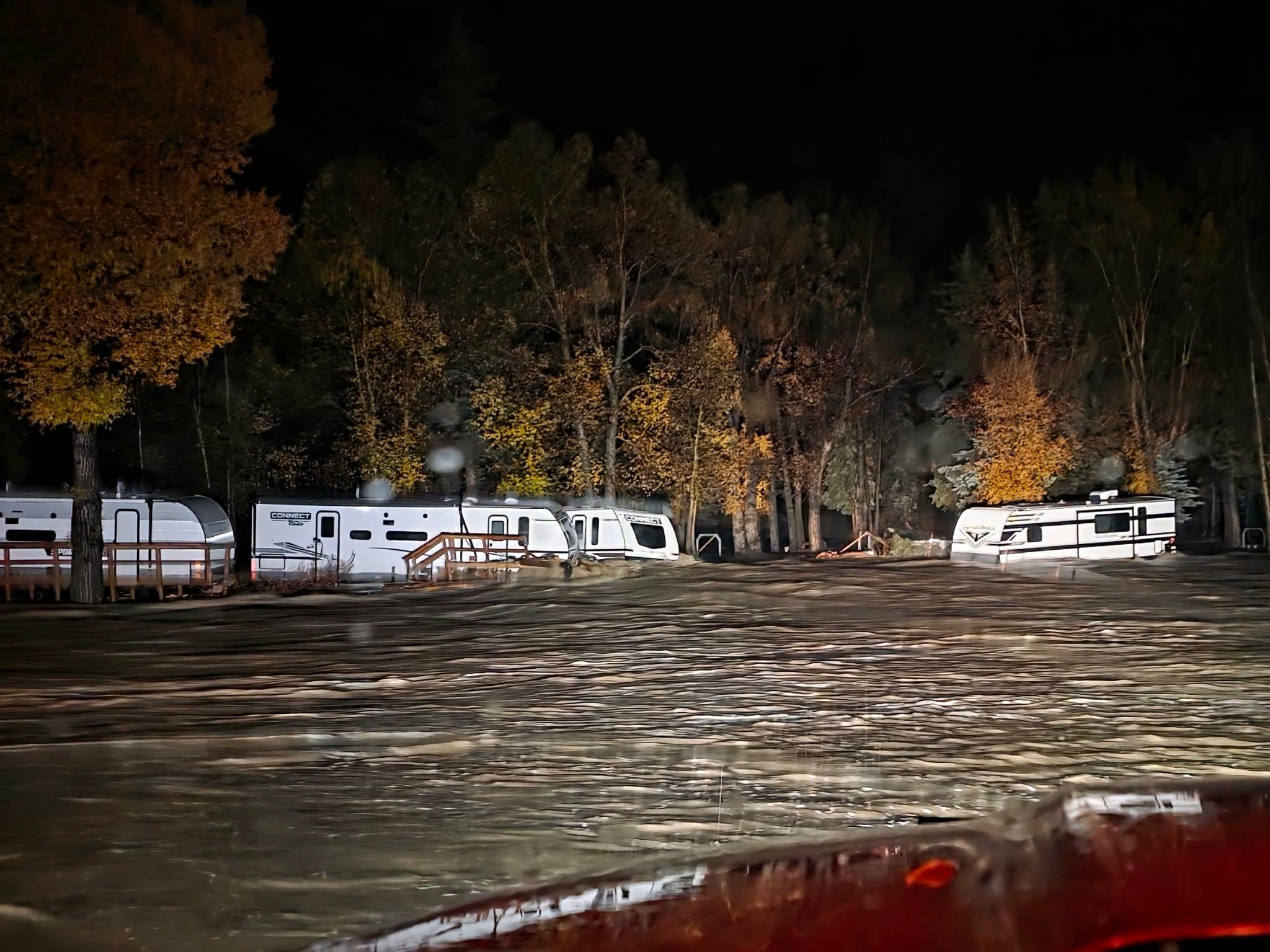
Officials in Pagosa Springs, a southwestern Colorado town of more than 2,000 in the Rockies located near ski resorts and known for its hot springs, warned of potentially “catastrophic flooding” as the San Juan River was forecast to crest at more than 20 feet (6.1 meters) late Sunday night.
Get The Latest News!
Don't miss our top stories and need-to-know news everyday in your inbox.
“To put the forecast into perspective, during the devastating 1911 flood that wiped out most of what existed as the town of Pagosa at that time, the San Juan River crested at approximately 17.8 feet (5.4 meters),” the Archuleta County Sheriff’s Office said in a Facebook post. “This is a potentially catastrophic flood event."
By sundown Sunday, the river's crest had reached about 14 feet (4.2 meters), according to Vicky Schaffer, a spokesperson for the county. Roads in and out of the town were closed and residents who weren't under evacuation orders were urged to stay home.
Communities across Arizona, meanwhile, also issued mandatory evacuations.
In the tourist destination of Sedona, Arizona, officials ordered residents near Oak Creek to leave immediately as flood waters rose and multiple people were trapped in their homes.
Nearby Yavapai County and the community of Camp Verde issued similar evacuation order s for residents living near swollen rivers and creeks.
More than 100 miles (160 kilometers) southeast of Sedona, officials in Gila County ordered the total evacuation of Gisela, a small community of several hundred residents along Tonto Creek. The wet conditions even produced flash floods, river flooding and swift boat rescues in Tucson, some 230 miles (370 kilometers) south of Sedona.
“We are getting two or three months of rain in a span of a couple of days,” said Aaron Hardin, a meteorologist with the National Weather Service in Tucson.
Rain fell nearly nonstop Sunday in Flagstaff, Arizona, flooding local roads and overwhelming storm drains. Police and city officials closed several roads around the mountainous city.
Outside Our Lady of Guadalupe Church, people filled plastic bags with sand to try to prevent further flooding inside. Luke Willson said water got into the garage, the basement and underneath the church building, as well as in an office where the computers are. “The pumps are pumping, but they’re not pumping fast enough,” he said.
The latest round of soaking rains started Saturday evening and was expected to saturate the region through Monday. The weather service estimates as much as 4 inches (10 centimeters) of rain could fall across the region, fueled by a series of Pacific storm systems.
The weather service issued flood warnings and watches for nearly all of Arizona and parts of southern Utah, southwestern Colorado and western New Mexico, in addition to part of southern Nevada. That includes the sparsely populated Four Corners region where Arizona, Colorado, New Mexico and Utah meet.
The weather service office for Salt Lake City said previous storms that soaked the area could contribute to excessive rain runoff during the latest downpours, especially in Washington County, Utah, and Zion and Capitol Reef National Parks.
“Flood prone areas will likely become inundated at times, and backcountry roads will likely become impassable from this excessive runoff,” a weather service statement said.
Officials in Pagosa Springs said anyone in low-lying areas along the San Juan, Rio Blanco, Navajo and Piedra rivers should head to a designated shelter at a local church.
They advised residents not to wait to leave their homes as emergency crews may be extremely limited during the worst of the storm. The highway entering town also was closed to inbound traffic, and residents were advised to avoid contact with the San Juan River after sewage was discharged into it.
Katie German, owner and chef of Bruin Coffee in Pagosa Springs, said downtown had been evacuated and that there was street flooding. German said she was most worried about the one bridge into town washing out and trucks carrying everything from food to fuel not having a way in.
Town officials had just lifted an evacuation order from flooding last week only to reimpose it Saturday night with the San Juan forecast to crest Sunday night at 21.9 feet (6.7 meters), according to Vicki Shaffer, public information officer working the floods for the Archuleta County Sheriff's Office.
“I’m worried about my business, worried about my employees, definitely worried for everybody in this town,” German said. “This town, we’re a very, very, tight community. We all help each other out.”
Officials in La Plata County, which is west of Pagosa Springs, said all public roads were closed due to the flooding.
In Sedona, longtime resident Michelle Grimm worried about her community after viewing the rushing waters of Oak Creek rising perilously close to the underside of a pedestrian bridge near the center of town.
“I went out at eight this morning and I saw the bridge and I was like, ‘Oh, we’re in trouble,’” she said as she sheltered in place in her home Sunday afternoon.
“I’ve never seen them rescuing people with helicopters out of neighborhoods. I’ve never seen neighborhoods completely submerged in water,” Grimm said. “We’re just praying that the creek doesn’t rise anymore.”
A video shared by the Sedona fire department showed powerful flood waters inundating vehicles and rushing past homes and other structures. Other videos and photos shared on social media showed people standing on a pedestrian bridge taking photos and videos as churning, brown waters rushed underneath.
By Sunday afternoon, the drenching rains had largely subsided in the Sedona area.
Officials were watching Oak Creek as water levels were expected to peak by evening, said David McAtee, spokesperson for Yavapai County, which covers part of Sedona along with other impacted communities.
No injuries or deaths had so far been reported, he said. At least 100 homes were located in the evacuation zone and nearly 20 of the homes had residents who needed emergency assistance to relocate.
Heavy rains had forced the closure of several highways across Arizona on Sunday, the state Department of Transportation reported. Arizona Gov. Katie Hobbs said state air rescue crews were assisting with rooftop evacuations and state transportation crews were helping clear debris.
The rain was expected to taper off across Arizona as wet weather moved eastward into other parts of the country, where it could also bring significant precipitation, said Brian Hurley, a senior meteorologist with the weather service in Maryland.
“It’s a pretty vigorous system,” he said. “It’s got a lot of moisture to work with.”
—-
Marcelo reported from New York and Casey from Boston. Associated Press writer Christopher Weber in Los Angeles also contributed to this story.