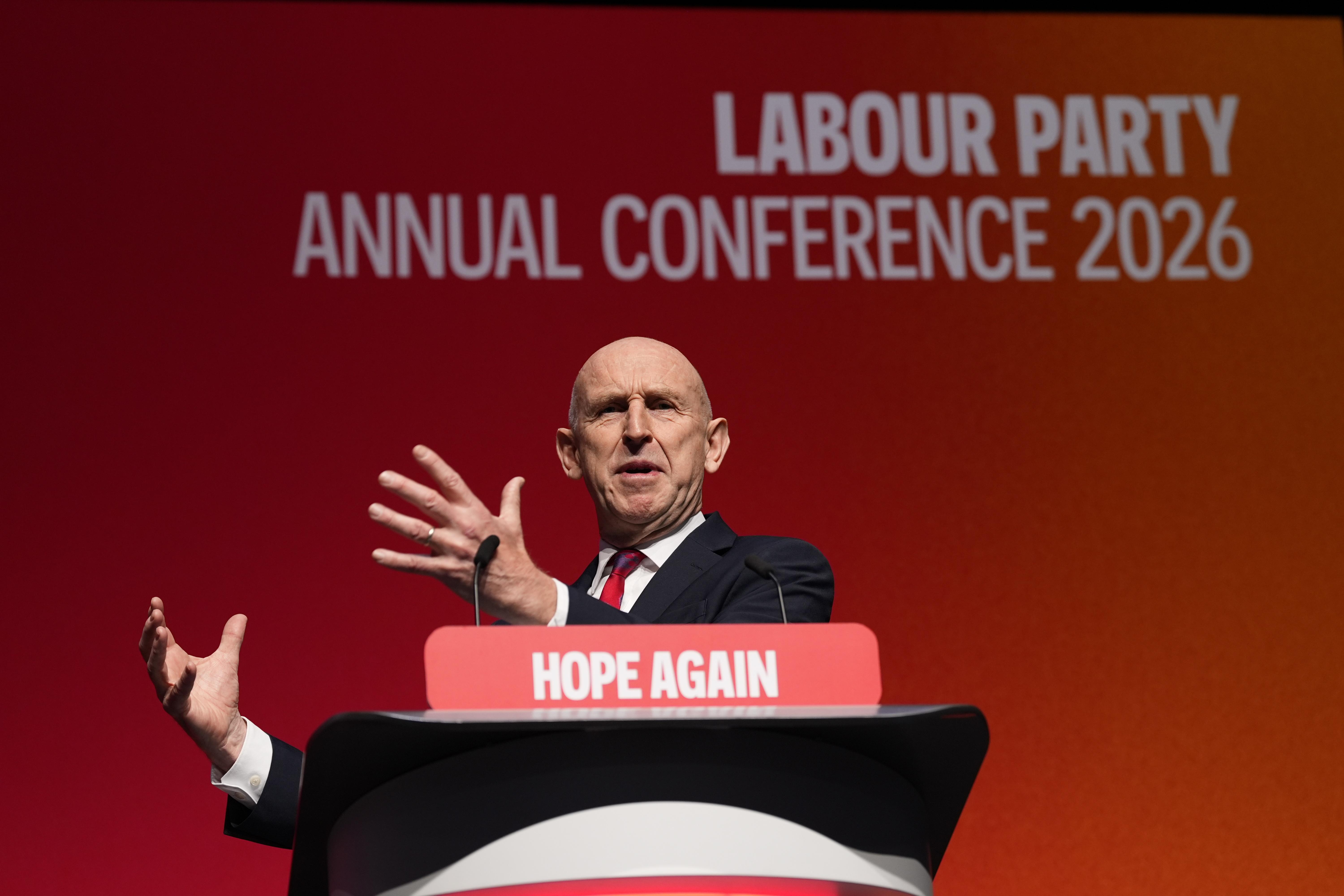
LONDON (AP) — U.K. Treasury chief John Healey used his first budget Wednesday to offer households and businesses some support with energy bills this winter in the face of what he termed “global economic storms.”
Healey, appointed chancellor of the exchequer in July when Andy Burnham became prime minister following the resignation of Keir Starmer, said the Iran war wasn't something that the Labour government wanted, but that it had to deal with the economic repercussions.
Get The Latest News!
Don't miss our top stories and need-to-know news everyday in your inbox.
He said that his “choice in the budget today is to give families and businesses some breathing space now,” as the consequences of the Middle East conflict play out.
“For families, that means higher prices at the pump, higher energy bills and higher mortgages,” he said in his statement, one of the main dates of the parliamentary calendar. “For businesses, higher running costs and more expensive loans. And the impact is felt in the public finances too.”
Among the measures announced was a 100-pound ($133) one-off payment this winter for 20 million lower- and middle-income households, proportionately more of whom live in the electoral battlegrounds in northern England.
Other measures include the extension of a cut in the sales tax on electricity bills and the abolition of a charge paid on gas bills.
Energy bills are set to spike sharply over the winter as the Iran war and the ensuing bottlenecks in the Strait of Hormuz have squeezed global oil and gas supplies, pushing prices higher.
Healey said that banks, which have benefited from higher interest rates, will foot the bill with a doubling in the surcharge on their profits to 6% for 15 months from January.
“Amid global economic storms, I am looking to our banks to help fund breathing space for British families,” he said.
Outside of the energy price support, it was a relatively low-key budget.
He outlined tax cuts for retail, hospitality and leisure businesses, such as pubs and clubs, which will be paid for by higher levies on gaming machines.
He also committed more money to reduce homelessness and confirmed that the government has a “target date” of spending 3% of the country's annual gross domestic product on defense by 2030. Getting to 3% from the scheduled 2.7% by 2028 will cost billions, and Healey said that he would outline how that will be done when he unveils three-year spending plans next year.
For Healey, this is a touchstone issue as he quit as defense secretary earlier this year in protest at the lack of money being provided, a move that heaped pressure on Starmer.
He also announced 10 billion pounds ($13.3 billion) more of economic and military support for Ukraine.
“Today we send a clear message to Moscow: Britain will stand with Ukraine for as long as it takes,” he said.
Healey said that the U.K. economy has been more resilient and, according to the latest forecast from the independent Office for Budget Responsibility, will grow by 1.2% in 2026.
However, growth next year is expected to be much weaker than anticipated at 1% instead of 1.6% as a result of the Iran war's economic shock.
Before the global financial crisis of 2008, the U.K. economy's trend growth rate was around 2.5% and governments since then have struggled to get back to those sorts of levels — Britain's departure from the European Union, the COVID-19 pandemic and Russia's full-scale invasion of Ukraine have all contributed to this period of subpar growth.
Economists said that Healey's overall package has done little to alter that backdrop.
“None of what was announced today is likely to shift the dial on what is set to be a truly terrible decade for living standards,” said Ruth Curtice, chief executive at the Resolution Foundation.
The main impact of the Iran war has been on inflation, which was due to fall earlier this year to the Bank of England’s 2% target. Instead, it has risen to 3.5% and is expected to climb further over the next year or two. As a result, the Bank of England is expected to raise interest rates soon, which will further raise the costs to the government of servicing its debt.
Arguably, the main economic problem facing Healey is the country's debt mountain.
Even though the trajectory of the public finances was recently given a nod of approval from the International Monetary Fund, the U.K.’s debt has passed 3 trillion pounds ($4 trillion) for the first time ever, requiring 8% of government spending to service it.
Healey said that in forecasts provided by the independent Office for Budget Responsibility, the U.K. will spend 14 billion pounds ($18.6 billion) more on debt interest this year.