Russian President Vladimir Putin agreed Wednesday to resume trilateral negotiations with Washington and Kyiv on ending the war in Ukraine, a Kremlin official said.
The Russian leader has agreed “in principle” to resume the talks after Nov. 10, Putin’s foreign affairs adviser Yuri Ushakov told reporters following a meeting in St. Petersburg between Putin and U.S. President Donald Trump’s envoy Steve Witkoff.
Get The Latest News!
Don't miss our top stories and need-to-know news everyday in your inbox.
The trilateral talks will focus on “building a security system for Russia and Ukraine after the conflict ends,” Ushakov said.
Witkoff's talks with Putin about Moscow’s full-scale invasion of Ukraine came as Trump pushes Kyiv to make a deal that stops the fighting.
Ukraine's President Volodymyr Zelenskyy has insisted only a summit of leaders can break the impasse. The two armies remain locked on the battlefield and they pummel each other with daily long-range strikes.
Representatives of the three countries held three rounds of trilateral negotiations early this year, meeting twice in Abu Dhabi in January and February, followed by further talks in Geneva in February.
However, there was little progress beyond exchanges of prisoners of war as Moscow and Kyiv stuck to their basic demands.
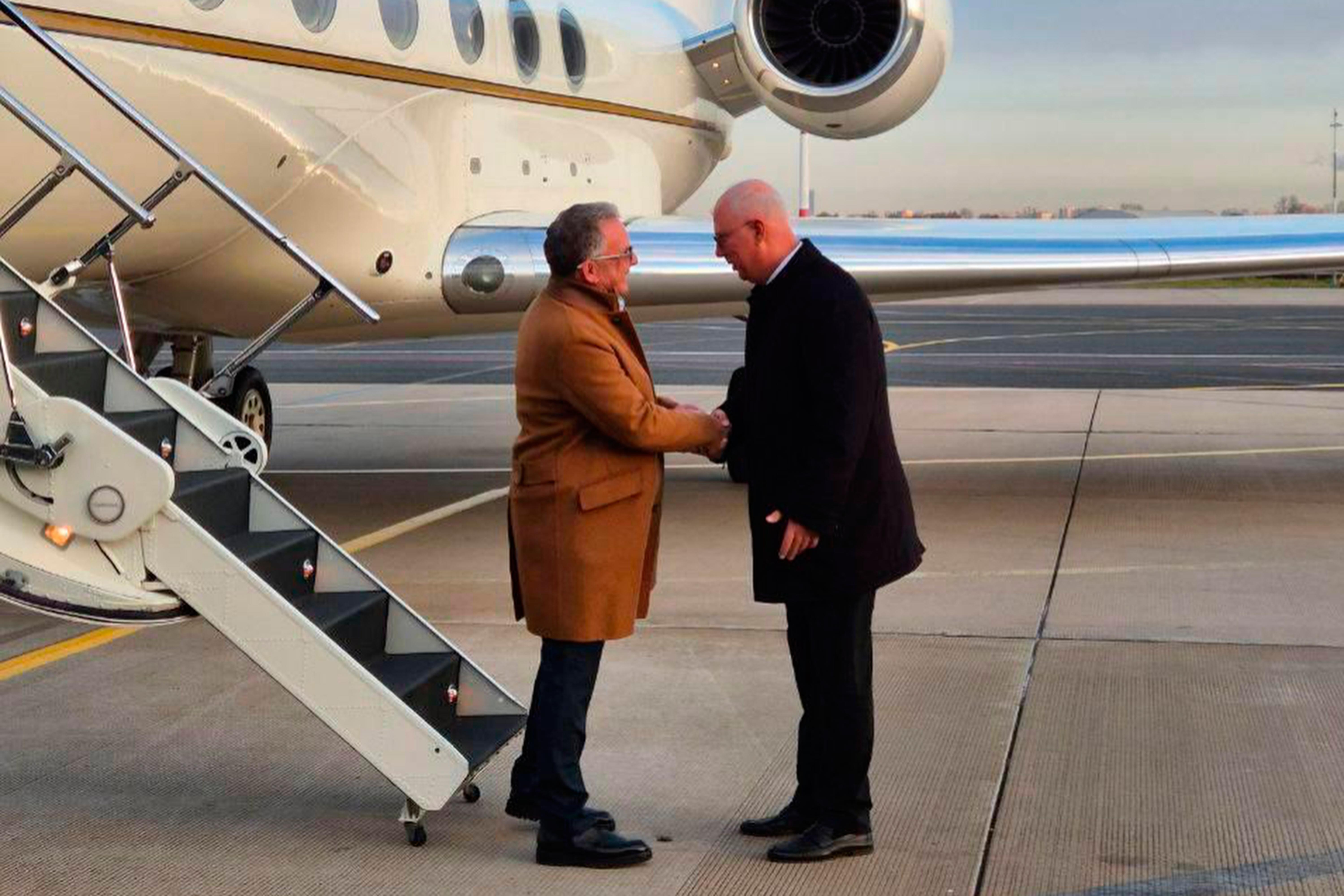
The discussion in St. Petersburg lasted about three hours, the Kremlin said, and came a day after Witkoff met with Ukrainian President Volodymyr Zelenskyy and some European leaders in Norway's capital, Oslo.
Witkoff’s meetings suggested leaders are keen to bring new momentum to U.S.-led peace efforts, more than 4½ years after the war began. Efforts by the Trump administration since early last year to end the war have made no significant progress, and there was no suggestion Wednesday of an imminent high-level breakthrough.
Zelenskyy says that freezing the conflict in Ukraine was the “minimum” required from Russia to bring about an end to the war.
“Right now, we have to freeze, and I think this is (the) real way to end this war,” Zelenskyy said in an interview broadcast Wednesday on Fox News.
Witkoff and Putin met at St. Petersburg’s Constantine Palace, with Ushakov and Russian presidential envoy Kirill Dmitriev also at the table. Trump’s son-in-law, Jared Kushner, joined the discussion via a video link, Ushakov said.
Before the meeting, Witkoff said that “there is some degree of momentum” in talks.
He thanked Putin for lifting Russia’s ban on diesel exports, which angered some U.S. lawmakers, adding that it would help reduce prices for American farmers and truckers.
Putin said that he was ready to consider prospects for the restoration of U.S.-Russia economic ties, adding that he's also prepared to discuss the U.S.-led conflict with Iran. Moscow is ready to use its special relationship with Tehran to help bring peace, he said.
Russia on Wednesday released a retired American teacher who had been imprisoned on charges of fighting as a mercenary in Ukraine, Witkoff said, in what appeared to be a goodwill gesture by the Kremlin after Trump asked Putin to free Stephen Hubbard.
Putin also met Wednesday with Chinese Premier Li Qiang, who was in St. Petersburg for talks with other Russian officials, the Kremlin said.
Russia has cultivated its ties with China, and the two countries last month vetoed a U.S. proposal for U.N. experts to keep monitoring sanctions on Iran.
Witkoff planned to return to Oslo for more consultations after his trip to Russia, Norwegian Prime Minister Jonas Gahr Støre said.
“I think we may have entered a phase now where the Russians are also looking for opportunities for diplomacy,” Støre told Norwegian broadcaster NRK on Wednesday.
Zelenskyy was still in Oslo early Wednesday, where he visited Norway's parliament and met with lawmakers.
Zelenskyy said Tuesday that on the agenda of the latest contacts were future security guarantees for Ukraine, the fate of occupied territories, postwar reconstruction and the possibility of a ceasefire.
Trump said Oct. 11 that Russia and Ukraine had agreed to a ceasefire in attacks on energy infrastructure. But Russia has kept hammering Ukraine’s power grid and Kyiv has hit Russian oil refineries.
Ukrainian strikes set an oil export terminal and a depot ablaze in St. Petersburg on Sunday as Kyiv launched more than 1,000 drones at Russia in one of its largest aerial attacks of the war.
At the White House on Tuesday, Trump increased the pressure on Zelenskyy to come to an agreement with Russia as relations between the two leaders have soured again.
“We want Zelenskyy to make a deal,” Trump told reporters in the Oval Office. “We’ve given a lot to Ukraine. We’ve gotten absolutely nothing back except grief, death, tremendous monetary loss.”
If that doesn’t happen, “I think it’s going to be a very bad thing,” Trump said.
Amid fears that Washington was turning its back on Ukraine, Zelenskyy said Kyiv is once again receiving early warnings from its partners about incoming Russian missiles, after recent strikes that he said occurred without enough notice from allies.
The change happened after Zelenskyy spoke with his American counterparts, including a phone call with U.S. Secretary of State Marco Rubio.
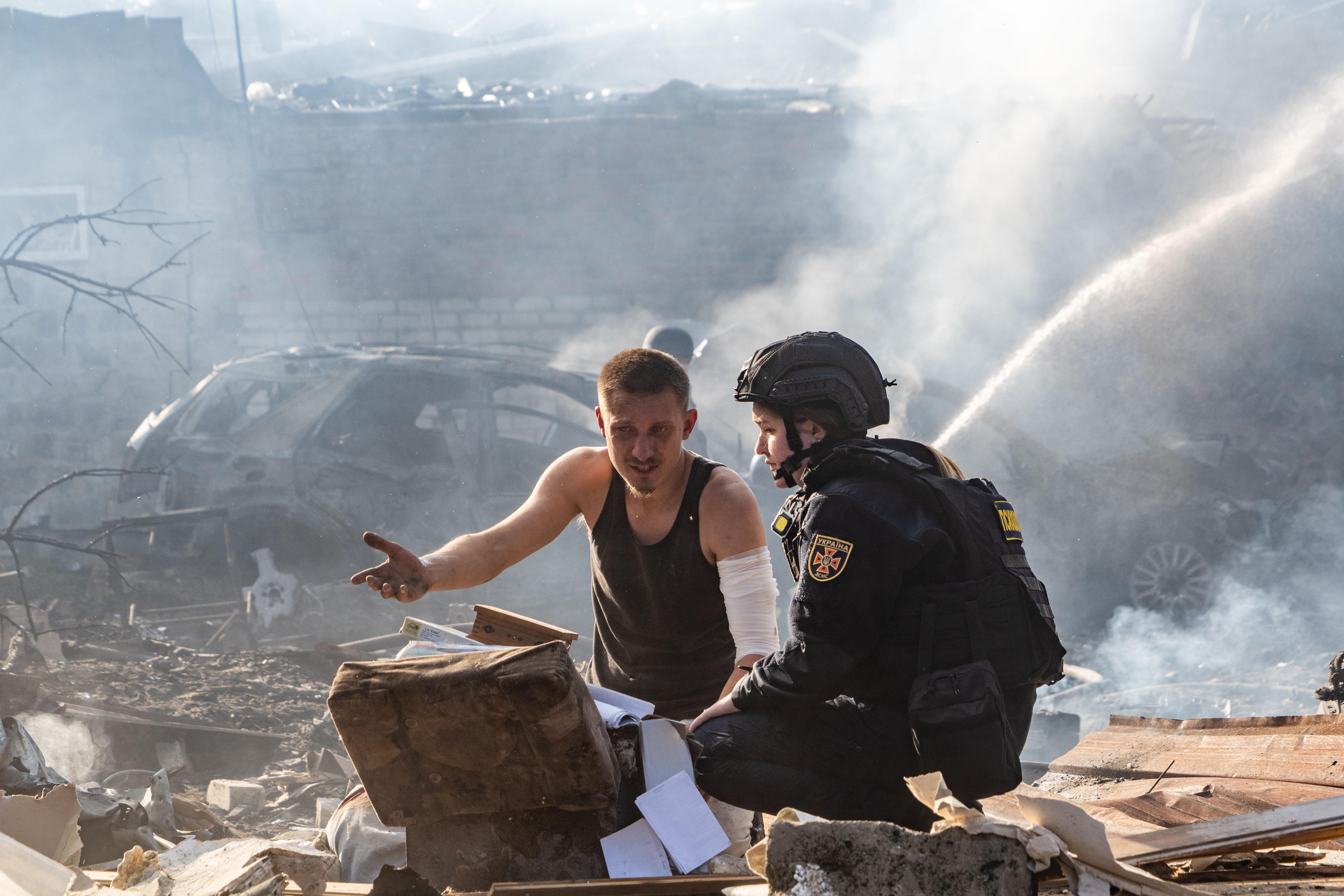
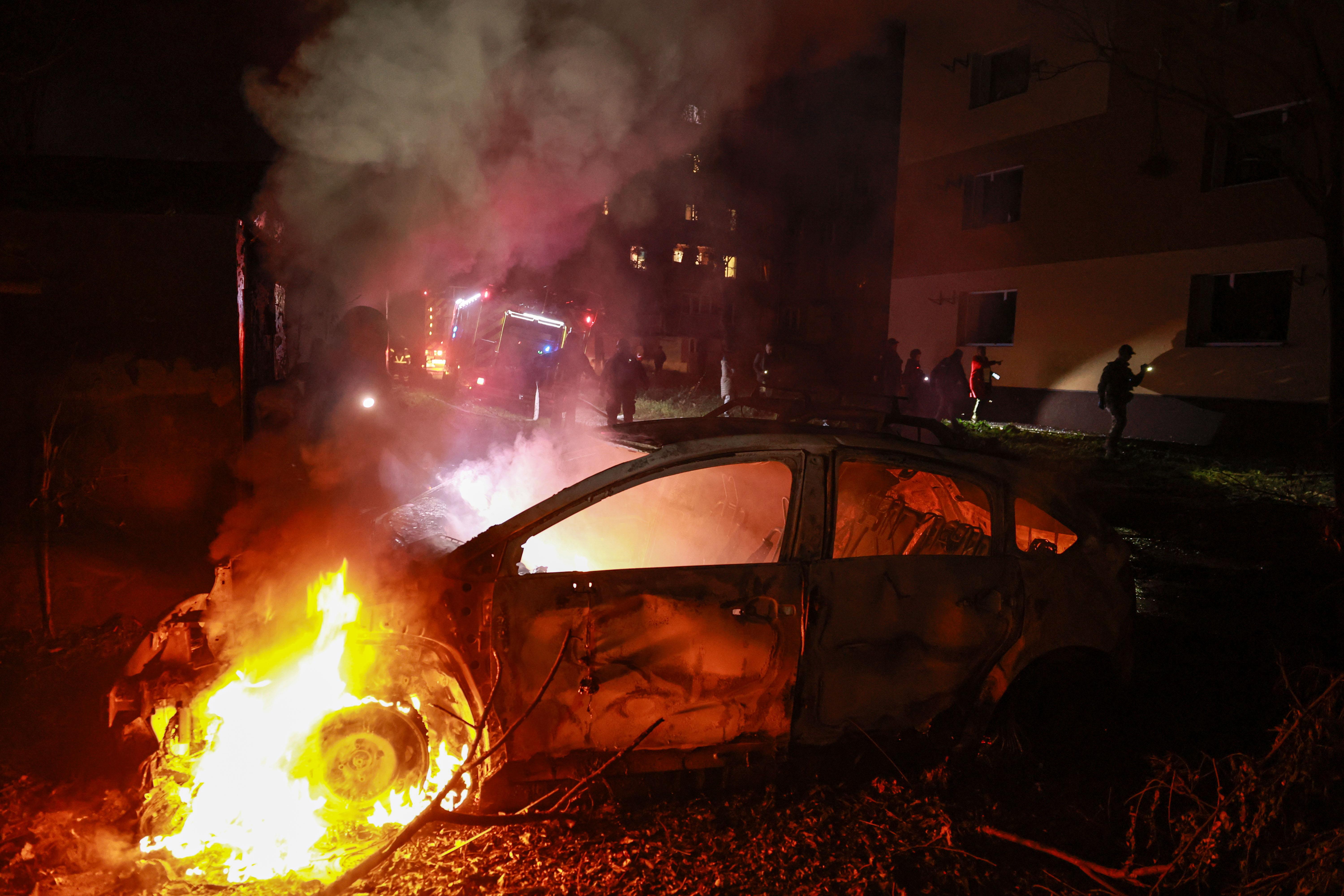
Overnight Russian attacks in Kyiv left three people dead and 12 wounded, while 10 residential buildings were damaged, the city’s military administration said.
Energy facilities were targeted in Kyiv and three other cities in Russian attacks early Wednesday, Ukrainian Prime Minister Serhii Koretskyi said. Outside the eastern city of Kharkiv, two people died and 11 others were wounded when drones exploded in a residential area, he said.
The Russian Defense Ministry said that overnight its forces struck a warehouse, an electrical substation and a bulk carrier at sea that was headed to the Ukrainian port of Odesa.
The Russian Defense Ministry reported Wednesday that its air defenses intercepted 373 Ukrainian drones over multiple Russian regions overnight, as well as the illegally annexed Crimean Peninsula and the Black Sea.
___
Follow the AP’s coverage of the war in Ukraine at https://apnews.com/hub/russia-ukraine