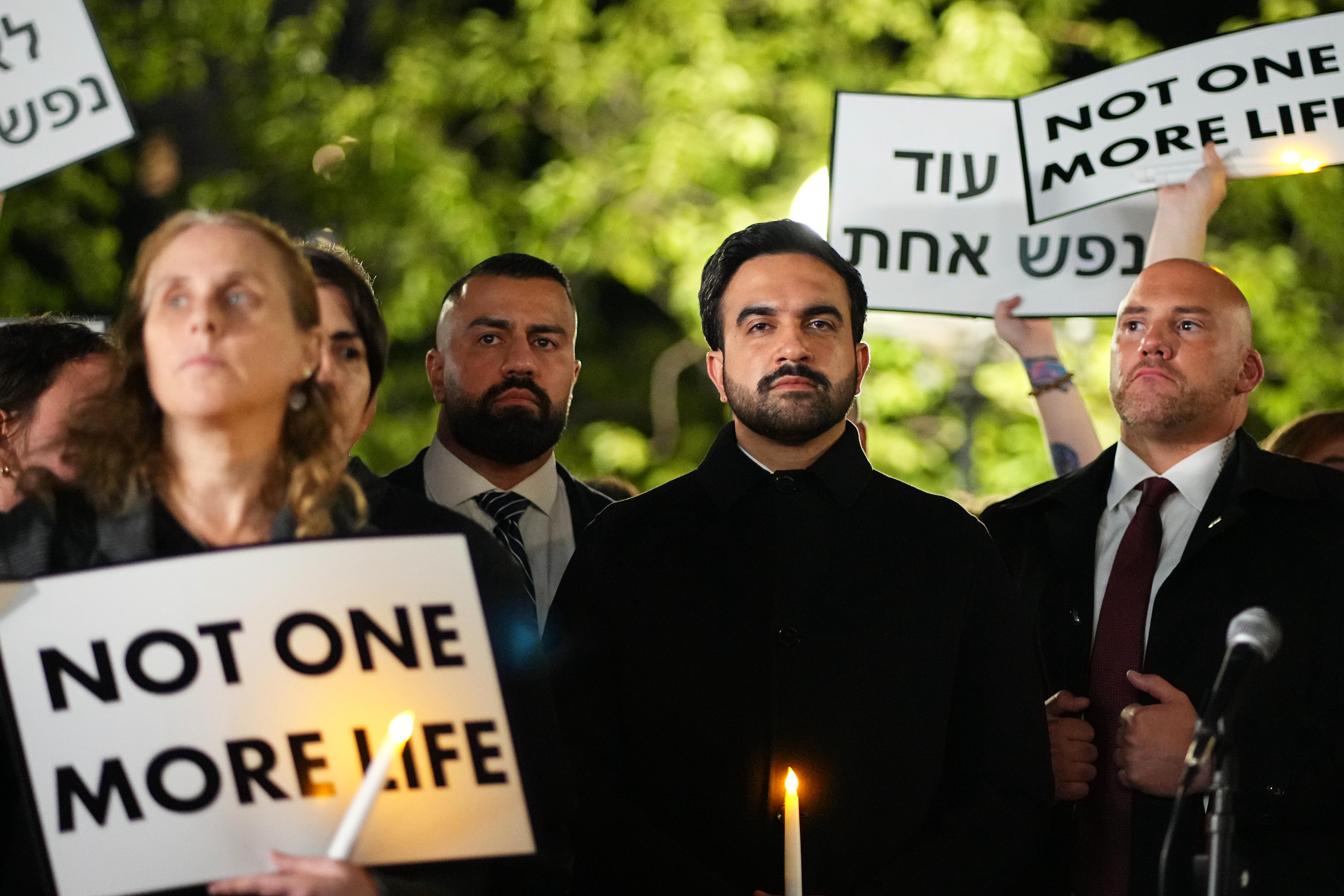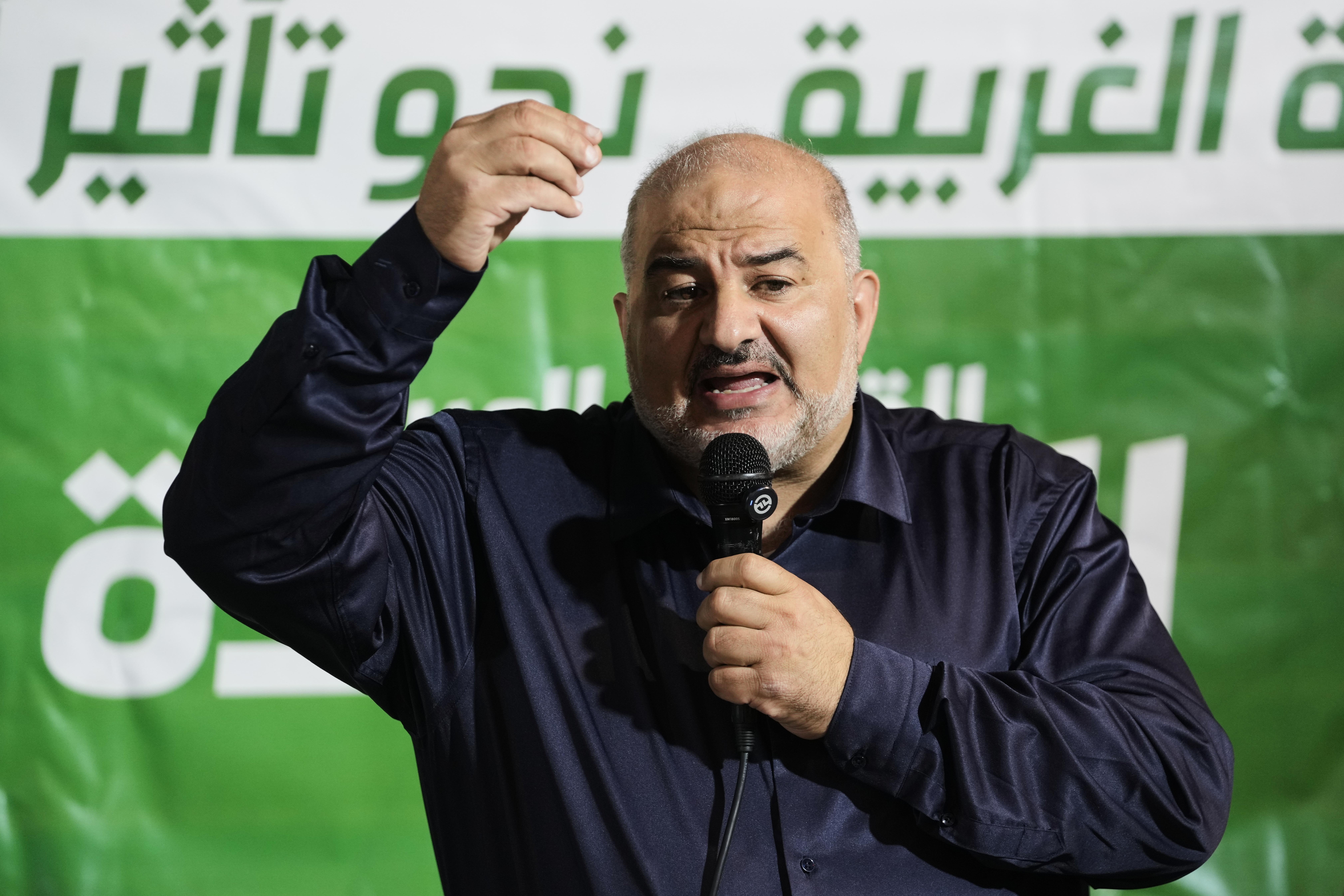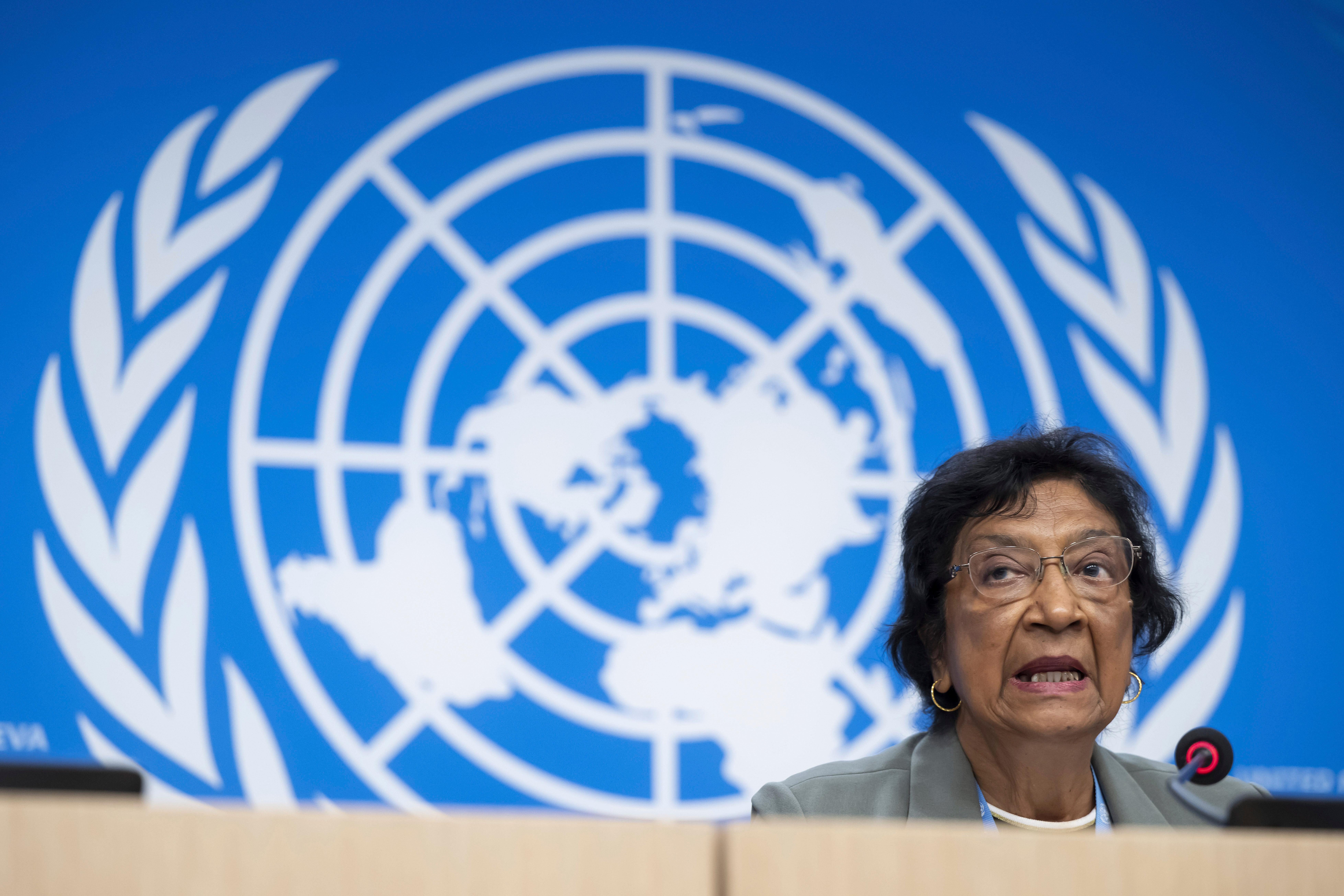
NEW YORK (AP) — Jewish Americans feel they have a lot at stake in this month's contentious elections in Israel as three years of Mideast conflicts rile up emotions across the United States, from street protests to the midterm races.
But they are sharply divided along political, religious and often generational lines on the preferred outcome in a vote that’s perceived as a referendum on Prime Minister Benjamin Netanyahu and held against the backdrop of the enduring trauma of the Oct. 7, 2023, Hamas-led attack, which triggered the war in Gaza.
Get The Latest News!
Don't miss our top stories and need-to-know news everyday in your inbox.
Netanyahu’s supporters, especially among Orthodox Jews, believe he’s protecting a country they love as central to their identity. Many liberal and younger Jewish Americans believe his policies have harmed Israel’s global standing, engendering widespread anger that threatens them in the U.S., too.
The moment is particularly fraught as antisemitism and antisemitic violence grow. Even harsh critics of Netanyahu’s actions, whether over Gaza or Israeli settler violence in the occupied West Bank, argue that blame for attacks against Jews can’t solely be laid at his feet.
“A lot of American Jews are really torn. They want to shout from the rooftops, ‘Stop the pogroms in the West Bank,’ but also yell at everybody, ‘Stop with allegations of genocide and double standards against Israel,’” said Rabbi Dan Levin of Temple Beth El in Boca Raton, Florida.
Levin’s large Reform synagogue is one of many across the U.S. hosting educational programs this fall because congregants feel “deeply emotionally invested” in the Israeli elections, even if, as non-citizens, they can’t vote.
Under Israel’s complex, multiparty political system, the Oct. 27 election outcome is impossible to forecast. Polls suggest a tight race between a Netanyahu-led bloc and an alliance of rivals for control of the government.
Many Jewish Americans have Israeli friends and family. More broadly, support for Israel is a key component of the religious identity of many U.S. Jewish adults ages 45 and older, particularly those who identify as religiously Jewish, according to a recent AP-NORC poll.
The largest Jewish denomination in the United States is Reform, which emphasizes progressive values. Many Reform Jews see no contradiction between their liberalism and their Zionism — understood as the Jewish people’s aspiration “to live as a free people in our land,” said Rabbi Josh Weinberg of the Union for Reform Judaism, an umbrella group for more than 800 Reform synagogues in North America.
But they worry about the growing power of the ultra-Orthodox in Israel’s political and religious life, as well as settlement policies and the treatment of Palestinians in the West Bank, that they perceive as contrary to their values, Weinberg added.
“If Netanyahu wins, I worry very much about the young generation of American Jews who may continue to be, I’ll put it nicely, disenchanted, and who might just say ‘OK, that’s it. I’m giving up on Israel,’” he said.
Only about 4 in 10 religious Jewish adults under 45 in the United States say that supporting Israel is “extremely” or “very” important for their Jewish identity, prioritizing instead other forms of connection, like celebrating Jewish holidays, according to the AP-NORC poll.
In the same poll, a majority of Jewish adults said prejudice against Jewish people is an “extremely” or “very” serious problem in the United States today.
As the Israeli elections approach, many communities are worrying about their effects on antisemitism.
“Some American Jews believe a different style of prime minister, one more similar to earlier ones who constantly talked about the desire for peace, will change the way American Jews themselves are viewed,” said Jonathan Sarna, professor emeritus of American Jewish History at Brandeis University.
Even Netanyahu critics, however, don't believe antisemitic acts would stop if Israel changes its government, especially when outrage at his administration’s actions toward Palestinians is used to incite violence against all Jews regardless of nationality or political leanings.
“‘There is only one solution, intifada revolution’ — we hear that as a call to rise up and use violence against Jews,” Weinberg said of a popular protest chant referring to the violent Palestinian uprising. “So when someone says that in Ramallah, that’s one thing. When someone says that in Minneapolis, what exactly are they calling for? That seems pretty clearly to us antisemitic.”
But some think different Israeli policies would help stem the tide.
“Somebody who decides that they’re going to drive a car into a synagogue or attack Jews on the street, that is their responsibility. You can’t blame that on Israel’s actions,” said Rabbi Jill Jacobs, CEO of T’ruah, a rabbinic human rights organization. “But … I think that it’s going to be a very scary time for Jews around the world if there’s another Netanyahu government and if it continues on its policy of expanding occupation, ethnic cleansing, and forever war.”
Stanley Weinstein, an Orthodox Jew from Florida, rejects much of the criticism of the Israeli military and policymaking, especially given the threats the state faces from militant groups like Hamas in Gaza as well as in other conflicts that keep simmering despite tenuous ceasefires, including in Lebanon and with Iran.
Weinstein sees Israel’s security as crucial, especially given the rise in anti-Israel and antisemitic rhetoric among left- and right-wing American political figures that he has observed even from his home in the diverse and vibrant Jewish community of Miami Beach.
“I am appalled as an American. I am appalled as a Jew. And I say, thank God there is an Israel,” he said.
For Jewish Americans, Israel also looms large in the U.S. midterms — when voters decide who controls Congress for the next two years. The Nov. 3 elections come a week after Israelis go to their polls.
From New York City to Michigan and beyond, support for Palestinians, and withdrawal of U.S. aid to Israel, are rising issues among Democratic voters.
Both the Israeli and U.S. elections could affect the two countries' longstanding alliance. It has been particularly close — though not without recent strains, especially over the joint Iran war — under the Trump and Netanyahu administrations.
Even as some Israeli policies have become controversial in the United States, among American Jews there is still substantial support for the state of Israel, said Jason Isaacson, chief policy officer for the American Jewish Committee, a prominent advocacy group that strives to broadly represent Jews in the U.S. and abroad.
“There is strong support for the continuation of the U.S.-Israel relationship and for the necessity of Israel’s survival,” he said.
Regardless of their faith and politics, some Jewish Americans are most concerned about the prospect of further divisions driven by Israel's elections.
“This may be the most consequential election in modern Israeli history, because the nature of the current administration is so fraught with division that it’s ripping the people apart,” said Levin, the Reform rabbi in Boca Raton.
Weinstein, the Orthodox congregant in Miami Beach, believes Netanyahu has been doing “a terrific job.” But he shares the same worry for the future.
“The biggest issue in Israel today, which doesn’t exist, is unity. To me, that is what is at stake,” he said. “Is there a way to unify the country, unify the people?”
___
Associated Press religion coverage receives support through the AP’s collaboration with The Conversation US, with funding from Lilly Endowment Inc. The AP is solely responsible for this content.