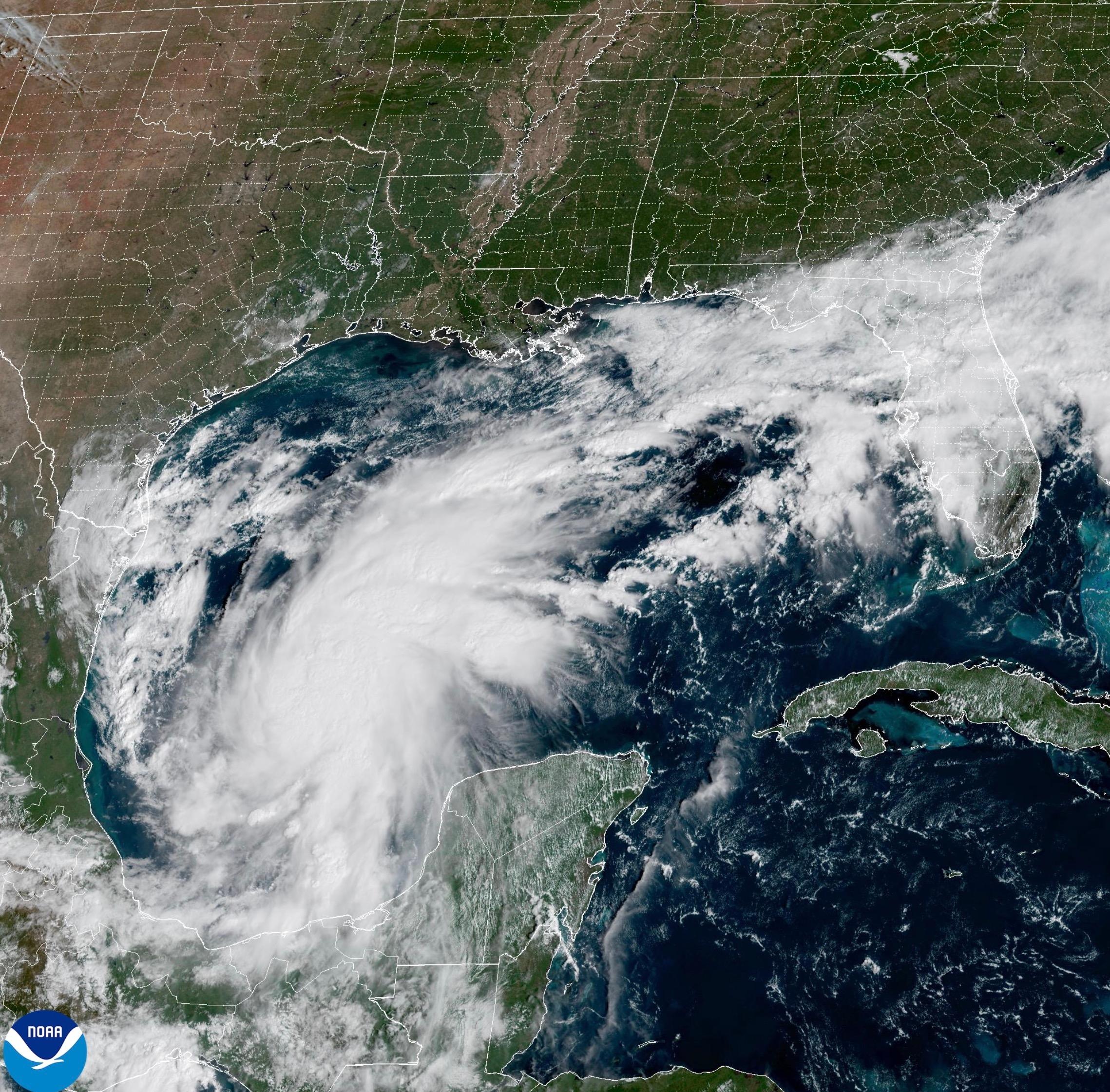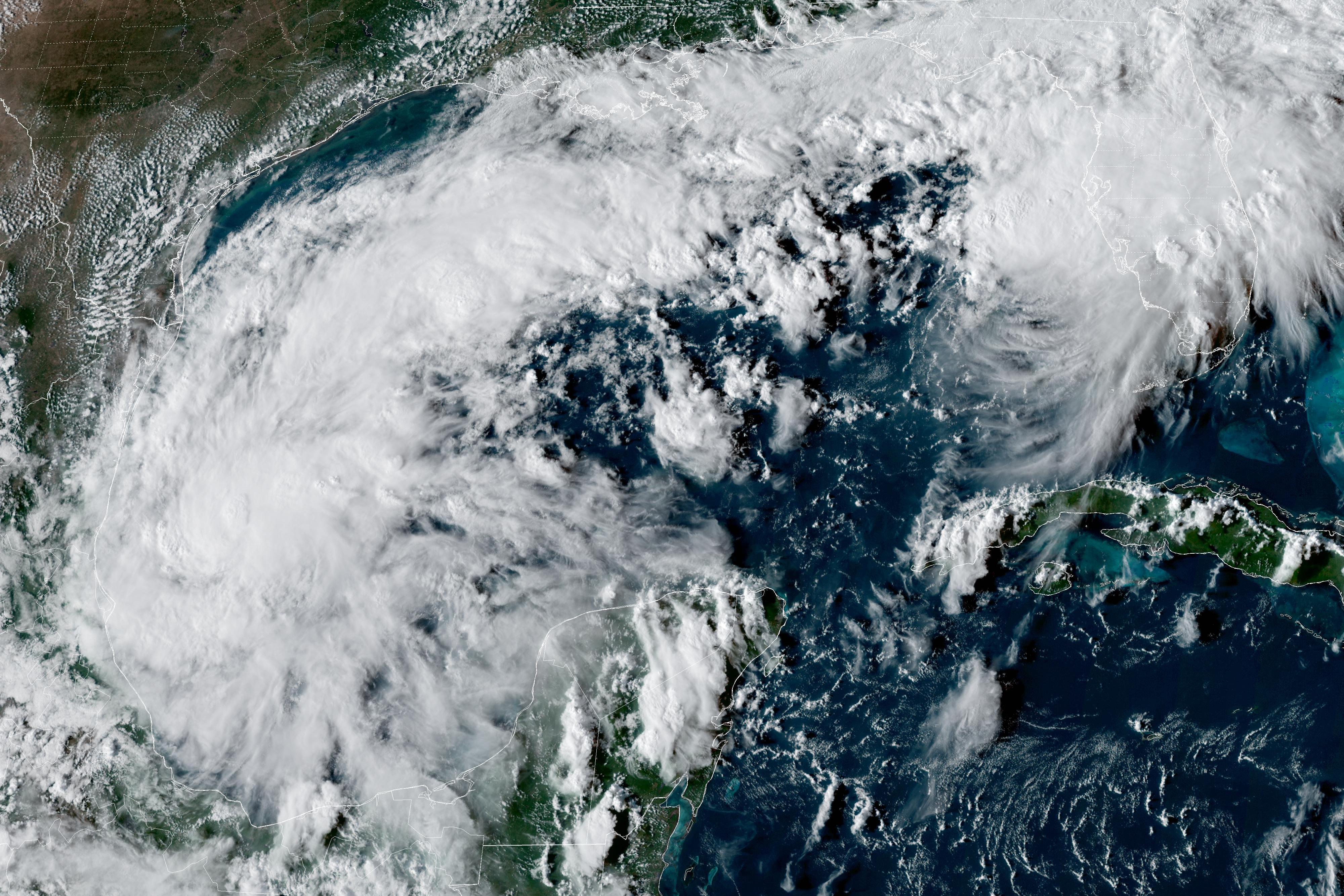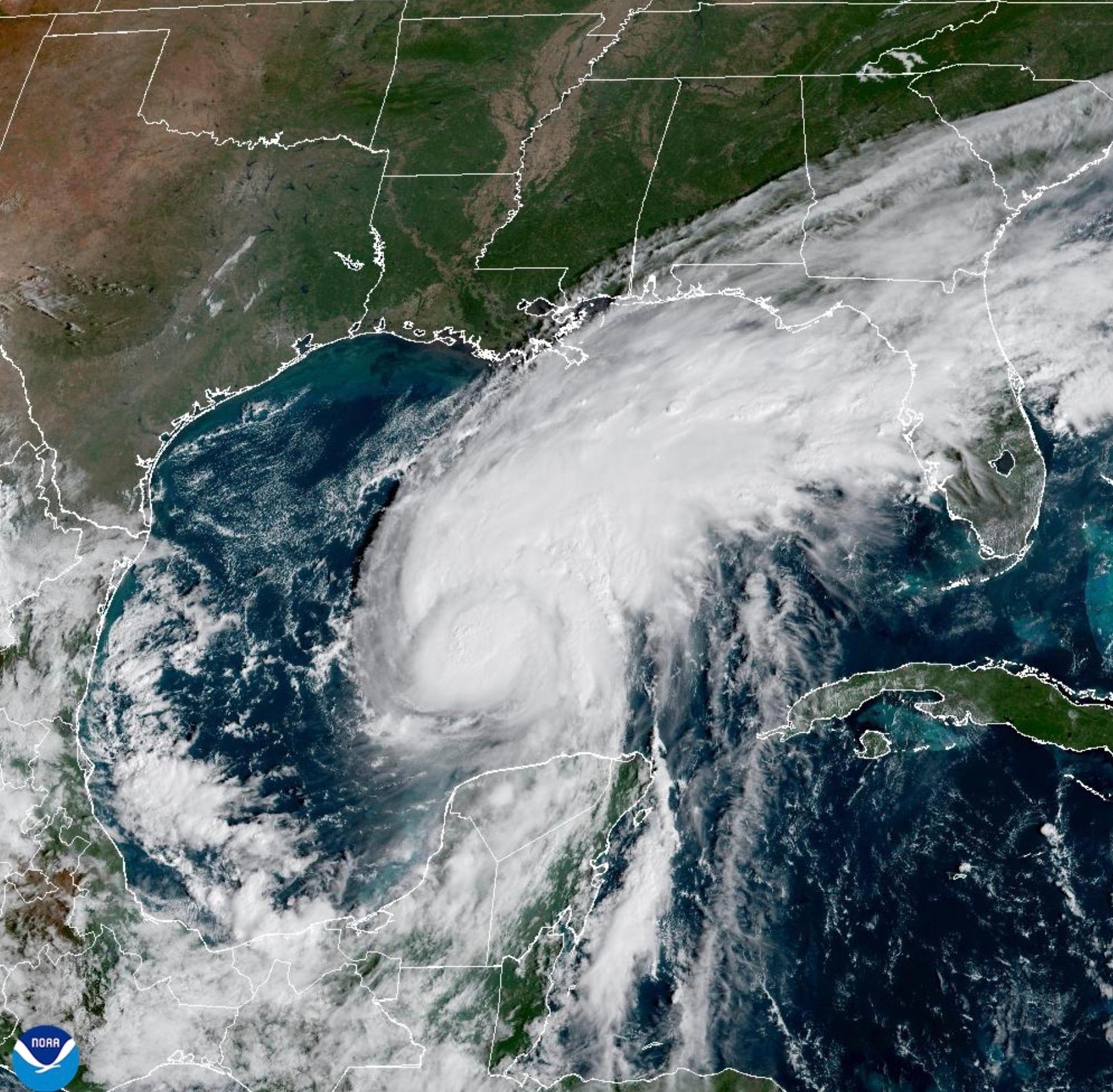
Isaias strengthened into a major hurricane Friday as it headed toward the U.S. Gulf Coast, where final preparations were underway for potentially life-threatening storm surge and high winds. The Category 3 storm is expected to continue strengthening.
Meanwhile, Hurricane Simon was headed toward Mexico’s Pacific coast and strengthened into a Category 2 storm late Friday morning. Simon is forecast to become a major hurricane by late Friday and strengthen further on Saturday.
Get The Latest News!
Don't miss our top stories and need-to-know news everyday in your inbox.
Tropical storm activity has been above average this season in the Pacific because of a strong El Niño, a natural, temporary warming of parts of the Pacific that warps weather worldwide.
Here's the latest:
Kelsei Frazier of Pace, Florida, plans to sleep in her living room Friday night to stay close to her four kids, two golden doodles and a pair of kittens as Hurricane Isaias is expected to hit.
“We just decided we would make it fun, make it as comfortable so everybody could feel safe and together,” said Frazier, whose eight-year-old child experiences storm anxiety.
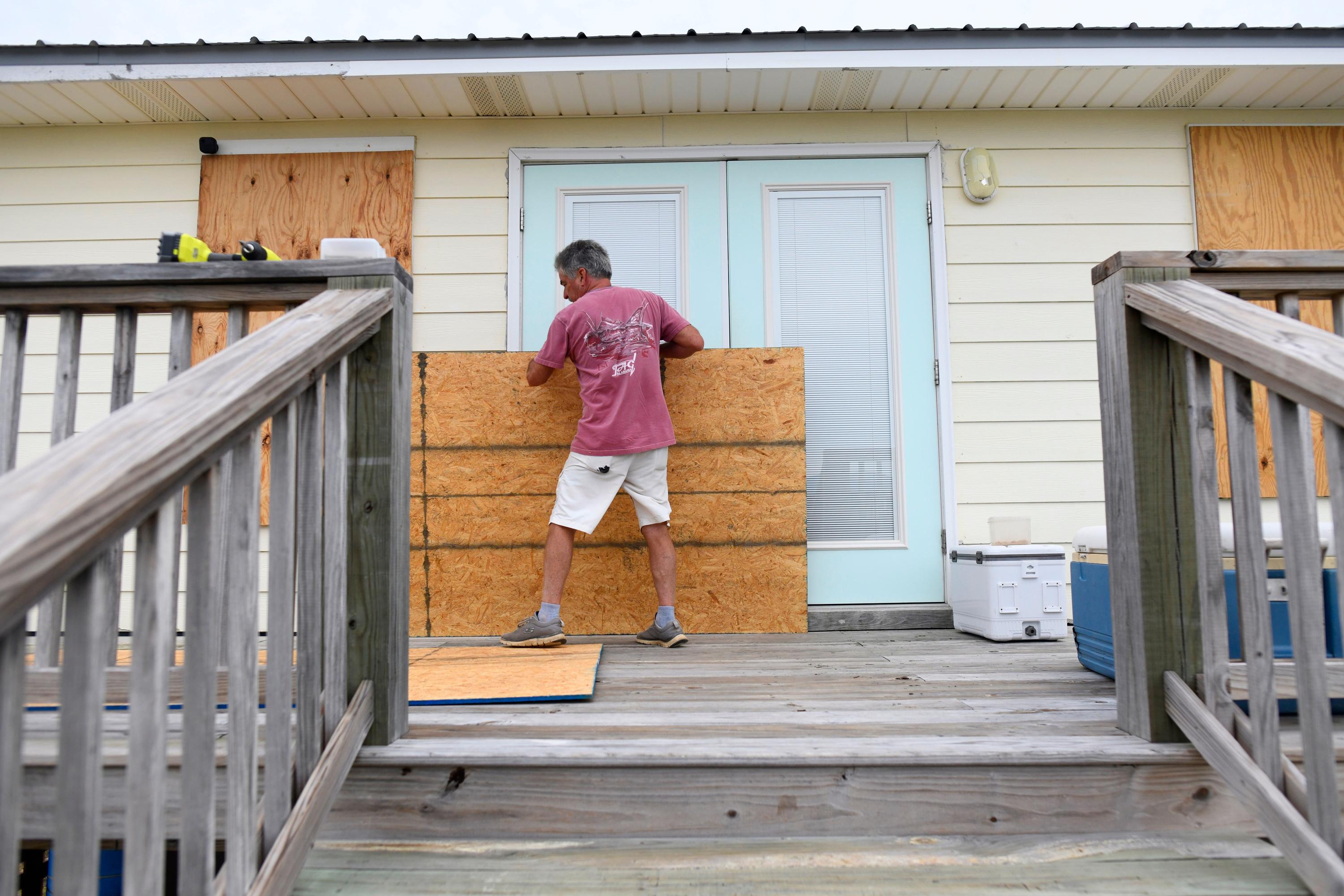
Frazier is well-prepared: She charged tablets and phones, ran to Sam’s Club, pinned an outdoor trampoline to the floor and boarded up the windows.
The Florida native is no stranger to hurricanes — a Category 5 hurricane flooded her family’s house in 2004.
But she still gets jittery.
“We joke because if Waffle House is still open, then you know it’s not a bad hurricane,” she said. “But all the Waffle Houses that I know of within at least a normal range from us are closed.”
An extreme wind warning is issued when winds of at least 115 mph (186 kph) are imminent, according to the National Weather Service in Mobile, Alabama.
If such a warning is issued, take shelter immediately in an interior room and away from windows. Put as many walls between you and the outside as possible.
If Hurricane Isaias remains a Category 3 storm, extreme wind warnings will be issued as the eyewall approaches.
The Southeastern Conference college football clash between No. 2 Georgia and No. 6 Alabama remained on schedule for Saturday night despite the looming arrival of Hurricane Isaias along the U.S. Gulf Coast.
President Donald Trump, however, will no longer attend the game in Tuscaloosa, Alabama.
Trump posted on his social media site Friday that “based on the fact that a huge Hurricane/Storm is coming, it is important to have our wonderful First Responders, Law Enforcement, and others, focused on that Storm, and in no way be thinking about the safety, or presence, of the President of the United States, ME!”
“Therefore, I will miss that potentially unbelievable Game, Alabama vs. Georgia,” Trump continued. “But, hopefully, the Game will go on despite the weather!”
He also promised, without providing details, “I will be visiting both of those Teams at a later date.”
Even the approaching hurricane couldn’t dampen the celebratory atmosphere at a wedding in Pensacola Beach, Florida.
On Thursday evening, David and McKenzie Pipes welcomed guests to their wedding weekend at a beachfront condo. Caterers, bartenders and guests arrived ahead of the storm to celebrate the couple based in Perdido Key, Florida.
Though the two wed a year ago, this weekend was their celebration with friends and family. As a bright orange sunset took over the sky, the Pipeses headed down to the beach to take pictures as their dog Hank ran around in the sand.
The couple did have to make some changes: They moved their wedding ceremony and reception to Sunday after Hurricane Isaias is expected to pass, and some out-of-town guests canceled.
Still, family arrived from Maryland and Arizona to celebrate the happy couple, and nothing in the excitement hinted at the storm ahead.
Florida Gov. Ron DeSantis said officials expect Isaias to make landfall near Destin late Friday as a Category 3 hurricane.
Hazardous conditions will begin in the evening beforehand, so “now is your last chance” to prepare, he said at a news conference Friday afternoon.
“You’re going to see water across the entire region of the Florida Panhandle,” DeSantis said.
He urged northern Florida residents, even those outside the hurricane’s path, to prepare for heavy rain and possible tornadoes, telling them to “assume power is going to go out.”
Officials anticipate tornadoes could form near Tallahassee, he said.
The president will no longer attend Saturday’s football game between the University of Alabama and the University of Georgia, according to a White House official who spoke on condition of anonymity to discuss internal planning.
Trump had planned to travel to Tuscaloosa for the rivalry clash after a rally planned in Tennessee on Saturday. Asked about the storm’s impact on Wednesday, he said, “I gotta go to the game,” but noted his plans might change based on the weather.
Trump had said he did not want to divert resources from the emergency response.
All flights into and out of Destin-Fort Walton Beach Airport were canceled Friday, affecting 39 scheduled arrivals and 39 departures, according to flight monitor FlightAware.
At Pensacola International Airport, 74 flights had been canceled, accounting for 78% of scheduled arrivals and 70% of scheduled departures.
And 47 flights were canceled at Northwest Florida Beaches International Airport, representing 65% of scheduled arrivals and 46% of departures.
Hurricane Isaias was 125 miles (200 kilometers) south of Pensacola, Florida, and 140 miles (225 kilometers) south of Mobile, Alabama, as of mid-afternoon Friday.
The storm was moving north-northeast at 17 mph (28 kph), according to the National Hurricane Center’s 3 p.m. ET update.
Tropical storm conditions were spreading onshore along the northern Gulf Coast, with wind gusts of 43 mph (69 kph) reported at Apalachicola, Florida.
Several U.S. airlines, including Delta, United, American, Southwest and JetBlue, are waiving change and cancellation fees for eligible passengers due to the storms.
The waivers cover flights through affected airports across Florida, Alabama and Mississippi.
Some airlines are also offering flexibility for travelers flying through New Orleans, Atlanta and Nashville, as well as Mexican destinations including Puerto Vallarta.
Travelers should check with their airline for details on eligible flights, travel dates and rebooking deadlines.
Becki Swan of Pace, Florida, came to Pensacola Beach on Friday to see the water before Isaias made landfall.
“This time we have a little bit more prep time,” she said. “It’s fun to see the waves crashing against the pier. It’s just amazing; I can’t wait to see what happens.”
Swan plans to board up her windows, secure any items and grab last-minute groceries. If the power goes out, she has a battery backup.
For Pensacola resident Tim Mowry, Isaias will be the first hurricane he’s experienced since he moved to the coastal city in 2022.
“It’s starting to get surreal a little bit,” said Mowry, 57.
He already had a generator, but he estimated he spent at least $400 on supplies, including a generator cable and gas for his car. Until the storm arrives, he plans to sit on his front porch as long as he can.
The National Hurricane Center says Hurricane Isaias has been centered about 145 miles (233 kilometers) south of Pensacola, Florida, as it swirls northward. However, its wider bands of tropical storm-force winds extend outward up to 205 miles (330 km). That means tropical storm-force winds are already striking the coast, with a gust of 47 miles per hour (76 kph) recently reported at Dauphin Island, Alabama.
Landfall — the point when and where a hurricane’s eyewall hits the coast — isn’t expected until Friday night, most likely somewhere near the Alabama-Florida state line.
As Isaias continues moving north, people living on the northeast side of the storm can expect to be hit the hardest. That’s because tropical cyclones north of the Equator blow counterclockwise, and the so-called “dirty side” of a hurricane is in the right front quadrant.
Hurricanes spin clockwise in the Southern Hemisphere, where the left front quadrant is the dirty side.
As of Friday afternoon, dozens of Waffle House locations in the Florida panhandle were closed, according to the restaurant’s website.
The beloved Southern breakfast chain is known for staying open 24/7, even through severe weather. For decades, it often seemed to be the only business open during a storm — or the first to reopen after it passed.
Thus, the diner became a measure of a storm’s severity for both communities and officials alike. So when a local Waffle House closes, it can signal impending disaster and cue people to evacuate.
In 2018, Morton McLemore, of Apalachicola, Florida, witnessed the immediate aftermath of Hurricane Michael, one of the strongest storms to hit the U.S.
It knocked out power in his small town in the Florida Panhandle for at least a week, he said.
“That was a tough one to go through,” said McLemore, owner of a local Piggly Wiggly grocery store in the area. “We just pray that it’s nothing like the Hurricane Michael.”
A truckload of water and other essentials arrived at the grocery store Friday morning.
“The store is pretty busy, and people are getting the last, last-minute things they need,” McLemore said.
In Panama City, Florida, residents braved the rain to fill sandbags and protect their homes from flooding, hours before Isaias is expected to hit.
“This area is really a bad flood zone,” said Corliss Stone, who works for the fire department. “I mean, it’s just the nature of the beast, it’s Florida.”
While Bay County is not expected to be in the eye of the storm, residents who showed up say they can never be too prepared after Hurricane Michael, the Category 5 storm that slammed Florida in 2018.
“That’s kind of why everybody is really, really worried because it was a nothing storm and then it became something way bigger than what we expected,” said Stone.
Another resident, Ricky St. John, said he was the only one in his street to take preemptive measures to protect his house.
“I guess they don’t figure it’s going to be very bad. But that’s what they figured with Michael, too.”
Jay Brazzell in Gulf Breeze, Florida, is preparing for the storm by securing potted plants and other items outside his home that could fly away.
Isaias isn’t as large as other hurricanes he’s seen, he said. Other than the usual preparations like filling up his car tank and having plenty of water, he said he wasn’t too worried.
“I mean, I’m not boarding up,” Brazzell, 69, said. “I’ve been through — this being the ninth hurricane.”
For past storms, he and his neighbor would run through their preparation lists, grab beignets and coffee, and share them with newcomers to help them prepare.
“It was like a little party,” he said.
The Department of Homeland Security would not give The Associated Press a clear answer Friday on whether it will suspend non-criminal immigration enforcement in states impacted by Isaias during the emergency.
In past administrations, including Trump’s first, DHS would sometimes issue messaging in the run-up to hurricanes clarifying its immigration enforcement policies during extreme weather.
Before Hurricane Irma in 2017, the agency stated that “DHS will not conduct non-criminal immigration enforcement operations in the affected area … When it comes to rescuing people in the wake of Hurricane Irma, immigration status is not and will not be a factor.”
Asked Friday what the DHS policy is during Isaias, the department instead cited a statement about FEMA’s storm preparations. It included: “Under President Trump and Secretary Mullin’s leadership, the safety of the American people is DHS’s top priority.”
DHS did not immediately respond to follow-up questions.
Florida Gov. Ron DeSantis said he’ll keep “butchering” the pronunciation of Isaias, but you don’t have to.
Here’s how to say it:
Hurricane Isaias is pronounced “ee-sah-EE-ahs,” not Isaiah.
And Hurricane Simon is pronounced “SY-muhn.”
Hurricane Isaias is forecast to miss the oil industry’s biggest hubs along the Gulf Coast, but could still nudge fuel prices higher if it triggers power outages that shut down refineries for processing crude, according to experts.
An extended refinery shutdown would impact fuel supplies that already have taken a hit from the U.S. war against Iran and Russia’s war against Ukraine.
Experts say that could increase fuel prices by a few cents or even as much as a dollar per gallon. Refineries in Pascagoula, Mississippi, and Mobile, Alabama, account for 2.4% of the nation’s refining capacity.
If the storm moves through quickly with minimal impacts, refineries would continue to run at reduced capacity, and gasoline and diesel prices could rise just a few cents, said Carl Larry with the energy analysis firm Enverus.
Refineries could take weeks to fully recover from a major hit, he added.
National Hurricane Center Director Michael Brennan says strong winds arriving at the coast in the early afternoon are expected to spread well inland during the hurricane — reaching as far as metro Atlanta and Tennessee.
Inland areas are also at risk of scattered power outages and tree damage, he said.
Storm surge will be a major concern with Isaias, with the highest water levels expected from the Alabama-Florida border to Grayton Beach in the western Florida Panhandle. Significant storm surge is also expected in Florida’s Big Bend region, Brennan said.
“So if you’re in these evacuation zones and you’ve been asked to leave by your local officials, please get out as soon as you can before conditions deteriorate further,” he said.
Brennan said the highest tornado risk will be Friday afternoon into the evening in central parts of the Panhandle to southwestern Georgia. That risk will expand Saturday to much of central and southern Georgia and parts of South Carolina, he added.
Double red flag warnings prohibiting swimming and wading were posted Friday morning as beachgoers were asked to evacuate. The surf was at about 6 feet (2 meters) and rising, officials said in a social media post.
Lifeguards were expected to leave the beach mid-morning after urging people to leave and stay safe during the storm.
“Bottom line is to just please be smart. Please be smart,” Pensacola Mayor D.C. Reeves said in a social media post. “You wouldn’t consciously put your lives in danger. Make sure that you don’t put the fire, the police — please do not put them in danger. They are not going to be able to respond.”
Reeves warned that bridges may be closed as conditions worsen.
The center said maximum sustained winds have increased to nearly 100 mph (155 kph), and that Simon, which was headed toward part of Mexico’s Pacific coast, is expected to continue strengthening rapidly during the next day or so. Simon is forecast to become a major hurricane by late Friday and strengthen further on Saturday.
U.S. forecasters earlier issued a hurricane warning for parts of the central and southwest coast, where hurricane-force winds were expected within 36 hours.
The super El Niño has been a nonstop machine cranking out tropical storms that have seemingly rolled through the Pacific region like rush-hour traffic. Now, it’s the U.S. Gulf Coast’s turn.
Isaias is the ninth named storm of the season. None of the previous ones reached hurricane strength. A normal hurricane season has 14 named storms, seven becoming hurricanes and three reaching major hurricane level, which is more than 110 mph (177 kph).
“The season has been completely dead — and we’re still going to have an impactful storm hitting the northern Gulf,” Colorado State University hurricane expert Phil Klotzbach said Wednesday. “How impactful it is remains to be seen.”
El Niño involves a natural, temporary warming of parts of the equatorial Pacific, setting off a chain of unusual weather around much of the world. While it’s one of many factors in play in the formation of Isaias, the current El Niño “still is certainly driving the bus,” Klotzbach said.