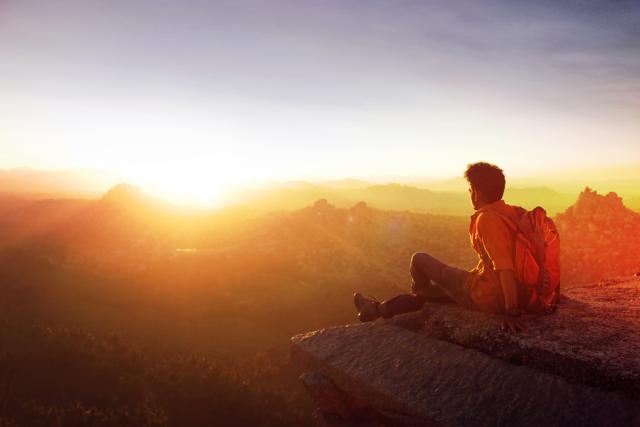

A sunset lasts only minutes, yet people will stop traffic, miss a train, or stand in silence just to watch one.
Get The Latest News!
Don't miss our top stories and need-to-know news everyday in your inbox.
That reaction is oddly powerful for something so ordinary. The sun sets every day. It asks nothing from us. It does not solve problems or change deadlines. And still, people chase it from rooftops, beaches, parking lots, airplane windows, and city streets. We take photos, write poems, plan dates around it, and call it magical even when we have seen thousands of them before. So why do we romanticize sunsets so much?
The answer has less to do with the sky itself and more to do with how the human mind works. Sunsets bring together beauty, biology, memory, and meaning. They turn a routine event into an emotional one.
A daily event that feels rare
Part of the appeal is simple: a sunset is common, but it never looks exactly the same twice.
The colors shift with clouds, dust, pollution, humidity, and the angle of light. One evening may be pale pink and soft. Another may turn the whole sky orange, purple, and red. Even if you stand in the same place every day, the scene changes. That mix of repetition and surprise keeps sunsets interesting.
People are drawn to things that feel familiar but not predictable. A favorite song works like that. So does a walking route that changes with the light. Sunsets fit that pattern perfectly. They are reliable enough to be comforting, but varied enough to feel special.
That may explain why people often say things like, “This is the best sunset I’ve ever seen,” again and again. The statement is not always about objective comparison. It reflects the feeling of being surprised by beauty in a moment that could have been ordinary.
The brain loves color, contrast, and motion
Sunsets also appeal to the senses in a direct way. They offer intense color, slow movement, and a clear visual story.
As the sun drops, the light becomes warmer and softer. Shadows lengthen. Bright daylight gives way to richer tones. The shift happens gradually enough for us to notice it, but fast enough to feel like a performance. Our brains are wired to respond to contrast and change, and sunsets provide both.
There is also something calming about the pace. Unlike fast entertainment, a sunset cannot be rushed. You have to watch it unfold. That can pull people out of their usual mental speed. In daily life, many of us move from task to task with little pause. A sunset gives the mind a reason to slow down.
This may be one reason people often feel reflective while watching one. The sky changes, the noise in the head softens, and ordinary thoughts begin to feel larger.
Sunsets mark an ending, and people care about endings
A sunset is not just beautiful. It is symbolic.
It marks a transition from day to night. That shift carries emotional weight because humans naturally attach meaning to endings. We do this with school years, jobs, relationships, meals, and even conversations. An ending makes us pay attention. It frames experience.
Sunsets often feel romantic because they turn the close of a day into a visible event. They suggest closure, rest, and release. For some people, that feels peaceful. For others, it feels bittersweet. Either way, it is emotional.
This also helps explain why sunsets appear so often in movies, music, and love stories. They work as a visual shortcut for feelings that are hard to say directly: change, longing, beauty, uncertainty, hope. A couple watching the sunset in a film is not only looking at the sky. The scene tells us that something matters.
People use sunset language in everyday speech too. We talk about the “sunset years” of life, meaning later years. Businesses sometimes use “sunset” to describe the planned end of a policy or product. The word carries softness. It suggests winding down rather than abrupt disappearance.
We connect sunsets with memory
Sunsets are easy to attach to personal moments. Vacations, first dates, long drives, family trips, beach walks, rooftop gatherings, and quiet evenings often include them.
Because they are visually striking, they become memory markers. You may forget exactly what you talked about on a trip, but remember the sky over the water. You may not recall every detail of a goodbye, but remember the orange light on the buildings. The sunset becomes part of the emotional storage system of the mind.
This is one reason sunset photos matter even when they all seem similar. People are not only photographing color. They are trying to save a feeling. The image says, “I was here. This moment felt bigger than usual.”
In modern life, that matters more than we often admit. Phones have made it easy to document everything, but not everything feels worth documenting. A sunset often does. It gives shape to a moment and tells us it was meaningful enough to keep.
Romance, dates, and shared attention
Sunsets have become strongly linked with romance, and there is a practical reason for that.
Romance often grows through shared attention. Two people looking at the same thing, reacting at the same pace, and sitting in the same silence can feel close without needing perfect words. A sunset creates that setting naturally. It gives people something beautiful to experience together.
It also removes some social pressure. Eye contact can be intense. Watching the horizon side by side is easier. Conversation can come and go. The moment still feels full.
That is why sunset dinners, evening walks, and scenic overlooks show up so often in dating culture. The sunset does part of the emotional work. It creates atmosphere without effort. It signals care, intention, and pause.
Even outside romance, sunsets can strengthen connection. Friends stop talking and look up together. Families gather on porches. Strangers at a lookout point quietly share the same view. For a few minutes, people feel linked by attention.
Culture teaches us to see sunsets as meaningful
People do not respond to sunsets only through instinct. Culture trains us too.
Songs, paintings, novels, travel ads, social media posts, and films repeatedly present sunsets as moments of beauty, love, freedom, or reflection. Over time, we learn the script. A sunset is not just light in the sky. It is a sign that this moment matters.
Different cultures have attached different meanings to the setting sun. In some traditions, sunset is connected with rest, prayer, gratitude, or the boundary between one part of life and another. Evening rituals around the world often carry a quieter mood than the start of the day. The fading light encourages that tone.
There are also sayings that show how deeply sunsets sit in language. People say “ride off into the sunset” to mean a happy or graceful ending. The phrase is unrealistic in a literal sense, but emotionally it makes perfect sense. The sunset stands for closure with beauty still attached.
A common misunderstanding is that sunsets are loved only because they are “pretty.” Beauty matters, but that is not the whole story. If it were only about color, a paint sample could do the job. What makes a sunset powerful is meaning layered onto beauty.
They offer a brief escape from control
Much of modern life is organized, measured, and managed. Calendars, messages, maps, notifications, and tasks pull attention in every direction. A sunset interrupts that system.
You cannot speed it up, improve it, or fully own it. You can only notice it or miss it.
That lack of control may be part of the appeal. A sunset reminds us that not everything valuable is productive. Some experiences are important because they ask us to receive rather than achieve.
This is why people often describe sunsets as grounding. They reset attention. They make personal worries feel smaller for a moment. Not because problems vanish, but because perspective returns.
You can see this in everyday life. A tired commuter pauses on a bridge to look west. Office workers gather at a window when the sky suddenly turns red. Travelers press against the airplane glass. In each case, people step out of routine and into observation.
How to recognize the pull of sunsets in your own life
If you want to understand why sunsets move you, notice what happens when you watch one.
Do you feel calmer? More nostalgic? More connected to whoever is with you? Do you reach for your phone, or do you put it away? Does the moment feel like an ending, a reward, or a reset?
Your reaction can reveal what you are really responding to. For one person, a sunset may mean peace after stress. For another, it may bring memories. For someone else, it may spark awe, romance, or a sense of smallness in a good way.
You do not need a perfect beach or mountain view to feel this. A sunset between apartment buildings can have the same effect. So can a pink sky above a grocery store parking lot. The setting changes the style of the moment, not its core meaning.
Humans romanticize sunsets because sunsets gather several deep needs into one short experience. They give us beauty without effort, endings without harshness, and meaning without explanation. They slow us down just enough to feel what the rest of the day may have covered up. For a few minutes, the world looks finished, and we get to simply watch.