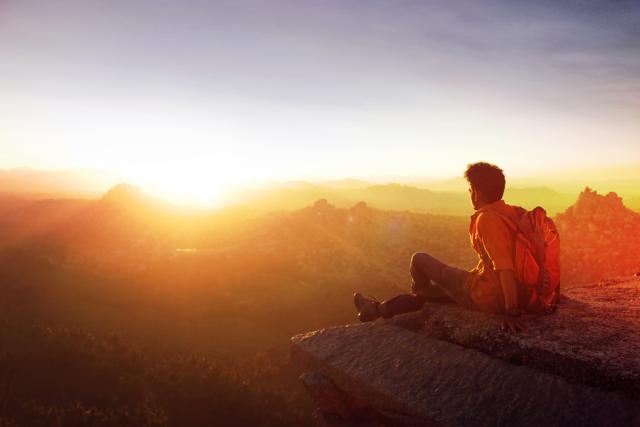
A later sunset can make the same day feel richer, freer, and strangely more hopeful.
Get The Latest News!
Don't miss our top stories and need-to-know news everyday in your inbox.
That reaction is so common that it can be easy to miss how powerful it is. When daylight stretches into the evening, parks stay busy, sidewalks fill up, and people often act as if they have been given extra time. Nothing about the clock has changed. The number of hours in the day is the same. Yet late sunsets often feel like a gift. That feeling comes from a mix of biology, culture, memory, and the way modern life is built.
Late sunsets feel like “bonus time”
One big reason people enjoy late sunsets is simple: evening daylight feels more usable than morning daylight.
For many people, the first part of the day is spoken for. Work, school, commuting, errands, and family duties often take up the morning and afternoon. If the sun is still up after those obligations end, the day feels open again. A person can go for a walk, meet a friend, sit outside, ride a bike, or just linger without feeling rushed.
That helps explain why a sunset at 8:30 p.m. can feel better than a sunrise at 5:30 a.m., even though both involve light. Early morning light arrives when many people are sleeping, getting ready, or heading somewhere they must be. Evening light arrives when choice returns.
You can see this in everyday life. Restaurants with outdoor seating get busier. Children stay at the playground longer. Joggers come out after work. Even simple chores, like watering plants or walking the dog, feel easier when done in daylight instead of darkness.
In that sense, people do not just enjoy late sunsets because they look nice. They enjoy what those sunsets seem to offer: more room to live.
The brain links light with safety and energy
Human beings are strongly shaped by light. Brightness affects alertness, mood, and the sense of what is possible. When the sun is still up, many people feel more awake and more willing to be active. Darkness often sends the opposite message. It suggests closure, slowing down, and staying in.
This response has deep roots. For most of human history, artificial light was weak, limited, or expensive. Daylight was the safest and easiest time to travel, gather, work, cook, and socialize. Night carried more risk. Even though modern cities are full of lamps, screens, and headlights, the older pattern still lingers in the body and mind.
That does not mean everyone loves bright evenings in the same way. Some people prefer the calm of early darkness. Others are naturally more active at night. Still, many people feel a lift when daylight lasts longer because the brain reads light as a sign that the day is still available.
This is also why the phrase “before dark” carries weight. It implies a deadline. Late sunsets push that deadline back, and people often experience that as relief.
Late sunsets support social life
Evening daylight makes it easier for people to be around one another.
Social plans often happen after work or school. If it is still light outside, meeting up feels simpler and more inviting. A conversation on a porch, a game in a local park, or a walk after dinner can happen with less planning. People are more likely to say yes when the setting feels bright and easy.
This matters more than it may seem. Much of daily happiness comes from small social contact, not just major events. A neighbor stopping to chat. Families staying outside after a meal. Friends choosing to walk instead of sitting indoors. Late sunsets make these moments more likely.
In many places, public life expands with evening light. Town squares stay active. Street markets do better. Waterfronts and trails draw crowds. Even in suburbs, where people often move by car, late daylight encourages a few more minutes outdoors. Those minutes add up.

There is a reason phrases like “long evening” often sound pleasant, while “it got dark so early” sounds like a complaint. One suggests possibility. The other suggests that possibilities were cut short.
Beauty matters more than people admit
Late sunsets are also enjoyable because they are beautiful, and beauty changes mood.
A sunset is one of the few shared visual events people still pause for. People who rush all day may stop to take a picture of the sky. Others slow down on a walk or look out a train window. The low light softens buildings, trees, and streets. Ordinary places can suddenly seem dramatic or peaceful.
This matters because pleasure is not always practical. People do not only like late sunsets for productivity or convenience. They like them because evening light can feel emotional. It can signal calm, romance, nostalgia, or quiet satisfaction.
Popular sayings reflect this. People talk about “golden hour” with affection. In photography and film, that light is prized because it flatters faces and landscapes. A “sunset view” is often treated as a bonus in homes, restaurants, and travel spots. These are small signs of a larger truth: people value the experience of being in beautiful light.
Culture teaches us to love long evenings
Our enjoyment of late sunsets is not only biological. It is cultural too.
Many traditions and habits place special meaning on the hours before night. Think of evening strolls, outdoor meals, festivals, sports practices, barbecues, boardwalks, and community gatherings. In many cultures, the late day is a time to gather, not just to work. When daylight stays longer, those customs become easier and more enjoyable.
Language reflects this as well. “Make a night of it” usually means stretching an experience out and enjoying it. “Still light out” often sounds like an invitation. People also speak of “chasing the sunset,” which gives the event a sense of wonder, not routine.
Modern life makes late sunsets feel especially valuable
In earlier times, daylight mostly meant time for necessary tasks. In modern life, it often means time for personal choice.
Most people spend large parts of the day inside: offices, classrooms, stores, factories, cars, buses, and homes. That can make daylight feel scarce, even when there is plenty of it overall. If someone leaves work and finds the sun still up, it can feel like they have recovered something they were missing.
This helps explain why late sunsets can have such a strong emotional effect in cities. Urban life often runs on schedules, screens, and indoor spaces. Evening daylight breaks that pattern. It pulls people outdoors and offers contrast to the controlled environment of the workday.
You can notice this in your own routine. Ask yourself: do you feel more willing to run errands, exercise, or meet people when it is light outside? Do you feel that a dark evening pushes you toward staying in, even if you were motivated earlier? For many people, the answer is yes.
That does not mean late sunsets create more actual free time. They change the feeling of time. And that feeling can influence behavior in a real way.
There can be downsides too
It is worth noting that late sunsets are not universally loved.
Some people struggle to wind down when it stays bright into the evening. Young children may resist bedtime. Adults may stay out later than they planned and lose sleep. Bright evenings can also make routines feel less stable for those who depend on clear signals that the day is ending.
This does not erase the appeal. It just shows that the pleasure of late sunsets comes with trade-offs. People enjoy them partly because they blur the edge of the day. But that same blur can make rest harder.
Recognizing this can be useful. If you love late sunsets but find yourself tired, the answer may not be to avoid the light. It may be to enjoy it on purpose, while still keeping good evening habits.
Why the feeling is so strong
Humans enjoy late sunsets because they combine several rewards at once. They offer visible beauty. They make social life easier. They suggest safety, energy, and openness. They turn the hours after obligation into something that feels personal.
Most of all, they create the sense that life has not closed down yet. Even after a long day, the world still looks available. There is still light on the street, still movement in the park, still color in the sky. That simple fact can make people feel less boxed in by the clock and more connected to the world around them.