
 ALTON - “It’s causing a bloodbath.”
Those are the words of Susan Elmendorf, a woman who found herself on the side of the road Tuesday morning carrying turtles across Highway 367.
Get The Latest News!
Don't miss our top stories and need-to-know news everyday in your inbox.
She stopped because a large turtle had been hit earlier that morning, almost causing a car accident. For the next several minutes, she and another motorist shepherded more turtles from one side of highway to the other, dodging speeding cars and construction signs.
“The turtles will keep going on that path because that’s their migratory path. They cross the road that they’ve taken for decades,” Elmendorf said. “And now all of a sudden, these turtles can’t get across, but they keep trying and they get halfway across the route and they’re just getting killed.”
The highway cuts through the Illinois and Mississippi Rivers; it’s the road that many people take to cross the Illinois and Missouri border. Elmendorf said that most of the turtles were on the Missouri side between the Phillips 66 gas station and the Clark Bridge, about a mile from downtown Alton.
On Tuesday morning, she said, the scene was gruesome. In addition to the dead animals in the road, Elmendorf said there were more turtles beside the highway “in a row, alive, not knowing what to do, just sitting there waiting to be killed.”
“You’ll probably see three or four turtles in the road alive, trying to get across,” she added. “All the things that road construction does, yeah, it’s nice and pretty and everything, but how many turtles are going to have to die?”
There has been increased road construction along Highway 367 for the past several months. Robert Cosgriff, a wildlife biologist with the U.S. Army Corps of Engineers, points out that the construction has not increased the traffic or speed at which cars drive.
“The highway is incredibly busy. It always has been,” Cosgriff said.
Within the U.S. Army Corps of Engineers, Cosgriff works with the Rivers Project Office as the manager of the Environmental Stewardship Team. They oversee over 45,000 acres of federal land around the Mississippi and Illinois Rivers.
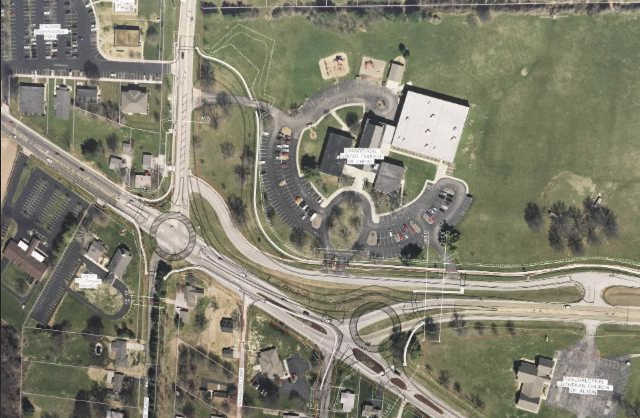
Cosgriff explained that the Corps of Engineers is currently working with the Missouri Department of Transportation (MODOT) to adjust the lanes along Highway 367. This will hopefully decrease the number of car accidents.
Additionally, MODOT hopes to raise the lower lanes near the Illinois and Missouri border, which are often underwater due to flooding. MODOT has overseen much of this construction planning and timeline.
As a biologist, Cosgriff encourages people to “slow down and pay attention” to the wildlife that might be near the roads. Not only could this save animal lives, but it would also increase the safety for workers in the area.
“I mean, that’s a construction zone,” he said. “The speed limit has been reduced.”
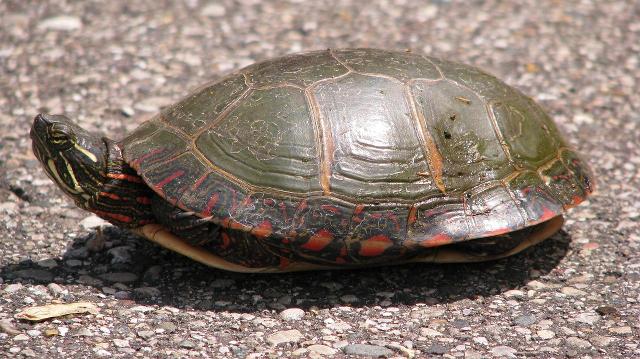
Illinois has 17 native species of turtles. The main ones in this area are likely common map turtles, eastern box turtles, eastern river cooters, false map turtles, painted turtles, red-eared sliders and snapping turtles. The painted turtle is the Illinois state reptile.
During this time of year, female turtles often cross roads in search of nesting sights. If you see a turtle in immediate danger, the Illinois Department of Natural Resources has a few tips on how to help. They encourage people to lift the turtle from the back of the shell, near the tail. Never try to grab a turtle by the tail, as this can sever its spine. Take extra precautions when moving snapping turtles. Don’t move the turtle far from where you found it, and don’t step out of your vehicle or move a turtle if your own safety is at risk.
But as both Elmendorf and Cosgriff noted, the best way to help local wildlife is to be aware while driving.
“Slow the hell down, and if you see one, try to miss it,” Elmendorf said. “It’s shameful what we’re doing to these turtles…We pride ourselves in Alton on being caring, compassionate people. This is not it.”
More like this: