This Day in Sports History: September 22
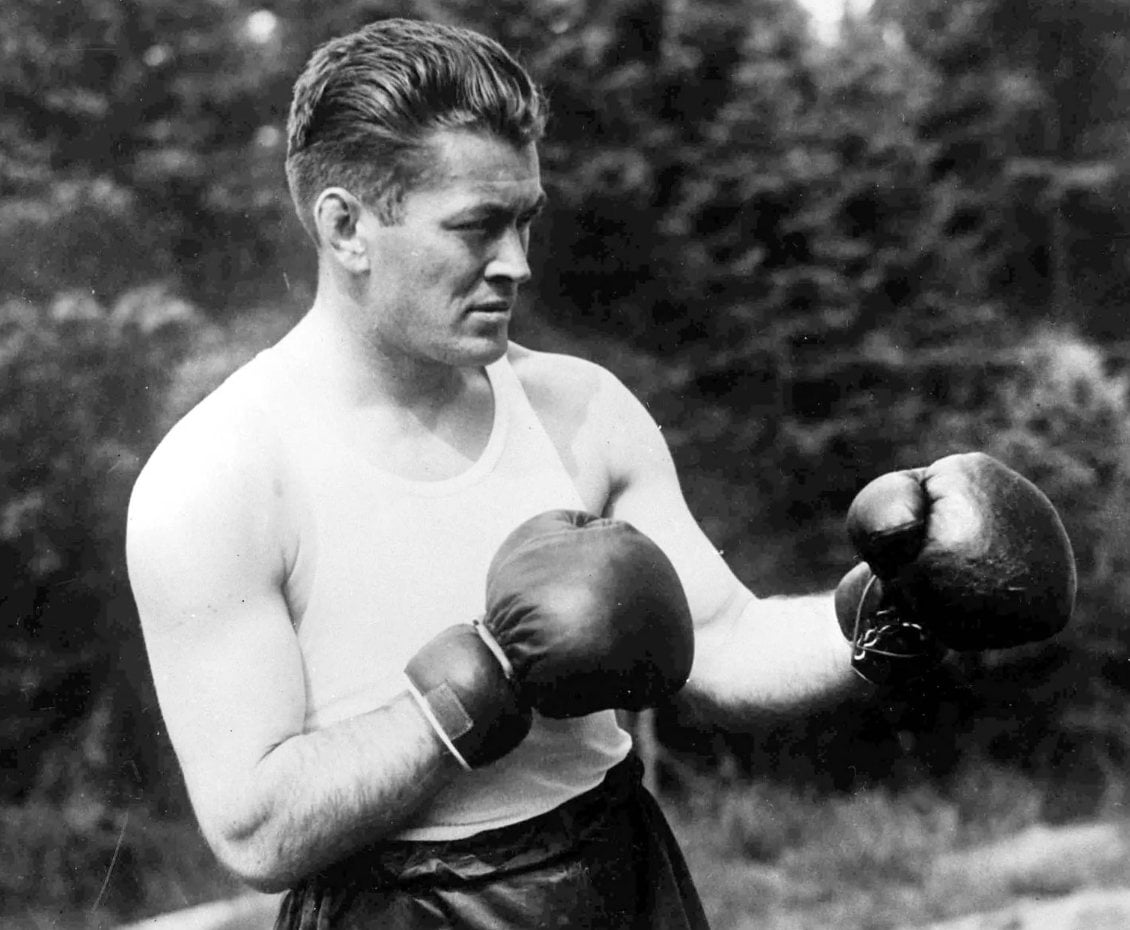
Few dates in sports carry a more enduring piece of controversy than Sept. 22, 1927, when Gene Tunney retained the heavyweight boxing championship against Jack Dempsey at Chicago’s Soldier Field. The rematch became known as the “Long Count” fight, a name that has lasted far longer than the decision itself. In the seventh round, Dempsey knocked Tunney down but did not immediately go to a neutral corner, as the rules required. The referee did not begin counting until Dempsey complied, giving Tunney valuable extra time to recover. Tunney rose, regained control and won a unanimous decision after 10 rounds. The fight mattered because it settled one of the era’s biggest rivalries, made the neutral-corner rule a lasting topic of debate and closed Dempsey’s run as a championship contender. It also gave Chicago one of the signature sporting spectacles in Soldier Field history.
Long before the lights at Soldier Field, Sept. 22 produced a golf accomplishment that remains unmatched in the U.S. Open. In 1905, Willie Anderson finished at 314 at Myopia Hunt Club in South Hamilton, Massachusetts, to beat Alex Smith by two strokes. The victory was Anderson’s third consecutive U.S. Open title and his fourth overall. No player has matched his streak of three straight U.S. Open championships. Anderson had also won in 1901, 1903 and 1904, and his performance in 1905 established a standard of consistency in golf’s national championship that has survived more than a century of changing equipment, course conditions and competition.
Get The Latest News!
Don't miss our top stories and need-to-know news everyday in your inbox.
Baseball’s most important breakthrough season also reached a landmark on this date in 1947. The Brooklyn Dodgers clinched the National League pennant on Sept. 22, earning the franchise’s first trip to the World Series since 1941. The club finished five games ahead of the St. Louis Cardinals, but its season had meaning far beyond the standings. Jackie Robinson had debuted for Brooklyn in April, breaking Major League Baseball’s color barrier and enduring relentless abuse while helping the Dodgers win the pennant. Robinson’s performance and the Dodgers’ success made the season a turning point for the sport. Brooklyn lost the World Series to the New York Yankees in seven games, yet the 1947 pennant remains inseparable from the beginning of modern baseball integration.
Chicago baseball supplied another Sept. 22 milestone in 1959. The White Sox defeated the Cleveland Indians 4-2 to clinch the American League pennant, ending a 40-year wait since the franchise’s previous league title in 1919. Air-raid sirens sounded in Chicago as the city celebrated the “Go-Go Sox,” a club built less on home-run power than speed, defense and pitching. Luis Aparicio stole 56 bases, Nellie Fox set the tone at second base and Early Wynn won 22 games. The White Sox won 94 games in all and returned Chicago’s South Side to the World Series, where the Los Angeles Dodgers prevailed in six games. Even so, the pennant gave a new generation of White Sox fans a defining September celebration.
On Sept. 22, 1972, the Summit Series took a sharp turn in Moscow. Canada entered Game 5 against the Soviet Union with a chance to recover from earlier uneven results and led 3-0 after two periods. Canada pushed the margin to 4-1 early in the third, but the Soviets scored four unanswered goals to win 5-4. The loss left Canada trailing 3-1-1 in the eight-game series and needing victories in each of the final three games to avoid defeat. That pressure helped make the comeback especially memorable. Canada won Games 6 and 7, then captured Game 8 on Paul Henderson’s famous late goal. Game 5 was painful for Canada, but it was essential context for one of international hockey’s most celebrated finishes.
Five years later, baseball delivered another remarkable Sept. 22 performance when Bert Blyleven threw a no-hitter for the Texas Rangers against the California Angels at Anaheim Stadium. Blyleven, who grew up in nearby Garden Grove, California, allowed only two baserunners in a 6-0 victory: one reached on an error and Carlos May drew a two-out walk in the ninth inning. Family and friends were in the ballpark, and an initially sparse crowd grew fully invested in the local pitcher’s pursuit of history. Blyleven’s curveball was his signature pitch throughout a Hall of Fame career that eventually included 3,701 strikeouts. The no-hitter was the only one of his career, making an already unusual homecoming an unforgettable night.
Sept. 22 also became a coaching milestone in 1991, when Don Shula earned his 300th NFL victory as the Miami Dolphins beat the Green Bay Packers 16-13. Shula reached the mark in his 29th season as an NFL head coach, after earlier leading the Baltimore Colts and then building the Dolphins into one of football’s most successful organizations. The win put Shula alongside George Halas as the only coaches at that time with 300 career victories. Shula later passed Halas and retired with 347 total wins, still the most in NFL coaching history. His record included two Super Bowl titles and the 1972 Dolphins’ perfect season. The narrow win over Green Bay therefore represented more than a round number: It was a visible measure of remarkable longevity and sustained excellence.
From Anderson’s historic U.S. Open streak to Tunney’s disputed title defense, from Chicago’s pennant celebration to a turning point in the Summit Series, Sept. 22 has repeatedly shown how a single day can hold both immediate drama and lasting consequence. Some of its moments are remembered for a final score, some for a controversy and some for what followed. Together, they form a sports history that stretches across generations and well beyond the games themselves.