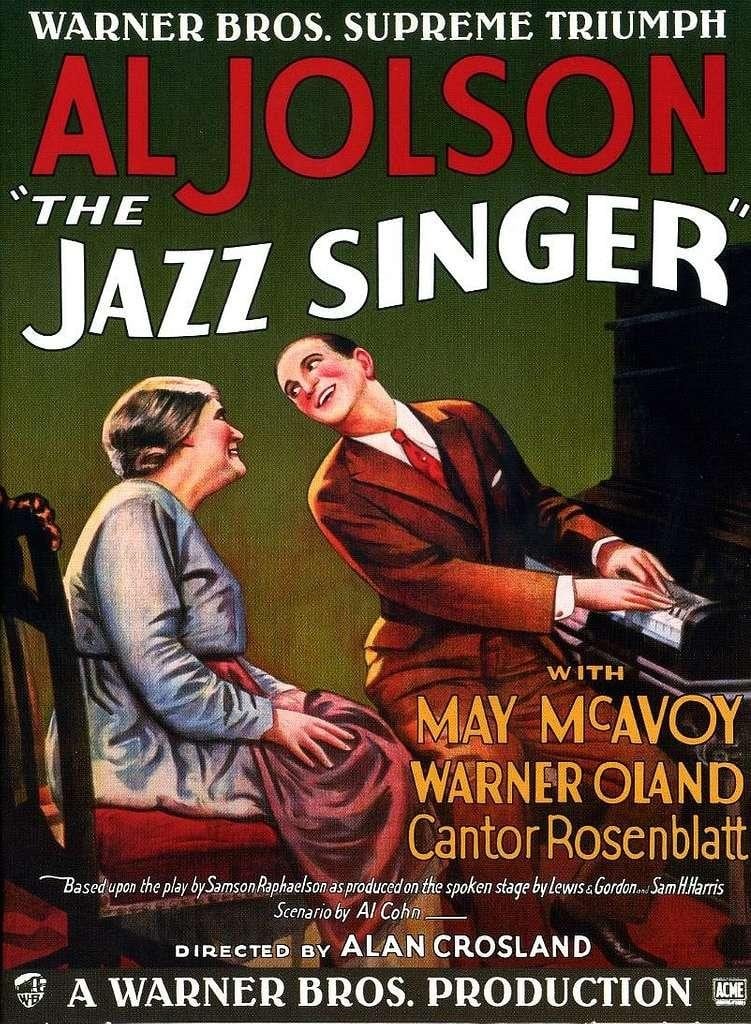
On Oct. 6, 1927, a movie premiere helped change how the world heard music. Warner Bros. introduced “The Jazz Singer,” starring Al Jolson, at its New York theater, demonstrating the commercial power of bringing a singer’s recorded voice into step with his screen performance. Looking back on Oct. 6, 2026, that evening stands as the date’s most consequential milestone: a turning point that helped make synchronized sound central to the movie business.
Get The Latest News!
Don't miss our top stories and need-to-know news everyday in your inbox.
The film was not the first motion picture accompanied by recorded sound, nor was it an entirely talking feature. Much of its storytelling still relied on the methods of silent cinema. Its breakthrough came through the combination of Jolson’s songs and passages of synchronized speech, which made a familiar stage performer seem newly present to theater audiences.
Warner Bros. used the Vitaphone system, which synchronized records with the projected film. The story followed the son of a Jewish cantor who wanted a career in popular entertainment, placing the tension between religious tradition and show business at its center. Music was not simply background decoration; it carried the conflict that gave the picture its emotional force.
The achievement also requires historical context. Jolson performed in blackface, a practice rooted in racist minstrel entertainment. Recognizing the film’s technical and industrial importance does not erase that legacy. “The Jazz Singer” belongs in music history both as a powerful demonstration of recorded performance and as a reminder that influential entertainment could reproduce harmful racial stereotypes.
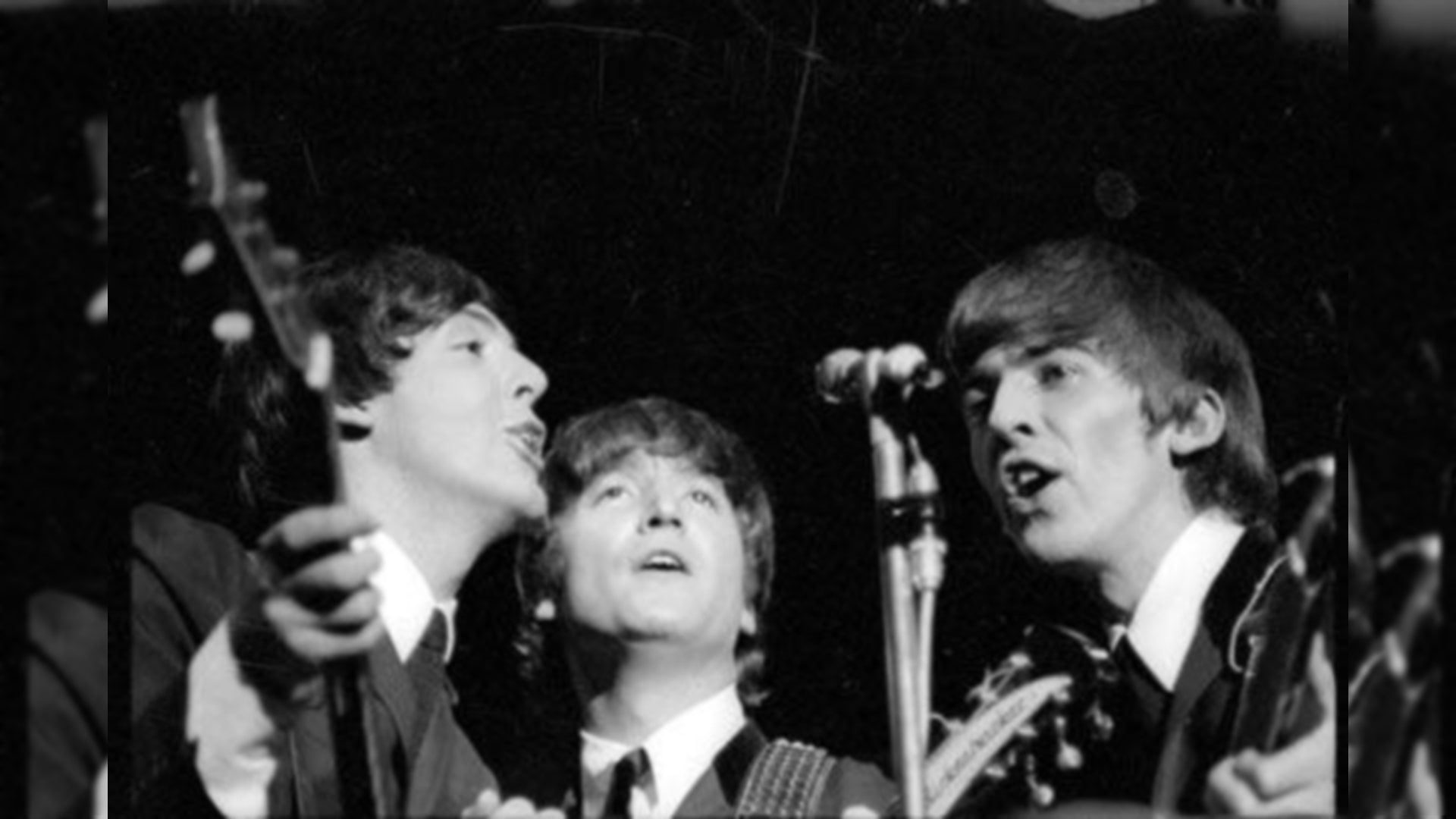
On Oct. 6, 1969, the Beatles released “Something” paired with “Come Together” as a single in the United States. Both songs came from “Abbey Road,” but the pairing carried particular importance for George Harrison: “Something” brought one of his compositions to the A-side of a Beatles single, a position previously dominated by songs credited to John Lennon and Paul McCartney.
Harrison’s ballad offered a contrast to the low-slung rhythm and enigmatic words of “Come Together.” Together, the recordings showed how much stylistic range the group could fit onto one record. The release also gave Harrison’s songwriting a prominent public platform, rather than leaving it as a discovery for listeners working through an album.
The two sides initially appeared separately on the Billboard Hot 100. They were later combined under the chart’s rules, and the single reached No. 1 on Nov. 29, 1969. That outcome reinforced the importance of the release, but its lasting significance was larger than a chart position: it documented Harrison’s emergence alongside the band’s established songwriting partnership.
On Oct. 6, 1972, Genesis released “Foxtrot” through Charisma Records. With Peter Gabriel singing and Phil Collins on drums, the band’s early progressive-rock lineup also included keyboardist Tony Banks, guitarist Steve Hackett and bassist and guitarist Mike Rutherford. This was the theatrical, exploratory Genesis, before the group’s later identity as a mainstream pop hitmaker.
The album’s centerpiece was “Supper’s Ready,” a roughly 23-minute suite that made extended composition a defining feature rather than an occasional experiment. Elsewhere, titles such as “Watcher of the Skies” and “Get ’em Out by Friday” underscored a taste for imaginative storytelling. “Foxtrot” reached No. 12 in Britain, giving music built around long forms and dramatic contrasts a substantial audience.
Ten years later, on Oct. 6, 1982, Madonna released her first commercially available single, “Everybody.” Written by Madonna and produced by New York DJ Mark Kamins, the recording grew out of the demo material that helped her secure a deal with Sire Records. Its first arena was the dance floor, not the upper reaches of the pop singles chart.
“Everybody” reached No. 3 on Billboard’s dance chart and later appeared on Madonna’s 1983 debut album. Its modestly scaled beginning is important to the larger story: before the elaborate productions and global celebrity, her recording career developed through club music. The single established a foundation in rhythm, performance and an invitation to dance that would remain central to her work.
On Oct. 6, 1986, Norwegian band a-ha released its second album, “Scoundrel Days,” while in the midst of a world tour. Rather than simply repeating the brighter pop approach of “Hunting High and Low,” the group introduced darker material that expanded the sound of its live shows.
“I’ve Been Losing You,” “Cry Wolf” and “Manhattan Skyline” became enduring parts of the band’s catalog. The album marked an important test for a group associated with immediate pop appeal: whether it could build a broader musical identity after a major breakthrough. “Scoundrel Days” answered with moodier songs and arrangements that asked listeners to look beyond the first impression.
On Oct. 6, 1995, Shakira released “Pies Descalzos” in Colombia. Her third studio album became the crucial international breakthrough of her early career, presenting a more assertive singer-songwriter after two earlier records. Its title translates as “Bare Feet,” and songs including “Estoy Aquí” and “Antología” helped establish the Spanish-language repertoire on which her wider career was built.
The record’s importance was not that it introduced an already finished global pop formula. It gave Shakira room to develop a more personal musical identity. From a sound-film premiere to an emerging Colombian songwriter’s breakthrough, Oct. 6 repeatedly marks moments when performers found a new way to be heard.