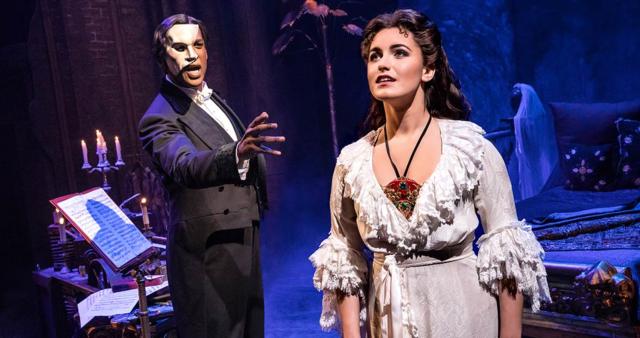

Wolfgang Amadeus Mozart’s “Don Giovanni” received its first performance in Prague on Oct. 29, 1787, introducing an opera that brought comedy, violence and moral reckoning into the same unsettling world. Its blend of entertaining theater and disturbing human behavior makes that premiere the defining milestone on a date that also brought an important American opera debut, a declaration of rock rebellion and a celebrated country-pop partnership.
Looking back on Oct. 29, 2026, the musical trail begins 239 years earlier at the theater now known as the Estates Theatre. Mozart worked with librettist Lorenzo Da Ponte on the two-act story of a predatory nobleman whose actions bring consequences he refuses to accept. Da Ponte described the work as a “dramma giocoso,” a dramatic work with comic elements. Mozart classified it as comic opera, although that label hardly captures the darkness surrounding its central character.
Get The Latest News!
Don't miss our top stories and need-to-know news everyday in your inbox.
The opera’s power lies partly in that tension: Servants, lovers and aristocrats share a musical world where jokes do not erase suffering. Mozart adapted the score for its Vienna premiere the following May, showing that even a work now treated as a monument began as living theater, shaped for particular singers and audiences. The Prague premiere established the starting point for those later versions and interpretations.
Nearly 170 years later, Oct. 29, 1956, brought Maria Callas to the Metropolitan Opera stage for the first time. She sang the title role in Vincenzo Bellini’s “Norma” on opening night of the company’s 72nd season in New York. Fausto Cleva conducted, with Mario Del Monaco as Pollione and Fedora Barbieri as Adalgisa. The occasion introduced Met audiences to an artist whose international reputation already rested on an unusually wide range of demanding roles.
It was not an uncomplicated triumph. Callas later acknowledged that she had not been at her best, and critics delivered mixed assessments, even as the audience welcomed her enthusiastically. The lasting importance of the debut was larger than a unanimous verdict on one performance. Her musical interpretation and dramatic imagination offered a compelling alternative to judging an opera singer chiefly by conventional vocal beauty.
On Oct. 29, 1965, the Who released “My Generation” as a British single. Written by guitarist Pete Townshend and produced by Shel Talmy, the recording turned youthful frustration into a direct confrontation. Roger Daltrey’s stuttering lead vocal, John Entwistle’s prominent bass playing and the band’s increasingly turbulent instrumental attack made the performance sound as impatient as its message. It eventually reached No. 2 in Britain.
The record’s importance was musical as well as cultural. Its call-and-response singing drew on rhythm and blues, while the exposed bass passages and rising intensity gave each musician a forceful role. Rather than simply describing a generation gap, the arrangement made listeners hear one. The British release came before the American single, which followed on Nov. 20; the Oct. 29 anniversary belongs specifically to its arrival in Britain.
Exactly one year later, Question Mark and the Mysterians reached No. 1 on the Billboard Hot 100 dated Oct. 29, 1966, with “96 Tears.” The teenage band from Michigan’s Saginaw-Bay City area had recorded the song in a small studio in Art Schiell’s Bay City home. Its distinctive keyboard sound helped turn a modest local recording into a national breakthrough, carrying a regional band to the top of American popular music.
The achievement also belongs to Mexican American music history: The musicians came from families of migrant farmworkers who settled in Michigan. Their success widened the picture of who was creating American rock. National touring followed, and the recording became an enduring garage-rock touchstone, demonstrating how a memorable instrumental hook and an urgent performance could compete with records made by much larger operations.
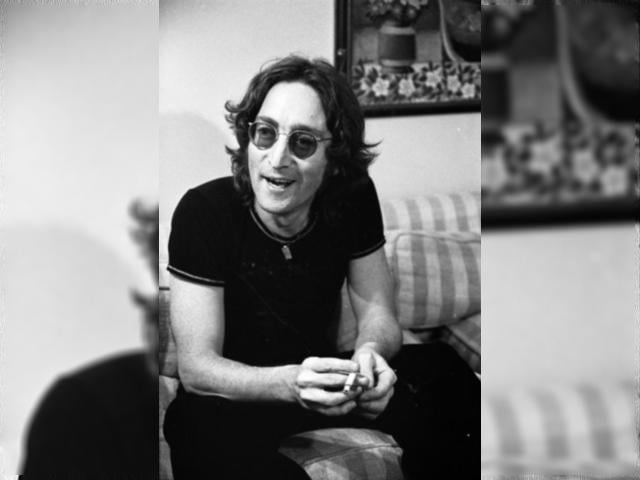
On Oct. 29, 1973, John Lennon released “Mind Games” in the United States. Recorded at New York’s Record Plant, the album placed personal reflection alongside his continuing interest in peace and social change. Lennon produced the record himself, moving away from the Phil Spector partnership associated with his earlier solo work. Its experienced session players supported songs about love, remorse and uncertainty rather than a single, narrowly political message.
The title song also arrived as a single that day, backed with “Meat City.” Lennon traced its beginnings to a song called “Make Love Not War,” explaining that the new language carried the same underlying belief. That connection makes the release more than another entry in his post-Beatles catalog: It preserved his peace-minded outlook while giving it a different musical and lyrical setting.
The chronological journey reaches Oct. 29, 1983, when Kenny Rogers and Dolly Parton’s “Islands in the Stream” began a two-week run atop the Billboard Hot 100. Written by Barry, Robin and Maurice Gibb, the duet joined two country stars through polished pop songwriting and closely matched harmonies. Rogers and Parton continued collaborating afterward, but this chart-topping recording remains a particularly clear example of how a song can connect audiences across genre boundaries without depending on those boundaries for its appeal.