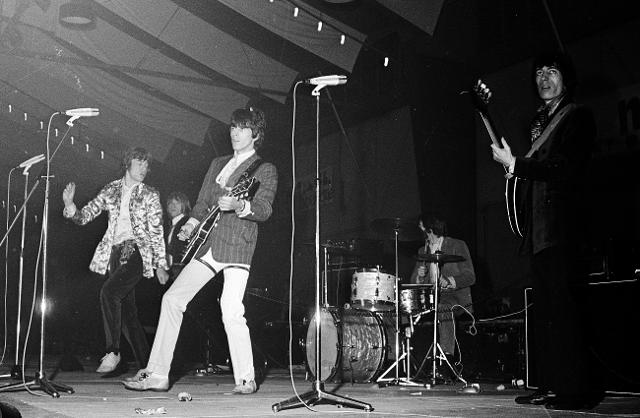
On Oct. 25, 1964, the Rolling Stones made their first appearance on “The Ed Sullivan Show,” bringing their rhythm-and-blues-driven rock to one of American television’s most influential stages. The performance helped establish a lasting place for the band in the British Invasion, while the audience’s reaction revealed how thoroughly young listeners were changing the sound and atmosphere of mainstream entertainment. It remains a defining milestone to revisit on Oct. 25, 2026.
The Stones performed “Around and Around” and “Time Is on My Side.” Their appearance placed a group cultivating a rebellious image inside a variety-show format designed to entertain the whole family. Sullivan’s program could bring sharply different performers before the same audience, and that evening also included comedians Stiller and Meara and violinist Itzhak Perlman. Rock music was not replacing everything else on the broadcast; it was demanding room beside it.
Get The Latest News!
Don't miss our top stories and need-to-know news everyday in your inbox.
Screaming fans repeatedly tested Sullivan’s patience. The host expressed displeasure with the band’s appearance, but the relationship did not end there: The Stones ultimately appeared on his show six times. The lasting story was not a permanent ban or a single confrontation. It was the accommodation between a powerful television institution and a band whose youthful audience could no longer be treated as a passing curiosity.
Two years later, on Oct. 25, 1966, Miles Davis and his quintet recorded “Footprints” and “Gingerbread Boy” at Columbia’s 30th Street Studio in New York. The session completed the two days of recording behind “Miles Smiles,” an important document of Davis’ second great quintet. Trumpeter Davis worked with tenor saxophonist Wayne Shorter, pianist Herbie Hancock, bassist Ron Carter and drummer Tony Williams, a lineup whose musical conversations became central to his acoustic recordings of the period.
The significance lay in the interaction as much as the individual solos. Davis’ official album history describes “Miles Smiles” as the recording on which the quintet established its identity, with musicians continually listening and responding to one another. The result offered an alternative to treating the rhythm section as a fixed foundation beneath a featured horn player: The whole ensemble helped determine where the music went.
Released in 1967, the album made those exchanges available beyond the studio. Decades later, Columbia/Legacy returned to the sessions for “Freedom Jazz Dance: The Bootleg Series, Vol. 5,” pairing finished performances with previously unreleased studio material. That later examination underscored why the October recording dates mattered: They preserved not only accomplished performances but also the working methods of an unusually responsive jazz ensemble.
On Oct. 25, 1994, Madonna released “Bedtime Stories,” her sixth studio album. Working with producers including Babyface, Dallas Austin, Dave “Jam” Hall and Nellee Hooper, she moved toward a more mainstream sound than on “Erotica,” drawing together pop, R&B and hip-hop influences. The album showed how an established pop star could change musical direction through collaboration without abandoning a recognizable voice.
Its range extended beyond a straightforward collection of ballads. Björk co-wrote “Bedtime Story,” while “Human Nature” addressed the controversies surrounding Madonna’s recent work. Those songs gave the record an experimental and assertive side alongside its warmer material. Rather than functioning simply as a retreat from provocation, the album balanced accessibility with a continued insistence on artistic independence.
The approach produced substantial results. “Secret” reached No. 3 on the Billboard Hot 100, and “Take a Bow” spent seven weeks at No. 1 in 1995. Those later achievements were not events of Oct. 25 itself, but they explain the importance of the release: “Bedtime Stories” became a successful reinvention, with songs that sustained Madonna’s presence across changing pop and R&B audiences.
On Oct. 25, 1996, the first Ozzfest opened in Phoenix, beginning a two-show experiment that helped reshape the American heavy-metal festival circuit. A second event followed the next day in Devore, California. Ozzy Osbourne headlined a bill that included Slayer, Danzig, Sepultura, Biohazard and Fear Factory, bringing several generations and approaches to heavy music into one event.
Sharon Osbourne organized the shows after efforts to place Ozzy on Lollapalooza’s lineup were rebuffed. The response was to build a separate platform rather than wait for acceptance from an established alternative-rock festival. Ozzfest subsequently developed into a major recurring gathering, demonstrating that metal’s audience could support an event organized around its own musical community.
On Oct. 25, 2019, Kanye West released “Jesus Is King,” his ninth solo studio album, alongside the theatrical release of an IMAX film bearing the same title. The project put Christian themes and gospel music at the center of his work, turning a major hip-hop release into an explicitly faith-focused recording.
The album’s collaborators included the Sunday Service Choir, gospel singer Fred Hammond, rap duo Clipse and saxophonist Kenny G. Their presence connected gospel performance, rap and instrumental pop within the same short collection. “Jesus Is King” later won the 2021 Grammy for best contemporary Christian music album, giving the Oct. 25 release a lasting place in the intersection of mainstream hip-hop and religious music.