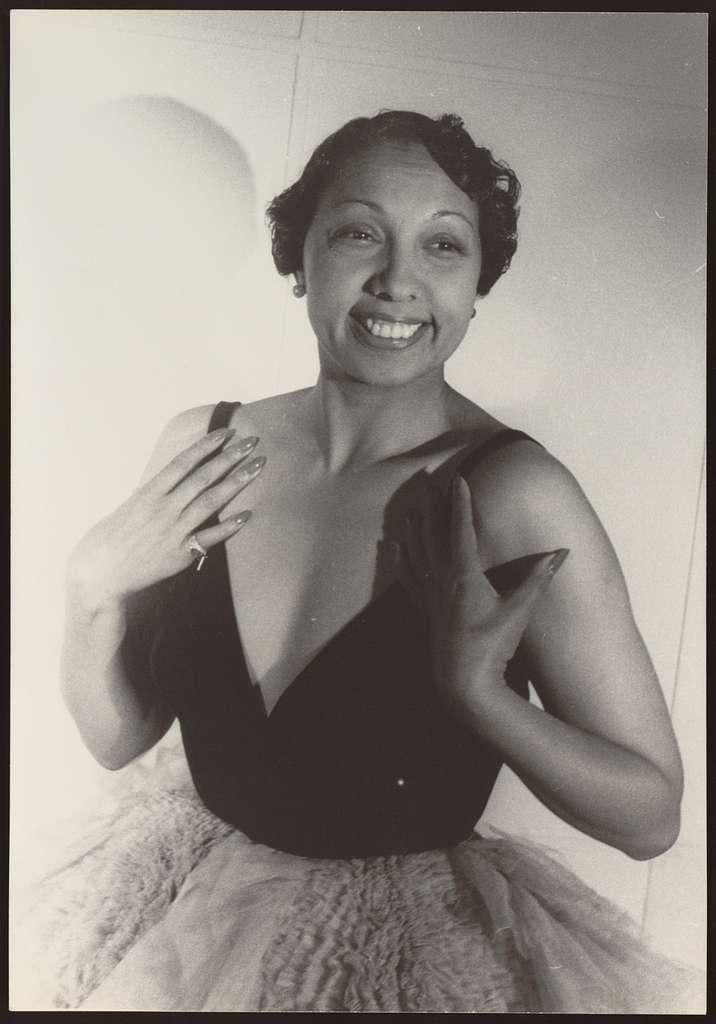
A performer born in St. Louis helped change the face of European entertainment on Oct. 2, 1925. Josephine Baker made her Paris debut in “La Revue nègre” at the Théâtre des Champs-Élysées, beginning a breakthrough that brought a Black American artist extraordinary international visibility. For Riverbend readers looking back on music history this Oct. 2, 2026, Baker’s appearance provides a local connection to a turning point in the global reach of American music and dance.
Get The Latest News!
Don't miss our top stories and need-to-know news everyday in your inbox.
The production arrived amid French enthusiasm for American jazz. Its all-Black cast brought musicians and dancers before Parisian audiences, with Baker quickly becoming its sensation. Her Charleston and expressive physical performance made her more than a supporting attraction: They helped establish the stage personality that would make her an international star. The opening connected American Black performance traditions with a European audience eager for a new kind of entertainment.
That success also carried contradictions. The revue presented Black talent while drawing on racial stereotypes and European fantasies about Black identity. Baker’s achievement was not evidence that prejudice had disappeared. Rather, she built a remarkable career within that difficult setting. She later became a singer, actress, French Resistance participant and civil rights activist, giving her fame a significance that reached well beyond the music hall.
On Oct. 2, 1970, Pink Floyd released “Atom Heart Mother” in Britain. The album would become the group’s first British No. 1, showing that an ambitious, unconventional recording could find a substantial audience. Instead of building the record around a succession of compact singles, the band devoted its entire first side to the title composition, a collaboration with composer Ron Geesin.
Geesin wrote brass, choir and cello material over the band’s recorded foundation. The result treated those forces as central parts of the composition, not simply decoration around a rock song. The second side offered shorter pieces, including “If,” “Summer ’68” and “Fat Old Sun,” before the sound experiment “Alan’s Psychedelic Breakfast.” In that closing track, even the preparation of a meal became material for a stereo recording.
A different kind of collaboration took place on Oct. 2, 1982, when Peter Gabriel reunited with Genesis at the Milton Keynes Bowl in England. The benefit concert, known as Six of the Best, was organized to address debts from the first WOMAD festival. Former Genesis guitarist Steve Hackett also joined the performance, making the event an unusual gathering of musicians whose careers had moved in separate directions.
The occasion was not the announcement of a permanent reunion. Its immediate purpose was practical: Gabriel’s former colleagues were helping support a festival venture that had suffered serious financial losses. In a contemporary interview, Gabriel acknowledged that financial need, rather than a new artistic plan for Genesis, had brought the reunion about. That distinction made the concert more than an exercise in nostalgia.
Its wider importance lay in the project it supported. WOMAD brought performers from different musical cultures together, and its first festival included artists ranging from a Chinese song-and-dance troupe to Simple Minds and Gabriel. The reunion linked the drawing power of an established rock band to an effort to introduce audiences to music beyond familiar commercial categories.
Oct. 2, 1995, produced several sharply different releases. Oasis issued its second album, “(What’s the Story) Morning Glory?,” a record that helped turn the group’s British success into an international breakthrough. Recorded at Rockfield Studios in Wales and produced by Owen Morris and Noel Gallagher, it included “Wonderwall,” “Don’t Look Back in Anger” and “Champagne Supernova.”
The album entered the British chart at No. 1 and accumulated 10 weeks in the top position. Its track list also included the British chart-topping singles “Some Might Say” and “Don’t Look Back in Anger.” Those results mattered beyond an opening-week celebration: A single album supplied multiple songs that sustained the band’s presence and helped define its public identity.
Iron Maiden began a new recording chapter that same day with “The X Factor,” its first album featuring singer Blaze Bayley. The change put a new voice at the center of an established heavy metal band. Rather than avoiding long-form material, the group opened with “Sign of the Cross,” a composition running more than 11 minutes.
Produced by Steve Harris and Nigel Green, the album also included “Lord of the Flies” and “Man on the Edge.” Bayley contributed to the songwriting, including a shared credit with Janick Gers on “Man on the Edge.” His role therefore extended beyond interpreting existing material: The release introduced him as a creative participant in the band’s next phase.
Another Oct. 2, 1995, release crossed a different musical boundary. Nick Cave and the Bad Seeds teamed with Kylie Minogue for “Where the Wild Roses Grow.” The duet placed the two singers inside a dark fictional story, told from the perspectives of a woman and the man who kills her. It later appeared on the Bad Seeds’ album “Murder Ballads.”
The collaboration earned song of the year, single of the year and best pop release at the 1996 ARIA Awards. That recognition gave an unsettling narrative song a prominent place in Australia’s mainstream music honors. It closed this date’s sequence of milestones with another example of artists finding a new audience by working beyond the expectations attached to them.