
This Day in History: September 30, 2026
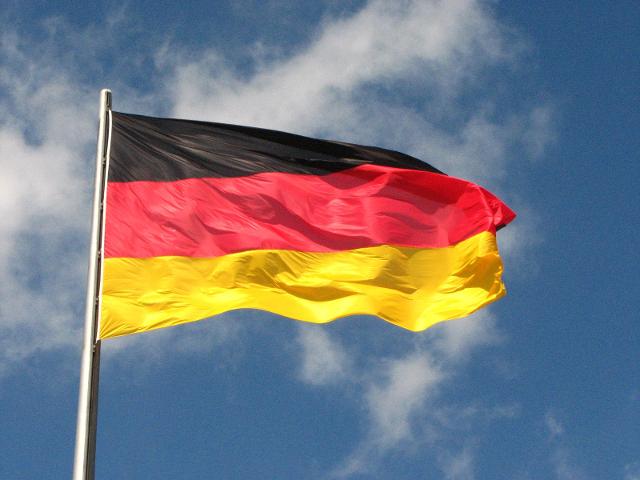
On September 30, 1938, Britain, France, Germany, and Italy concluded the Munich Agreement, allowing Nazi Germany to take control of the Sudetenland, a border region of Czechoslovakia. Czechoslovak representatives were not included in the negotiations that determined their country’s future. British and French leaders hoped the agreement would prevent another European war; instead, it weakened Czechoslovakia and failed to stop further German expansion. Less than a year later, Europe was at war.
Munich remains one of the most consequential events associated with September 30. Its lasting importance lies in the questions it raises about diplomacy, national sovereignty, and whether concessions can restrain a government committed to expansion.
Major Historical Events
1791 — Mozart’s The Magic Flute premieres
Long before September 30 became associated with diplomatic crisis, it marked an important moment in musical theater. Wolfgang Amadeus Mozart’s The Magic Flute premiered at the Theater auf der Wieden in Vienna, with Mozart conducting.
Get The Latest News!
Don't miss our top stories and need-to-know news everyday in your inbox.
Written with theater manager and librettist Emanuel Schikaneder, the opera combined spoken dialogue, popular comedy, elaborate stage effects, and demanding music. Its story of trials, loyalty, and enlightenment appealed to audiences beyond the courtly circles often associated with opera. Mozart died just over two months later, but the work became one of the most frequently performed operas in the world.
1846 — Ether helps make painless dentistry possible
In Boston, dentist William T. G. Morton used ether while extracting a patient’s tooth. The procedure was an important step toward the broader acceptance of surgical anesthesia.
Morton was not the first person to explore anesthesia: others, including Crawford Long and Horace Wells, had already used or investigated substances to reduce pain. His widely witnessed hospital demonstration followed on October 16. Together, these developments helped transform surgery from an ordeal constrained by severe pain into a field capable of increasingly complex operations.
1938 — The Munich settlement redraws Central Europe
The agreement highlighted at the opening emerged from Adolf Hitler’s demands over the Sudetenland, home to many German-speaking people and much of Czechoslovakia’s border defenses. Signed in the early hours of September 30, the document itself bore the date September 29.
Britain and France accepted German annexation rather than risk immediate war. Germany occupied the remaining Czech lands in March 1939, while Slovakia became a separate state closely dependent on Berlin. Munich subsequently became central to historical discussion of appeasement, although understanding the decision also requires remembering the deep fear of another war after the losses of World War I.
1949 — The Berlin Airlift ends
Another European confrontation reached a different outcome when the Berlin Airlift officially ended. Beginning in June 1948, Western aircraft had supplied West Berlin after the Soviet Union blocked its main land and water access routes from the western occupation zones.
The blockade ended in May 1949, but flights continued through September to build reserves and ensure reliable supplies. The operation delivered more than two million tons of goods and demonstrated that a large civilian population could be sustained by air. It also reinforced Berlin’s place at the center of the developing Cold War.
1960 — The Flintstones reaches television audiences
American television introduced The Flintstones, an animated series about Stone Age families living with recognizable modern concerns: work, money, neighbors, and household life.
Its significance extended beyond its jokes and prehistoric appliances. The program showed that animation could support a successful prime-time series aimed at a broad audience, rather than appearing mainly in short films or children’s programming. International broadcasts later made its characters familiar far beyond the United States.
1965 — A crisis begins in Indonesia
During the night of September 30 and into October 1, a group calling itself the September 30 Movement abducted and killed senior Indonesian army officers. The movement’s leadership, motives, and wider connections remain subjects of historical debate.
Major General Suharto suppressed the movement, and the army blamed the Indonesian Communist Party. A sweeping campaign of killings and imprisonment followed, targeting communists, suspected sympathizers, and others. Hundreds of thousands died. The crisis weakened President Sukarno and opened the way for Suharto’s long rule, profoundly changing Indonesia’s political life and international relationships.
1966 — Botswana becomes independent
The former British protectorate of Bechuanaland became the independent Republic of Botswana, with Seretse Khama as its first president.
The new country faced limited infrastructure, widespread poverty, and dependence on its southern African neighbors. Diamond development later transformed its economy, while sustained civilian government distinguished its political history. Independence marked both the achievement of self-government and the beginning of difficult decisions about development, public institutions, and the distribution of national wealth.
1968 — Boeing unveils the 747
At its factory in Everett, Washington, Boeing rolled out the first 747. The aircraft did not make its first flight until February 1969, but its public unveiling revealed the scale of a new generation of passenger aviation.
Developed as airlines anticipated rising demand, the wide-body jet could carry far more passengers than most existing airliners. After entering commercial service in 1970, it helped expand long-distance travel and became an important cargo aircraft as well.
Notable Births
1207 — Jalal al-Din Rumi
The Persian-language poet and Sufi teacher Rumi was born on this date. He spent much of his later life in Konya, in present-day Türkiye. His poetry explored love, spiritual longing, and the relationship between human experience and the divine. Rooted in Islamic learning and Persian literary culture, his work has reached readers across many languages and traditions.
1870 — Jean Perrin
French physicist Jean Perrin helped establish that atoms and molecules were physical realities rather than merely useful theoretical ideas. His studies of Brownian motion—the irregular movement of tiny particles suspended in a fluid—provided strong experimental evidence for atomic theory. He received the Nobel Prize in Physics in 1926.
1921 — Deborah Kerr
Born in Scotland, Deborah Kerr became a leading actor in British and American cinema. Films including Black Narcissus, From Here to Eternity, and The King and I demonstrated her range. Her career connected British filmmaking with Hollywood’s expanding international audience.
1980 — Martina Hingis
Swiss tennis player Martina Hingis was born in Košice, then part of Czechoslovakia. In 1997, she became the youngest women’s singles world number one. Her anticipation, placement, and tactical skill brought major singles titles and later sustained success in doubles and mixed doubles.
Notable Deaths
1955 — James Dean
Actor James Dean died in a car crash at age 24. His brief film career, especially East of Eden, Rebel Without a Cause, and Giant, left a lasting mark on screen portrayals of youthful conflict and vulnerability. Two of those films were released after his death.
1985 — Charles F. Richter
American seismologist Charles F. Richter died at 85. Working with Beno Gutenberg, he developed the earthquake magnitude scale introduced in 1935. Although modern seismology often uses other magnitude measures, his name remains closely associated with efforts to measure and explain earthquakes.
2020 — Quino
Argentine cartoonist Joaquín Salvador Lavado, known as Quino, died at 88. His comic strip Mafalda used a questioning child’s perspective to examine family life, inequality, war, and everyday contradictions. Its humor found a lasting audience throughout Latin America and beyond.
September 30 brings together diplomacy and independence, scientific evidence and artistic imagination.