This Day in History: October 3, 2026
Major Historical Events
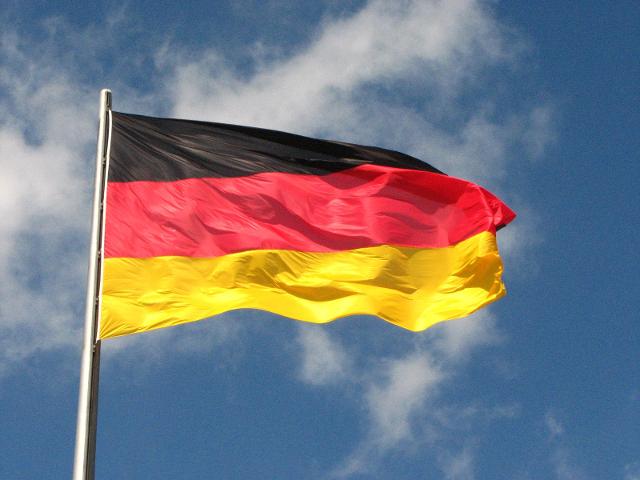
1990: Germany reunites after decades of division
Germany became one country again on October 3, 1990, ending more than four decades of separation between East and West. East Germany’s five reestablished states joined the Federal Republic of Germany, and Berlin was reunited. For families divided by borders and different political systems, reunification brought the possibility of building a shared future.
The division had grown out of Germany’s defeat in World War II and the rivalry between the Soviet Union and the Western Allies. Two German states emerged in 1949. The opening of the Berlin Wall in November 1989, followed by elections and international negotiations, made reunification possible. An agreement with the four former occupying powers settled the external conditions for a united Germany.
Get The Latest News!
Don't miss our top stories and need-to-know news everyday in your inbox.
Reunification became a defining milestone in the end of the Cold War. It changed Europe’s political map and brought major economic and social adjustments, especially in the former East Germany. October 3 remains Germany’s national holiday, a reminder that removing a border can happen faster than bringing institutions, economies, and communities together.
To place that milestone alongside the date’s other anniversaries, the historical record begins much earlier.
1932: Iraq enters the League of Nations
Iraq joined the League of Nations on October 3, 1932, formally ending the British mandate established after World War I. The country had emerged from former Ottoman territories under a monarchy headed by King Faisal I.
Admission recognized Iraq as an independent state, although Britain retained considerable influence through treaty arrangements, military facilities, and economic interests. Independence therefore marked a major transition rather than a complete break with outside power. Iraq’s experience reflected the wider struggle of former Ottoman territories to establish new states within an international order still shaped by European empires.
1935: Italy invades Ethiopia
Three years later, Italian forces invaded Ethiopia from Eritrea, opening a war intended to expand Benito Mussolini’s African empire. Ethiopia was a League of Nations member and one of the few African countries to have maintained independence during the era of European colonial expansion.
The League condemned the invasion and imposed sanctions, but these failed to stop Italy’s campaign. Italian forces captured Addis Ababa in May 1936; Ethiopian resistance continued, and Emperor Haile Selassie returned in 1941 with Allied support. The invasion, which included Italy’s use of chemical weapons, exposed the limits of international collective security before World War II.
1942: A rocket reaches a new frontier
At Peenemünde, Germany, an A4 rocket—the design later deployed as the V-2—completed its first fully successful test flight on October 3, 1942. It reached roughly 85 kilometers in altitude, demonstrating capabilities that helped establish the technical foundations of later spaceflight.
That achievement cannot be separated from its wartime purpose. V-2 rockets were subsequently used against cities, killing thousands, while their production relied heavily on concentration-camp prisoners working under lethal conditions. After the war, German rocket technology and personnel influenced both American and Soviet missile and space programs.
1952: Britain tests its first atomic weapon
Britain became the third country to test a nuclear weapon when Operation Hurricane took place near the Montebello Islands off Western Australia. The device was detonated inside a ship, partly to study the effects of a nuclear explosion in a harbor.
British leaders had pursued an independent weapons program amid postwar security concerns and restrictions on American nuclear cooperation. The test expanded the number of nuclear-armed states and began a series of British tests in Australia whose environmental and health consequences became subjects of lasting investigation and debate.
1955: Two children’s television landmarks debut
American television introduced both Captain Kangaroo and The Mickey Mouse Club on October 3, 1955. Their formats differed: Bob Keeshan’s Captain Kangaroo emphasized gentle storytelling and learning, while Disney’s program combined young performers, music, and serialized entertainment.
Both became influential examples of programming made specifically for children. Their success showed how television was becoming a central part of family routines and a powerful medium for entertainment, education, and commercial promotion.
1981: The Northern Ireland hunger strike ends
A hunger strike by republican prisoners at the Maze Prison ended on October 3, 1981. The prisoners had sought changes including the right to wear their own clothes and exemption from prison work, demands connected to their claim to political rather than ordinary criminal status.
Ten prisoners died during the protest, including Bobby Sands, who was elected to the British Parliament while on hunger strike. The British government did not formally restore political status, although later changes addressed several practical grievances. The protest deepened divisions during the Troubles and strengthened the role of electoral politics within the republican movement.
1993: Fighting begins in Mogadishu
A United States operation to capture senior associates of Somali faction leader Mohamed Farrah Aidid developed into a prolonged battle in Mogadishu on October 3–4, 1993. After two American Black Hawk helicopters were shot down, rescue efforts drew troops into intense urban combat.
Eighteen American service members and a Malaysian peacekeeper were killed; Somali deaths numbered in the hundreds, although estimates vary considerably. The battle occurred during an international intervention that had begun with efforts to secure famine relief. It prompted a reassessment of American involvement and became an important case study in the risks of military operations within humanitarian missions.
Notable Births
1854: William Crawford Gorgas
American physician William Crawford Gorgas helped control yellow fever and malaria in Havana and the Panama Canal Zone. Applying discoveries about mosquito transmission, his teams improved sanitation and reduced disease, making large construction projects and everyday life safer. His work demonstrated the practical value of organized public health.
1925: Gore Vidal
Born into a politically connected American family, Gore Vidal became a novelist, essayist, and public commentator. Historical novels such as Burr and Lincoln explored power and national memory, while his essays made him a prominent, often argumentative voice in twentieth-century literary culture.
1951: Kathryn D. Sullivan
Geologist and astronaut Kathryn Sullivan became the first American woman to walk in space in 1984. She later served in senior oceanic and atmospheric science roles. In 2020, she also became the first woman to reach Challenger Deep, the deepest known part of the ocean.
1981: Zlatan Ibrahimovic
Swedish footballer Zlatan Ibrahimovic earned international recognition through his technical skill, inventive goals, and success with major European clubs. As Sweden’s record men’s international goalscorer, he became one of the country’s best-known sporting figures.
Notable Deaths
1226: Francis of Assisi
Francis of Assisi died on October 3, although his feast day is observed on October 4. His commitment to poverty, service, and humility inspired the Franciscan movement and left a lasting influence on Christianity, religious art, and attitudes toward the natural world.
1867: Elias Howe
Inventor Elias Howe helped establish the practical lockstitch sewing machine. He was not its sole inventor, but his patented improvements and subsequent legal victories shaped an industry that transformed clothing manufacture and household sewing.
1896: William Morris
British designer, writer, and socialist William Morris helped shape the Arts and Crafts movement. His textiles, books, and decorative work emphasized skilled craftsmanship, while his writing questioned the social costs of industrial production. His influence remains visible in design and historic preservation.
Across these October 3 anniversaries, borders change, technologies advance, and individuals reshape public life.