This Day in History: October 13, 2026
On October 13, 1307, officials acting on the orders of King Philip IV of France arrested members of the Knights Templar across his kingdom. The coordinated operation struck one of medieval Europe’s most powerful religious and military organizations. Founded to protect Christian pilgrims in the Holy Land, the Templars had become landowners, bankers, and an important part of the Crusading world. Their arrest began a process that ended with the order’s dissolution. The episode remains significant because it shows how royal power, religious authority, and financial interests could combine to bring down an international institution.
Major Historical Events
1307 — France moves against the Knights Templar
Philip IV’s government accused the Templars of heresy and other offenses. Many prisoners were tortured, making their confessions unreliable evidence. The king owed money to the order, and its wealth and independence formed part of the background to the confrontation, although historians continue to debate his motives.
Get The Latest News!
Don't miss our top stories and need-to-know news everyday in your inbox.
Pope Clement V eventually suppressed the order in 1312 under intense political pressure. Its last grand master, Jacques de Molay, was executed in 1314. The arrests became a lasting symbol of the dangers faced by institutions caught between competing centers of power.
1773 — Charles Messier discovers the Whirlpool Galaxy
While observing the sky, French astronomer Charles Messier discovered the object now known as the Whirlpool Galaxy, or M51. He recorded it in his catalog of objects that could be mistaken for comets.
Messier did not know that M51 was a separate galaxy far beyond the Milky Way. Later observations revealed its spiral structure, and modern astronomy has used it to study star formation and interactions between galaxies. A catalog intended to help comet hunters became an enduring guide to the wider universe.
1843 — B’nai B’rith is founded in New York
Twelve German Jewish immigrants established B’nai B’rith as a mutual-aid organization. Its early work addressed practical needs, including assistance for sick members, widows, and orphans, while creating connections within a growing immigrant community.
The organization later expanded internationally and supported education, humanitarian relief, and efforts against antisemitism. Its founding belongs to a broader nineteenth-century history of communities building voluntary institutions to provide help that public services often did not offer.
1884 — An international conference selects Greenwich
Delegates at the International Meridian Conference in Washington, D.C., voted to recommend the meridian passing through Greenwich, England, as the world’s reference line for longitude. The vote was not unanimous: France and Brazil abstained, while San Domingo, now the Dominican Republic, opposed it.
Expanding shipping networks, railways, and communications had increased the need for shared geographic and time references. The decision helped establish an international framework for navigation and timekeeping, although countries adopted its recommendations at different speeds.
1923 — Ankara becomes Turkey’s capital
Turkey’s Grand National Assembly designated Ankara as the country’s capital, replacing Istanbul. The decision came shortly before the proclamation of the Republic of Turkey on October 29.
Ankara had served as the center of the nationalist movement during the Turkish War of Independence. Making it the capital reflected the new government’s break with the Ottoman imperial administration and its effort to build a state centered in Anatolia. The city subsequently grew into Turkey’s administrative hub.
1943 — Italy declares war on Germany
Following the fall of Benito Mussolini and an armistice with the Allies, the Italian royal government declared war on Germany. German forces had already occupied much of Italy, while Mussolini headed a German-supported regime in the north.
The declaration made Italy a co-belligerent fighting alongside the Allies, rather than a full Allied partner. It did not end the country’s conflict: fighting between opposing armies, resistance groups, and rival Italian authorities continued until 1945.
1964 — Voskhod 1 returns to Earth
The Soviet spacecraft Voskhod 1 landed after carrying three people into orbit, the first spaceflight with a multiperson crew. Its passengers were cosmonaut Vladimir Komarov, engineer Konstantin Feoktistov, and physician Boris Yegorov.
Their flight expanded human space travel beyond single-pilot missions and brought scientific specialists aboard. The cramped spacecraft carried the crew without spacesuits, illustrating both the technical progress and the risks involved in the early competition to reach new space milestones.
1972 — A passenger aircraft crashes in the Andes
Uruguayan Air Force Flight 571, carrying a rugby team and accompanying passengers, crashed in the Andes during a journey to Chile. Survivors faced severe cold, injuries, avalanches, and dwindling supplies.
Sixteen people were eventually rescued in December after Fernando “Nando” Parrado and Roberto Canessa crossed the mountains and found help. The survivors’ accounts, including their decision to eat the bodies of those who had died, became widely known through books and films. The disaster remains an important account of endurance, cooperation, and survival under extreme conditions.
2010 — Chile’s trapped miners reach the surface
Rescuers completed the extraction of 33 miners trapped underground at the San José mine in northern Chile. A collapse on August 5 had left them isolated for 69 days.
Engineers drilled a rescue shaft, and each miner was lifted in a specially designed capsule. Chilean teams worked with international specialists on drilling, health, and communications. The successful rescue drew worldwide attention and renewed discussion of mining safety and emergency preparation.
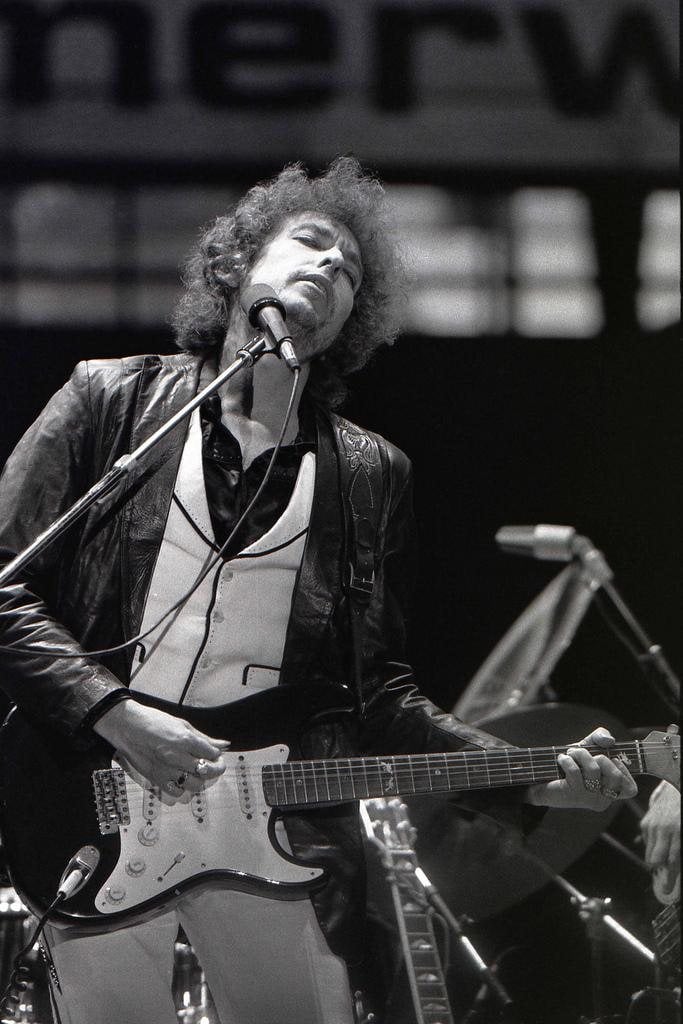
2016 — Bob Dylan receives the Nobel Prize in Literature
The Swedish Academy announced that American songwriter Bob Dylan had won the Nobel Prize in Literature for creating new poetic expressions within the American song tradition.
His selection brought renewed attention to the relationship between written literature and words performed through music. Songs shaped by folk, blues, and other traditions had reached audiences far beyond the usual readership of poetry, widening discussion of how literary achievement can be recognized.
Notable Births
Born on October 13, 1821, German physician Rudolf Virchow helped establish cellular pathology: the study of disease through changes in cells. He also argued that living conditions affected public health, linking medical practice with sanitation and social conditions.
Margaret Thatcher, born in 1925, became Britain’s first woman prime minister and served from 1979 to 1990. Her governments reshaped economic policy through privatization, changes to trade-union law, and a reduced state role in several industries. Those policies produced lasting changes and continuing debate.
Pakistan’s Nusrat Fateh Ali Khan was born in 1948. A leading performer of qawwali, a devotional musical tradition associated with Sufism, he introduced its powerful vocal style to wider international audiences through recordings, concerts, and collaborations.
Australian swimmer Ian Thorpe, born in 1982, won five Olympic gold medals. His achievements in freestyle events made him one of the defining swimmers of his generation and a prominent figure in Australian sporting history.
Notable Deaths
Roman emperor Claudius died on October 13, AD 54. His reign included the conquest of Britain and major administrative and infrastructure projects. Ancient accounts alleged that he was poisoned, but the circumstances remain uncertain. Nero succeeded him.
Television host Ed Sullivan died in 1974. His long-running American variety program introduced broad audiences to comedians, dancers, and musicians, including influential performances by Elvis Presley and the Beatles.
Thailand’s King Bhumibol Adulyadej died in 2016 after reigning for 70 years. His public role and development projects made him a central national figure through decades of political and economic change. His death began an extended period of mourning.
Across these different eras, October 13 connects institutional upheaval, scientific discovery, artistic expression, and human resilience.