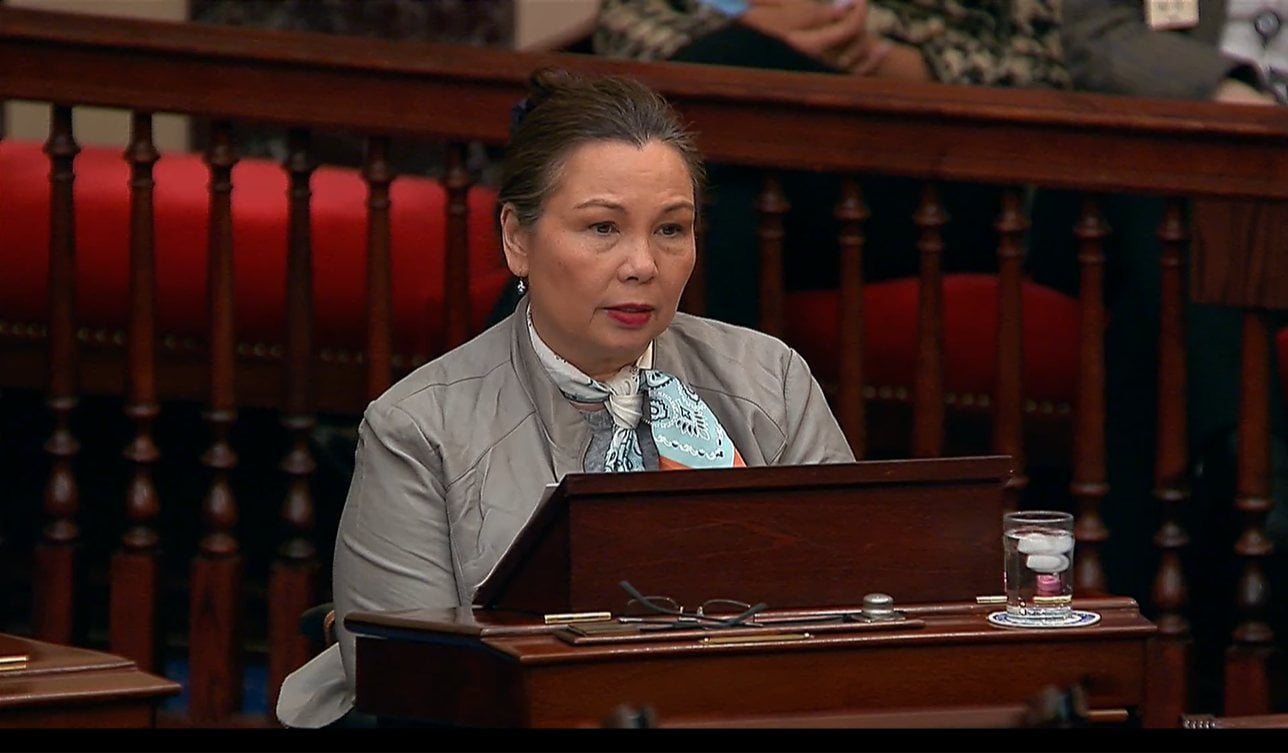
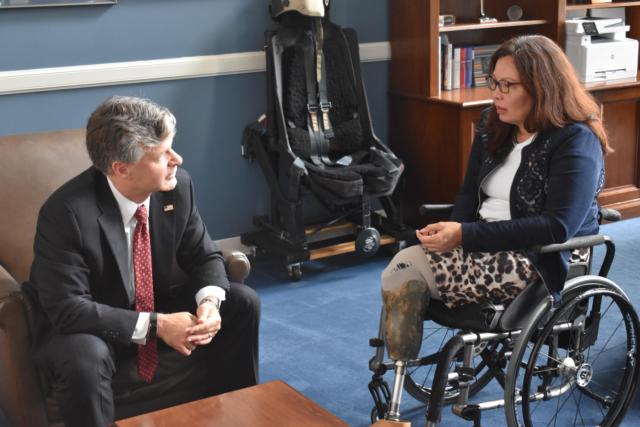
As the Senate Foreign Relations Committee holds a hearing on the current Authorizations for the Use of Military Force (AUMF) with Secretary of State Tillerson and Defense Secretary Mattis, I wanted to pass along the following comments from combat Veteran and U.S. Senator Tammy Duckworth (D-IL). Speaking with Axios, Duckworth highlighted how the deaths of four servicemembers in Niger show the need for a new AUMF that gives our troops the clear and up-to-date objectives they need to do their jobs.
Get The Latest News!
Don't miss our top stories and need-to-know news everyday in your inbox.
Duckworth also wrote an op-ed for the Wall Street Journal in September outlining why Congress’ failure to pass a new AUMF enables a seemingly endless conflict overseas without an honest, sober accounting of the true costs of war. Duckworth supports Senators Tim Kaine (D-VA) & Jeff Flake’s (R-AZ) efforts to pass new AUMF legislation.
More below:
Axios: Niger ambush shows need for new military authorization, Duckworth says
By Shannon Vavra
The death of 4 U.S. servicemembers in Niger "woke a few of my colleagues up," Senator Tammy Duckworth, an Iraq-war veteran, says as she presses Congress to take up a new authorization of military force in the fight against terrorism. She says Congress is "afraid" to take it up because of possible political backlash. "People don't want to be put on the record for this."
- Why it matters: No specific authorizations for the use of military force (AUMF) have been enacted except for the one passed in the wake of the Sept. 11 terrorist attacks and a separate 2002 vote authorizing military actions in Iraq. Defense Secretary Mattis and Secretary of State Rex Tillerson are appearing before the Senate Foreign Relations Committee later today to talk about a new authorization.
- The deadly ambush in Niger raised anew questions about the breadth of U.S. military deployments under the old authorization. What Duckworth said any new authorization would need to answer:
- What kinds of bounds (country, regional, or territorial) should be included.
- Characteristics of mission parameters such as specifics telling the military "what they're doing, why they're doing it, and how long they're going to be doing it for."
- Renewal timing and how the earlier authorization can be ended. Some Senators have called for a 5-year authorization, but Duckworth says the issue should be revisited every 2 years.
- Enforcement. "How would there be a move against a president who violated the AUMF? Should there be resolutions of approval or disapproval? Or is it just a slap on the wrist?"
"People think that [authorizations are] an attempt to restrain a president and, in particular, Donald Trump, and it's not. It's about the legislative branch being a coequal branch of government … and for too long we have not done our job," Sen. Duckworth said.
Wall Street Journal: Our Troops Need a New War Resolution From Congress
By Senator Tammy Duckworth
Most people would run away from gunfire, but our nation’s service members run towards it. They watch their brothers and sisters die. They’ve been tired, hungry, frustrated, broken down and pissed off. They miss holidays, anniversaries, births and funerals before coming home with the physical and emotional scars of war. They laugh and cry about it all – a gallows humor only those of us who have deployed can appreciate.
Despite the toll, our men and women in uniform continue to deploy time and again, shouldering a heavy burden on behalf of their nation. Silently and professionally, they have always—always—done their jobs defending our Constitution and our values.
Congress, on the other hand, continues to neglect the Constitution our troops defend by refusing to replace outdated Authorizations for Use of Military Force – an AUMF passed in 2001 to go after the perpetrators of 9/11 and another passed in 2002 to begin the war in Iraq, a war I disagreed with but am proud to have fought in.
I couldn’t have imagined that both AUMFs would still be in place more than 15 years later, used to justify a seemingly endless war, without recent public debate about America’s objectives or what we’re still asking of those we’ve sent into harm’s way. U.S. troops downrange need to know they have the moral support—and legal backing—of their country. Congress hasn’t given them that.
That’s why this month I joined a bipartisan group of 36 senators supporting Kentucky Republican Rand Paul’s amendment to the defense authorization bill that would gradually repeal the current AUMFs and provide Congress with an opportunity to debate a new authorization of military force against today’s enemies.
As both a combat Veteran and U.S. Senator, I know one of Congress’s most solemn responsibilities is deciding when and how we choose to send Americans into combat. The AUMF—in setting the legal framework, the parameters and Constitutional basis under which we go to war—represents that responsibility. It is not something we should shirk.
Debating an AUMF serves a moral purpose as well. With fewer Americans choosing to serve in uniform and a growing divide between civilians and our military, the public is becoming more removed from those on the battlefield. That lets Americans distance themselves from the moral burden of sending service members off to die. By ignoring the AUMF for 16 years, each of us—not just lawmakers—fails to do our part of the shared responsibilities of being an American citizen.
Though we failed to force this conversation, we came closer than ever. I hope the nation soon engages in this long-overdue debate with an honest, sober accounting of the true costs of war—in dollars and in lives—and provides our military a clear set of objectives it can take into the field.
American troops will carry out any mission they’re asked to. They always have. But the courage our troops show every day is not being matched by those sworn to represent them in Washington. If we can’t even tell the troops who risk their lives for us what we need them to do, what the hell are we doing in Congress?