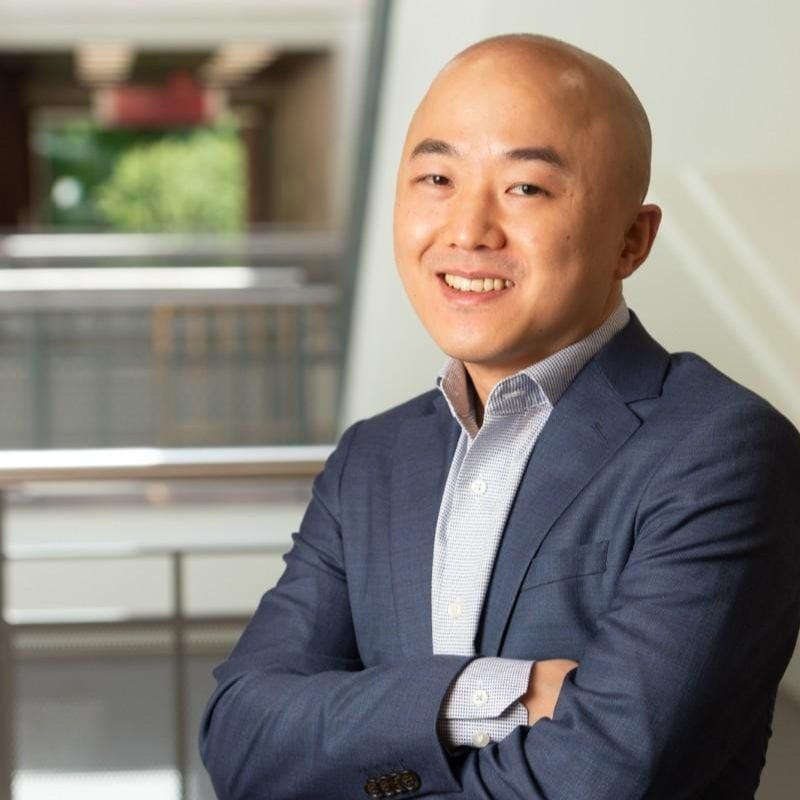
 EDWARDSVILLE – The United States has faced intense foreign competition for years as global markets continue to expand and trade barriers shift constantly. American businesses must adapt to an increasingly competitive international landscape. Yohan Choi, PhD, associate professor in the Department of Management and Marketing at Southern Illinois University Edwardsville, provides a new perspective on how tariff reductions and foreign competition influence the strategic behavior of U.S. firms.
Choi’s article, “The effect of foreign competition on firm risk-taking: Evidence from tariff reduction,” published in the Journal of Business Research, examines how the risk-taking behaviors of American firms change in response to stronger foreign competition resulting from tariff reductions. The study uses sharp decreases in import tariff rates as a quasi-natural experiment and applies difference-in-differences methodology to a sample of U.S. manufacturing firms. The study draws on threat rigidity theory, which suggests that organizations facing external threats tend to conserve resources, restrict information processing, and rely on familiar routines.
Get The Latest News!
Don't miss our top stories and need-to-know news everyday in your inbox.
The research finds that tariff reductions make American firms more cautious. Consistent with threat rigidity theory, when tariffs fall and foreign competition intensifies, domestic companies significantly reduce risk-taking—cutting back on research and development, capital expenditures and acquisitions—and tighten control over their resources.
However, not every firm responds this way. Strong performance provides greater resource flexibility, while aligning strategies with established industry norms can enhance legitimacy and access to information when firms face external threats. The study shows that firms increase risk-taking rather than retrench when relative performance is sufficiently strong or strategic alignment with industry norms is sufficiently high.
For business leaders, these findings emphasize the importance of deliberate decision-making as well as organizational conditions that preserve resource flexibility and information-processing capacity. In an interview, Choi noted that, in the face of external threats, CEOs often make decisions driven by familiar routines rather than a search for new options. He emphasized that when executives combine rational analysis with adequate resources and access to relevant information, they are better positioned to escape the threat rigidity trap. Choi’s study reflects his broader research interests in managerial decision-making, particularly how managers respond to pressure and what enables them to exercise sound judgment rather than rely on cognitive bias.
Southern Illinois University Edwardsville provides students with a high-quality education that powerfully transforms the lives of all individuals who seek something greater. A premier metropolitan university, SIUE is creating social and economic mobility for individuals while also powering the workforce of the future. Built on the foundation of a broad-based liberal education, and enhanced by hands-on research and real-world experiences, the academic preparation SIUE students receive equips them to thrive in the global marketplace and make our communities better places to live. Home to a diverse student body, SIUE is situated on 2,660 acres of beautiful woodland atop the bluffs overlooking the natural beauty of the Mississippi River’s rich bottomland and only a short drive from downtown St. Louis.