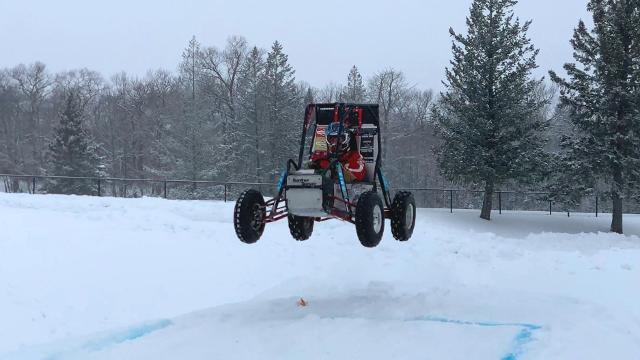
 EDWARDSVILLE – Southern Illinois University Edwardsville School of Engineering’s Cougar Baja team achieved 7th place at this year’s Blizzard Baja hosted Saturday, Feb. 5 at Michigan Technology University.
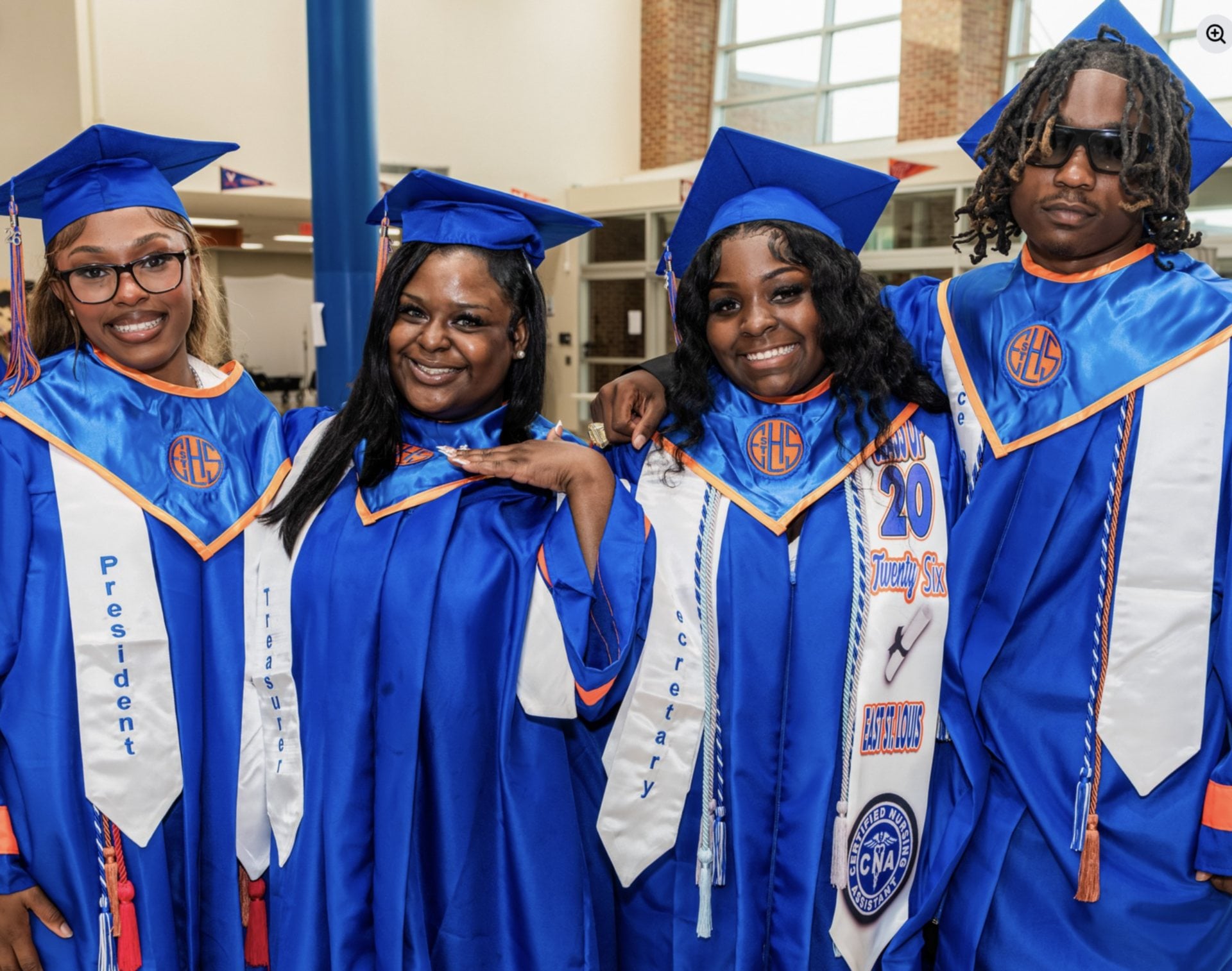
The president of the SIUE Baja team, senior Samuel Churchill, of Ottawa, together with teammates Matthew Buchholz (treasurer), Curtis Lake, and Nathan Buss (secretary) competed against athletes from across the country. This year’s edition had a total of 22 cars competing in dual events of hill climb and a four-hour endurance race where all the cars raced wheel to wheel.
Get The Latest News!
Don't miss our top stories and need-to-know news everyday in your inbox.
“We did well considering our resources,” Churchill shared. “We were up against stiff competition with Michigan schools known for having car manufacturers’ support. The most challenging aspect was the low temperature of around 10-15 degrees and wind. After about a half-hour we had to swap drivers because it was so cold.”
“The team worked together well and when there was an issue, we were collectively able to solve the problem in short order,” he added.
The Michigan Tech Blizzard Baja Enterprise is a student-led organization that designs, builds, and tests single-seat, off-road vehicles in a national competition. Students use modern engineering and manufacturing processes to enhance vehicle performance by focusing on reduction of vehicle mass, maximization of drive train efficiency, improvement of driver visibility and comfort, and optimization of off-road vehicle handling and maneuverability.
The School of Engineering offers one of the most comprehensive and affordable engineering programs in the St. Louis region with eight undergraduate degrees, five master’s degrees and two cooperative doctoral programs, all housed in a state-of-the-art facility. Students learn from expert faculty, perform cutting-edge research and participate in intercollegiate design competitions. Companies in the metropolitan St. Louis area provide students challenging internships and co-op opportunities, which often turn into permanent employment. All undergraduate programs are accredited by their respective accreditation agencies.