 |
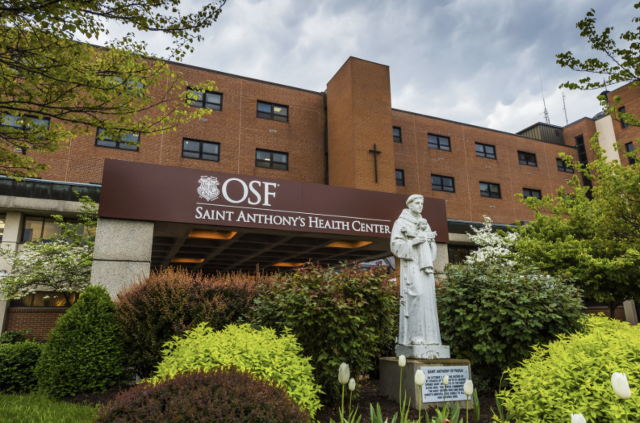
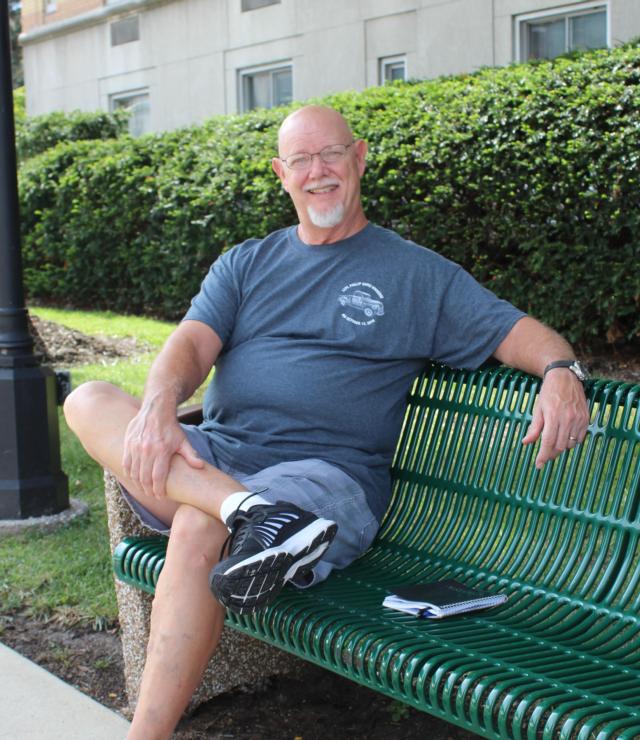
| Terry James, of Alton, recently celebrated 100+ days of being smoke free after attending the American Lung Association’s Freedom From Smoking program hosted by OSF Saint Anthony’s. |
(Alton, Ill.) – If you need help with smoking cessation, attend the eight-week Freedom from Smoking class at OSF Saint Clare’s Medical Office Building starting at 6 p.m. on Monday, September 14.
Not lighting up can be one of the most difficult challenges you will ever face. The combination of repetitive action and nicotine addiction is a powerful attraction.
Get The Latest News!
Don't miss our top stories and need-to-know news everyday in your inbox.
The good news – it is possible. Previous smoker, Terry James, is a prime example. He attended the Spring 2015 Freedom from Smoking session and has kicked the habit.
“I’ve been told there is a small percentage of folk in the world who, for whatever reason, can’t quit. I was one of those people,” James said. “However, this last time, through prayer and the class, I was able to discover a few things that worked well for me.
“When the nurse said if a cancer patient had a choice to have urges and the crazies of withdrawal or keep the cancer, it felt like she was talking directly to me. I decided that if I’m going to have these urges 24/7 for the rest of my life, I might as well accept that and be on my way.”
Participants in the Freedom from Smoking program learn about the effects of smoking, plus, review their personal commitment and readiness to quit or reduce hesitation towards quitting.
According to the U.S. Department of Health and Human Services, health benefits include:
- 12 hours after quitting: The carbon monoxide level in your blood drops to normal.
- Two weeks to three months after quitting: Your risk of having a heart attack begins to drop; your lung function begins to improve.
- One to nine months after quitting: Your coughing and shortness of breath decrease.
- One year after quitting: Your added risk of coronary heart disease is half that of a smoker’s risk.
- Five to 15 years after quitting: Your risk of having a stroke is reduced to that of a nonsmoker’s; your risk of getting cancer of the mouth, throat or esophagus is half that of a smoker.
- 10 years after quitting: Your risk of dying from lung cancer is about half that of a smoker’s; your risk of getting bladder cancer is half that of a smoker’s; your risk of getting cervical cancer or cancer of the larynx, kidney or pancreas decreases.
- 15 years after quitting: Your risk of coronary heart disease is the same as that of a nonsmoker.
At the beginning and end of the eight-week session, participants receive free pulmonary function screenings to measure lung capacity, plus blood pressure readings to visualize circulation improvement.
“For many years, I liked having something that I thought I had control of but I didn’t. Well, I’m over a hundred days now, and I feel better all the way around,” James said. “My family has wanted me to stop forever. Now that I have, they are happy I’m no longer killing myself.”
James had the following advice for potential quitters.
“Definitely go to the Freedom from Smoking class, and listen to everything the instructor says. But it is also equally important to listen to the others attending the class. You’ll learn a lot of strategies and tricks to help you quit.”
If you would like more information or to register for Freedom from Smoking, call OSF Saint Anthony’s Health Resource Center at 618-465-2264.