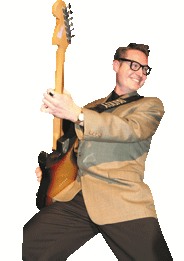
 On Oct. 21, 1958, Buddy Holly stepped beyond the guitar-driven sound that had made him a rock ’n’ roll pioneer and recorded four songs with orchestral backing in New York. The session offered a glimpse of a broader musical future that his death would soon cut short. Sixty-eight years later, it remains a defining moment in the story of an artist whose influence reached the Beatles, the Rolling Stones and generations of songwriters.
Working with Dick Jacobs and studio musicians, Holly recorded “True Love Ways,” “It Doesn’t Matter Anymore,” “Raining in My Heart” and “Moondreams.” These were not simply more versions of the brisk rock records that had established him. Strings and carefully arranged accompaniment gave his voice a different setting, bringing the intimacy of his singing forward while connecting his rock ’n’ roll identity with the sound of orchestral pop.
Get The Latest News!
Don't miss our top stories and need-to-know news everyday in your inbox.
The significance lies partly in the possibilities the recordings preserved. Holly was experimenting with how a young rock performer could sound outside a small band. He died in an Iowa plane crash on Feb. 3, 1959, leaving that development unfinished. The October session therefore stands as both an achievement in its own right and evidence that his musical ambitions extended well beyond the records that first made him famous.
Two years later, on Oct. 21, 1960, John Coltrane recorded “My Favorite Things” at Atlantic’s New York studio. Joined by pianist McCoy Tyner, bassist Steve Davis and drummer Elvin Jones, he transformed Richard Rodgers and Oscar Hammerstein II’s song from “The Sound of Music” into an extended jazz performance. A familiar Broadway melody became the foundation for a remarkably different musical journey.
Coltrane played soprano saxophone on the piece, giving the melody a penetrating, singing tone. Rather than treating the tune as a brief standard, the quartet used it as a framework for sustained improvisation. The performance kept a recognizable connection to its source while opening room for rhythmic movement and exploration, making adventurous jazz approachable without stripping away its complexity.
Released on the album “My Favorite Things” in March 1961, the recording helped establish the sound of Coltrane as a bandleader. It also introduced many listeners to his soprano playing. Its reach extended beyond jazz: Grateful Dead bassist Phil Lesh later recalled encouraging his bandmates to study how Coltrane’s group stretched relatively simple musical structures into expansive performances.
On Oct. 21, 1977, Meat Loaf released “Bat Out of Hell,” bringing Jim Steinman’s dramatic songwriting and producer Todd Rundgren’s studio work together in an album built on emotional extremes. Its seven tracks included “Two Out of Three Ain’t Bad,” “Paradise by the Dashboard Light” and the title song. The record approached rock as theater, with elaborate arrangements and performances that gave youthful longing an oversized stage.
That theatrical character had concrete roots. Three songs — “Bat Out of Hell,” “Heaven Can Wait” and “All Revved Up With No Place to Go” — had originally been written for Steinman’s musical “Neverland.” On the album, those ideas became part of a distinct recording identity rather than merely material transferred from a stage production. Rundgren’s guitar work and Meat Loaf’s vocals supplied the force needed to carry the songs’ scale.
The supporting performers added another layer of storytelling. Ellen Foley shared the lead vocals on “Paradise by the Dashboard Light,” while baseball broadcaster Phil Rizzuto supplied its play-by-play interlude. Those contrasting voices helped turn a song about teenage desire into a miniature drama, illustrating how far a rock recording could move beyond a straightforward verse-and-chorus presentation.
On Oct. 21, 2016, Leonard Cohen released his 14th studio album, “You Want It Darker.” Produced by his son Adam Cohen, the collection placed questions of mortality, faith and human uncertainty at its center. Its restrained presentation put the emphasis on Cohen’s words and voice, showing how a veteran songwriter could make deeply searching work without relying on an elaborate sonic spectacle.
The album also connected Cohen’s songwriting to his Jewish upbringing in Montreal. Cantor Gideon Zelermyer and the Shaar Hashomayim synagogue choir contributed voices that contrasted with Cohen’s own. The title song drew on biblical language and liturgy, making the collaboration more than atmospheric accompaniment: It brought the sounds of a religious community directly into a contemporary songwriter’s examination of belief and doubt.
Finally, on Oct. 21, 2022, Taylor Swift released “Midnights,” her 10th studio album, featuring collaborator Jack Antonoff and a Lana Del Rey duet, “Snow on the Beach.” Three hours later, she expanded the release with a “3am Edition” containing seven additional songs. The overnight rollout made the album’s late-night theme part of the listening experience itself.
The release’s historical importance grew beyond that opening night. At the 2024 Grammy Awards, “Midnights” won best pop vocal album and album of the year. The latter made Swift the first artist to win the academy’s top album award four times, breaking her tie with Frank Sinatra, Paul Simon and Stevie Wonder and giving this October release a lasting place in Grammy history.