October 12
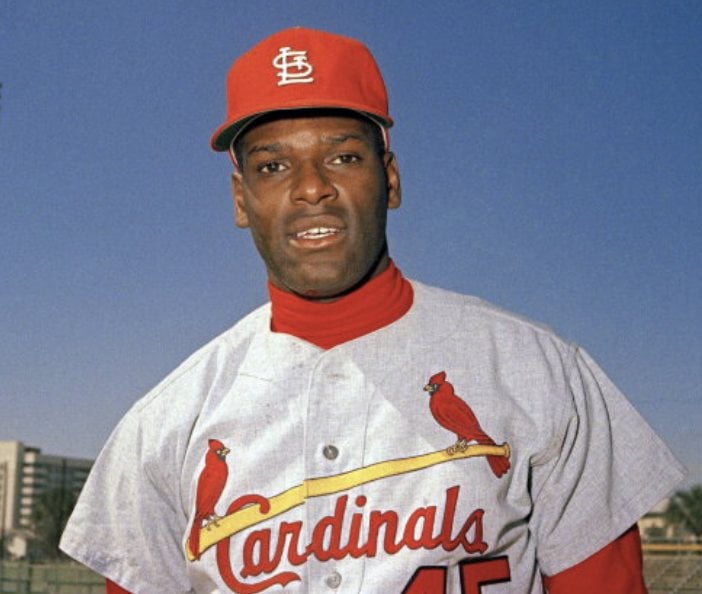
Bob Gibson gave St. Louis a championship performance to remember on Oct. 12, 1967, completing his third victory of the World Series as the Cardinals defeated the Boston Red Sox 7-2 in Game 7. His work secured another title for the Cardinals and his second World Series Most Valuable Player award, making the date a memorable one for baseball fans throughout the St. Louis region.
Get The Latest News!
Don't miss our top stories and need-to-know news everyday in your inbox.
Looking back on Oct. 12, 2026, the day's sports history stretches from Chicago's first World Series championship to an Olympic breakthrough, a transformative night in professional basketball and a marathon-distance performance that crossed a once-elusive threshold. These milestones show how a championship, an opportunity or a new rule can leave an impact far beyond a single afternoon.
The championship story begins in 1907, when the Chicago Cubs defeated the Detroit Tigers 2-0 on Oct. 12 to claim their first World Series title. Mordecai Brown pitched the clinching shutout in Game 5, giving Chicago the decisive victory against a Detroit club featuring Ty Cobb. The result established the Cubs as champions on baseball's biggest stage.
Chicago finished the Series with four victories and no losses, with the opening game ending in a tie. The Cubs would beat Detroit again in 1908, becoming the first team to win consecutive World Series championships. The Oct. 12 clincher thus marked the beginning of a brief championship run, rather than an isolated triumph.
For the Cubs, Oct. 12 brought a dramatically different experience in 1929. Chicago led the Philadelphia Athletics 8-0 entering the bottom of the seventh inning of Game 4 at Shibe Park. With nine outs remaining, the Cubs appeared positioned to even the World Series at two games apiece after losing its first two contests.
Instead, Philadelphia scored 10 runs in the inning and won 10-8. The rally included a three-run inside-the-park home run by Mule Haas, whose drive eluded center fielder Hack Wilson in the sun. Lefty Grove then protected the lead. What had looked like a chance for Chicago to reset the Series became a commanding advantage for Philadelphia.
The Athletics took a 3-1 Series lead and finished the championship in Game 5. The seventh-inning turnaround remains a striking example of how quickly a World Series can change: An eight-run cushion disappeared before the Cubs could record three outs, and Chicago never recovered in the Series.
In 1967, Gibson supplied the opposite kind of October story — sustained control under championship pressure. Against Boston in the deciding game, he allowed three hits, struck out 10 and hit a home run. Julian Javier added a three-run homer in the sixth inning, extending the Cardinals' lead to 7-1.
Gibson finished the Series 3-0 with a 1.00 ERA, completing all three starts. His victories in Games 1, 4 and 7 accounted for three of the four wins St. Louis needed. Having already earned World Series MVP honors in 1964, he reinforced his standing as a pitcher capable of carrying a team through its most demanding games.
One year later, Oct. 12, 1968, brought a different milestone as the Mexico City Olympics opened. These were the first Olympic Games held in Latin America, broadening the geographic reach of an event that brought athletes from around the world together. The opening ceremony also gave a Mexican athlete a place in Olympic history.
Enriqueta Basilio became the first woman to light the Olympic cauldron at an opening ceremony. The Mexican hurdler's role placed a female athlete at the center of one of the Games' most recognizable traditions. Her achievement was separate from the medal competitions that followed, but it established a lasting first in Olympic ceremony history.
On Oct. 12, 1979, the NBA began a season with changes that would shape its future. Boston's Chris Ford made the first 3-point basket in league history. The NBA had adopted the 3-point line initially as a one-year trial, giving teams a new scoring option and creating another consideration for defenses.
That same night, Larry Bird debuted for the Celtics and Magic Johnson debuted for the Los Angeles Lakers. Their arrival launched professional careers that helped define the NBA during the 1980s. The date therefore joined a landmark rules change with the first NBA appearances of two players whose rivalry became central to the league's story.
The most recent milestone in this look back came on Oct. 12, 2019, when Kenya's Eliud Kipchoge covered the marathon distance in Vienna in 1 hour, 59 minutes, 40.2 seconds. He became the first person to complete the 26.2-mile distance in less than two hours, achieving the goal of the specially organized INEOS 1:59 Challenge.
The performance was not ratified as a world record. Rotating teams of pacemakers helped Kipchoge during the attempt, which was designed around breaking the barrier rather than staging a conventional race. That distinction matters: Vienna did not produce an official marathon record, but it demonstrated that a runner could cover the full distance inside two hours under specially arranged conditions.
October 13
One swing ended a championship and secured Bill Mazeroski’s place in baseball history. On Oct. 13, 1960, the Pittsburgh Pirates second baseman hit a ninth-inning home run to beat the New York Yankees 10-9 in Game 7 of the World Series. It was the first time the Fall Classic ended on a walk-off homer, turning a tense afternoon at Forbes Field into a championship celebration.
As Oct. 13, 2026, marks the anniversary of that finish, the date also offers a broader look at sports milestones: the completion of the first modern World Series, baseball’s move into nighttime championship television, two landmark marathon performances in Illinois and a record-breaking day for American gymnastics.
The championship story begins in 1903. On Oct. 13, Boston defeated Pittsburgh 3-0 in Game 8 to win the first modern World Series, five games to three. The meeting between the American League and National League champions established the championship matchup that became baseball’s signature postseason event. Unlike today’s best-of-seven format, that inaugural series was played as a best-of-nine.
Bill Dinneen delivered the deciding performance for Boston, pitching a four-hit shutout against a Pittsburgh club led by Honus Wagner. Boston had trailed three games to one before winning four straight. Its final victory completed a comeback and gave the American League champion the first title in the new interleague championship series.
Dinneen’s work reflected the heavy demands placed on pitchers in that era. He finished the series with three wins and four complete games, while teammate Cy Young contributed two victories. Boston’s championship was built in large part on those two arms, with Dinneen supplying the final shutout that settled the contest.
Fifty-seven years later, Pittsburgh found itself celebrating a very different finish. Mazeroski came to the plate in the bottom of the ninth on Oct. 13, 1960, with Game 7 tied 9-9. His solo home run off Ralph Terry ended the game immediately, leaving the Yankees no opportunity to answer and sending Pirates teammates and fans into celebration.
The final result stood in sharp contrast to the series’ overall scoring. New York outscored Pittsburgh 55-27 across seven games, including a combined 38-3 margin in its three victories. But the Pirates won four games, and Mazeroski’s drive supplied the only margin that mattered in the deciding one. It was a vivid demonstration of how a championship series rewards victories rather than total runs.
The home run became Mazeroski’s defining moment, though his career extended far beyond it. He won eight Gold Glove awards and entered the Baseball Hall of Fame in 2001. His championship-ending feat would not be repeated until Joe Carter’s home run won the 1993 World Series for Toronto, 33 years later.
On Oct. 13, 1971, Pittsburgh hosted another World Series milestone, this time involving when the game was played. The Pirates defeated the Baltimore Orioles 4-3 at Three Rivers Stadium in Game 4, the first nighttime game in World Series history. The victory tied the series at two games apiece before a crowd of 51,378.
The scheduling change reflected television’s growing influence. Commissioner Bowie Kuhn supported nighttime games as a way to let more viewers watch the championship. Before that evening, 397 World Series games had been played in the afternoon. A new television agreement called for all midweek World Series games to be played at night beginning in 1972, making Pittsburgh’s game a significant step toward a new viewing tradition.
Illinois supplied the next landmark on Oct. 13, 2002, when Britain’s Paula Radcliffe won the Chicago Marathon in 2 hours, 17 minutes, 18 seconds. Her performance lowered the women’s world best by 1 minute, 29 seconds, surpassing the 2:18:47 Catherine Ndereba had run in Chicago the previous year. Radcliffe was competing in only her second marathon after winning her debut in London.
Radcliffe accelerated after halfway and steadily pulled away. Ndereba finished second in 2:19:26, an exceptional time that nevertheless left her more than two minutes behind. Chicago had produced another global standard, and Radcliffe had shown that her successful transition to the marathon was more than a one-race breakthrough.
Seventeen years later, on Oct. 13, 2019, Kenya’s Brigid Kosgei delivered another historic Chicago Marathon victory. She finished in 2:14:04, breaking the 2:15:25 world record Radcliffe had set in London in 2003. The improvement of 81 seconds ended Radcliffe’s 16-year hold on that mark. Radcliffe was in Chicago and congratulated Kosgei after the finish, linking two generations of record-setting runners.
That same date in 2019 brought a record in Stuttgart, Germany. Simone Biles won world championship gold medals on balance beam and floor exercise, raising her career total to 25 world medals. Her beam victory broke Vitaly Scherbo’s previous record of 23, and her floor title extended the new standard. The milestone covered both men’s and women’s gymnastics.
Biles finished those championships with five gold medals: team, all-around, vault, balance beam and floor exercise. Teammate Sunisa Lee took silver on floor, giving the United States a one-two finish in that final. From baseball’s championship beginnings to record performances on Chicago streets and a German gymnastics floor, Oct. 13 has repeatedly marked moments when athletes did more than win — they changed the historical standard.