URBANA – With their vibrant, floral displays and low-maintenance needs, holiday cacti are a great holiday gift. Thanksgiving, Christmas, and Easter cactus are each different species. They bloom reliably each year without much upkeep.
Get The Latest News!
Don't miss our top stories and need-to-know news everyday in your inbox.
“Every December, one plant in my office comes to life despite the minimal care it receives,” says Kelly Allsup, University of Illinois Extension horticulture educator. “The plant has remained in the 6-inch pot for nine years now, receives water when it is dry and has been used prolifically in propagation workshops for Master Gardeners.”
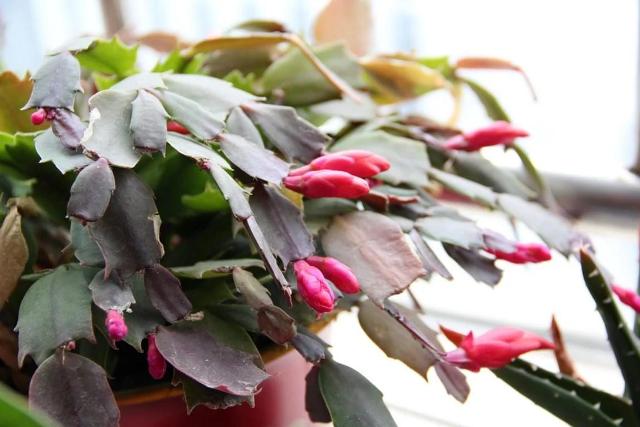
Holiday cacti are easily distinguished by the stem margins as well as the timing of flowering. These cacti don't have true leaves; instead, they have flattened stem segments that are used in propagation to grow new plants.
Illinois Extension Horticulture Educator Jenifer Fishburn says holiday cacti are the gifts that keep on giving.
"They are often passed down from generation to generation as family heirlooms because they are so long-lived,” Fishburn says.
Thanksgiving cactus, Schlumbergera truncate, has two to four saw-toothed projections resembling crab claws. Flowers are produced from late November to late December. Flower colors include white, red, lavender, salmon, orange, and yellow.
“Thanksgiving cacti are often forced into bloom and sold at Christmas time, and are often misnamed Christmas cacti," Fishburn says.
Christmas cactus, Schlumbergera x buckleyi, has scalloped or rounded stem margins. Flowers are generally showy from late December through March. The flowers form at the tips of segments.
Easter cactus, Rhipsalidopsis gaertneri, has four to six rounded teeth along the stem edges and brownish hairs at the leaf tips. Flowers in shades of pink or red flowers appear from March through May. Easter cactus may re-bloom.
Thanksgiving and Christmas cacti blooms are triggered by day length. They bloom when they receive 12 to 15 hours of darkness a day for five to six weeks and are exposed to cool night temperatures.
Holiday cacti are commonly used to demonstrate propagation because leaf cuttings, rather than stem cuttings, can be used to generate new plants. However, cacti do not have true leaves. The leaves are actually stems called cladophylls.
Despite being a cactus, these plants are native to the tropical rain forest and are watered regularly with other houseplants. Water cacti when the top inch of soil is dry to the touch.
To gift holiday cacti, look for 4, 6, and 8-inch pots at garden centers. Find a decorative container with a hole in the bottom of the same size. Remember these cacti are long-lived and can thrive in this pot for the next 15 years.
When transporting cacti, wrap and bag plants to prevent exposure to cold temperatures as the buds will be severely damaged by time spent outside.
Holiday cacti can bloom profusely for a month or two and may even bloom twice a year. While in bloom, use cacti as decoration, keep them away from heat sources, and water regularly.
As a houseplant, place it in front of a window and water regularly. In the summer, these tropical houseplants can go outside in a partially shaded area. Between April and October, fertilize every four weeks with a complete houseplant fertilizer.
SOURCE:Kelly Allsup, Horticulture Educator, Illinois Extension
ABOUT ILLINOIS EXTENSION: Illinois Extension, the public outreach, and engagement arm of the University of Illinois, translates research-based knowledge into actionable insights and strategies that enable Illinois businesses, families, and community leaders to solve problems, adapt to changes and opportunities, make informed decisions, and carry technical advancements forward into practice.