 GODFREY – Lewis and Clark Dean of Health Sciences Donna Meyer was one of 65 nursing leaders from across the country called to discuss the health concerns of veterans with First Lady Michelle Obama and Dr. Jill Biden as part of the Joining Forces Initiative last week during a Nursing Leadership Conference at the University of Pennsylvania's School of Nursing.
As a result, in a broad, coordinated effort, more than 150 state and national nursing organizations, including the National Organization for Associate Degree Nursing, and more than 500 nursing schools, including the Lewis and Clark Community College, have committed to further educate the nation’s three million nurses so they are prepared to meet the unique health needs of service members, veterans and their families. Nursing organizations and schools have committed to educating current and future nurses on how to recognize and care for veterans impacted by post-traumatic stress disorder, traumatic brain injury, depression and other
combat-related issues, in ways appropriate to each nurse’s practice setting.
Get The Latest News!
Don't miss our top stories and need-to-know news everyday in your inbox.
“Whether we’re in a hospital, a doctor’s office or a community health center, nurses are often the first people we see when we walk through the door. Because of their expertise, they are trusted to be the frontline of America’s health care system,” said First Lady Michelle Obama. “That’s why
Jill and I knew we could turn to America’s nurses and nursing students to help our veterans and military families get the world-class care that they’ve earned. It’s clear from today’s announcement that the nursing community is well on its way to serving our men and women in uniform and their families.”
“Nurses are at the center of providing lifesaving care in communities across the country – and their reach is particularly important because our veterans don't always seek care through the VA system,” Dr. Biden said. “This commitment is essential to ensuring our returning service men and
women receive the care they deserve.”
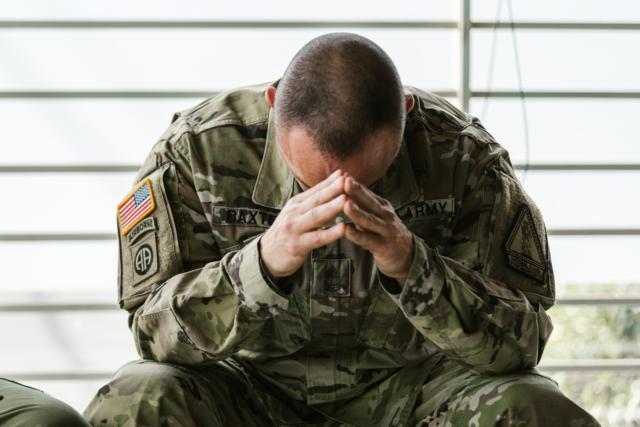
The invisible wounds of war, Post-Traumatic Stress Disorder (PTSD) and Traumatic Brain Injury (TBI), have impacted approximately 1 in 6 of our troops returning from Afghanistan and Iraq – more than 300,000 veterans. Since 2000, more than 44,000 of those troops have suffered at least a moderate-grade traumatic brain injury. Veterans seeking care within the Veterans Affairs (VA) health system are often treated by health care professionals who have received extensive training in mental health issues, but because the majority of veterans in the country seek care at local hospitals, this initiative fills a need in their communities.
America’s nurses are trusted partners in providing lifesaving and life-sustaining care in nearly every community and every setting where health care is delivered. They can make a dramatic and positive impact on the long-term health of hundreds of thousands of veterans, and they are
eager to understand the needs of those who have served, to recognize the warning signs of posttraumatic stress disorder, depression, or suicide, and to know where to send them for help.
“This initiative is truly all about helping those who have served and continue to serve our country. It is imperative to educate current and the future generation of nurses in this country to assist our veterans and the families with the many health related issues confronting them,” Meyer said.
“This event was truly inspirational as the First Lady and Dr. Biden spoke so eloquently about the role of nurses in this country. It is now in the hands of nursing leaders and the three million nurses in this country to carry out the work.”
Key commitments of the agreement include:
- Educating America’s future nurses to care for our nation's veterans, service members, and their families facing post-traumatic stress disorder, traumatic brain injury, depression and other clinical issues;
- Enriching nursing education to ensure that current and future nurses are educated and trained in the unique clinical challenges and best practices associated with caring for military service members, veterans, and their families;
- Disseminating the most up-to-date information as it relates to traumatic brain injury (TBI) and psychological health conditions, such as post-traumatic stress disorder (PTSD);
- Growing the body of knowledge leading to improvements in health care and wellness for our military service members, veterans, and their families;
- Leading and advancing the supportive community of nurses, institutions, and health care providers dedicated to improving the health of military service members, veterans, and their families.
Dean Meyer, who is currently serving as the President of the National Organization for Associate Degree Nursing (NOADN) was also recently honored as one of 35 individuals named to the Institute of Medicine’s Global Forum of Innovation and Health Professional Education. This new committee, which advises Congress, is exploring how all health services on an international
level can collaborate to make improvements to healthcare delivery around the globe. Meyer’s role on the committee is to represent the role community colleges can play in providing education in the health services professions.
In addition, Meyer has been appointed to the Robert Wood Johnson Foundation Advisory Board to launch its initiative to support academic progression in nursing. The mission of the Robert Wood Johnson Foundation is to improve the health and health care of all Americans. It is the largest
philanthropic organization devoted to public health.
“There is a very strong focus right now on moving nurses more efficiently from associate to bachelor degree programs, as well as advanced degrees including master and doctoral degree programs,” Meyer said. “The overall goal is to strengthen patient outcomes by increasing all nursing credentials. Nursing is the largest healthcare profession in the country and has a vital impact on health.”
Meyer said all three groups she has recently been invited to join are all focused on improving healthcare delivery across the board, and advocates the significant role community colleges can play in strengthening the nation’s healthcare delivery systems.
“Our own Family Health Clinic at Lewis and Clark is an excellent example of
the role that community colleges are uniquely positioned to play in improve
healthcare delivery,” Meyer said. “We see our campus health clinic as a
national model that not only extends healthcare access to thousands of
residents in the district, but it also provides an excellent clinical site
for our students.”
Meyer said Lewis and Clark’s nursing program has long been touted as an
outstanding program, and stated that she and the program faculty work with
other four-year nursing programs to create seamless transition programs for
Lewis and Clark nursing students to continue to progress their nursing
credentials and their career opportunities.
“More than 70 percent of our students transfer on to a four-year program,
and we recognize the benefit their advanced levels of nursing education
have to the healthcare of this community and the patients they serve,” she
said. “In addition, we are working closely with SIUE to develop an
associate degree to masters program, which would be a major benefit for our
students.”