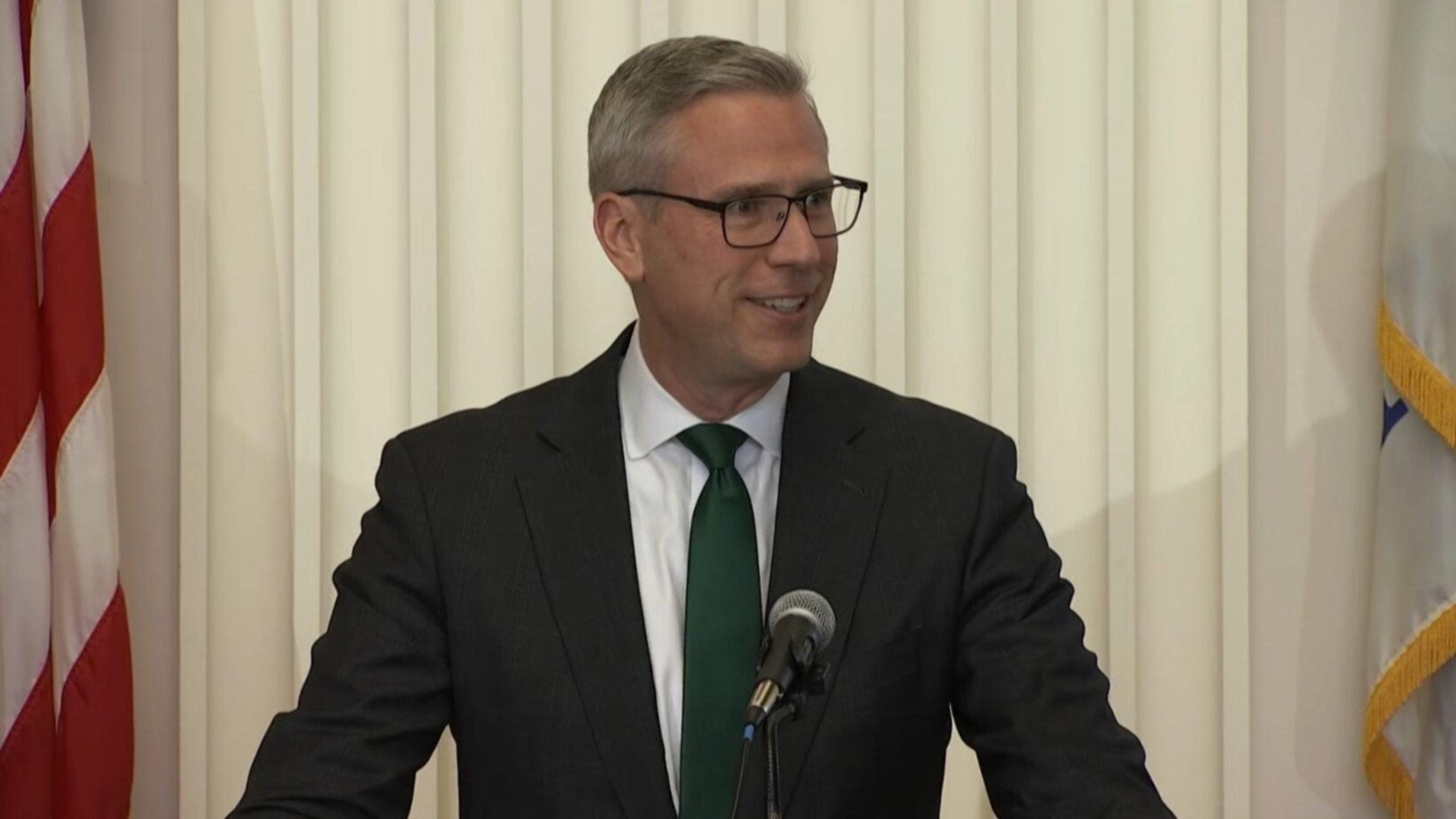
SPRINGFIELD – Illinois has invited yet another credit downgrade from S&P Global Rating agency due to lack of a budget, Illinois State Treas urer Michael Frerichs said today.
With no budget deal by the May 31 Illinois General Assembly session deadline, Illinois now moves into a third year without a state budget. Illinois has not had a budget agreement since the first-term governor took office in 2015, prompting credit rating agencies to issue six downgrades as the bill backlog continues to grow. The backlog was approximately $4.36 billion when Gov. Rauner took office. Today, it is approximately $14.5 billion.
Get The Latest News!
Don't miss our top stories and need-to-know news everyday in your inbox.
S & P today lowered its rating on Illinois' general obligation (GO) bonds to 'BBB-' from 'BBB.' The credit agency also lowered its rating to 'BB+' from 'BBB-' on the state's appropriation debt, including bonds issued by the Illinois Sports Facility Authority and the Metropolitan Pier & Exposition Authority. Additionally, the agency lowered the rating to 'BB-' from 'BB' on the state's moral obligation-backed debt.
Frerichs again urged the Governor and General Assembly to strike a compromise after going two years without a spending plan. Previous state treasurers, Democrats and Republicans, have pointed out the credit risks that come without a budget agreement.
“This budget impasse continues to cripple our state,” Frerichs said. “Today’s latest credit downgrade is the first of many more if Illinois does not get its act together.
“Gov. Rauner has engineered this crisis because he believes crisis brings him leverage.
“No, it doesn’t,” Frerichs said. “Crisis brings our residents $10 billion more in unpaid bills than when Gov. Rauner took office and 1 million people who have lost social service programs such as domestic violence shelters and meals for our elderly. Our job growth lags the country because we know that business owners crave the stability that comes with a budget.”
Illinois has the worst credit ratings in the country.
Credit downgrades make it more expensive for the state to borrow money. While entities that purchase Illinois debt have constitutional guarantees that they will be paid, the additional interest payments represent money that could have been spent elsewhere, especially in the hard-hit areas of education and elder care.
Until May 31, a simple majority in each chamber was needed to pass a budget. After June 1, a 3/5ths vote total is needed in each chamber to pass a budget. The higher threshold makes passing a budget more daunting. The fiscal year begins July 1.
Credit ratings agencies agree that a lack of political will, not economic factors tied to the recession, is the driving force behind this impasse.
Today, the backlog of bills has more than tripled since 2015, when this standoff began, and each Illinois resident would have to pay more than $1,000 to eliminate the backlog. At this pace, the bill backlog could reach $28 billion by 2021, or potentially 80 percent of a state budget.
About Credit Rating Agencies
There are three primary credit rating agencies: Fitch Ratings Inc., Moody’s Investors Service, and S&P Global Ratings. Each agency assigns government bonds, sometimes called a tax-backed loan, a credit rating. The credit rating, like a credit score, indicates how risky it is to purchase government bonds. The higher the risk, the lower the credit rating; the lower the credit rating, the more expensive it is for Illinois to borrow money. Each agency’s ratings system is similar, although each uses different letter and number combinations to reflect the credit rating. Nevertheless, each rates Illinois’ debt to have speculative elements and a credit risk.
Fitch’s Rating is BBB. Moody’s Rating is Baa2. S&P’s rating is BBB-
About the Illinois Treasurer
The Illinois Treasurer is the state’s chief investment officer and Frerichs is a Certified Public Finance Officer. He protects consumers by encouraging savings plans for college or trade school, increasing financial education among all ages, and removing barriers to a secure retirement. The treasurer oversees a portfolio worth more than $25 billion. It includes approximately $13 billion in state funds, $7 billion in college savings plans and $5 billion on behalf of local and state governments. The investment approach is cautious to ensure the preservation of capital and returns $28 to the state for every $1 spent in operations. The Treasurer’s Office predates Illinois incorporation in 1818. Voters in 1848 chose to make it an elected office.