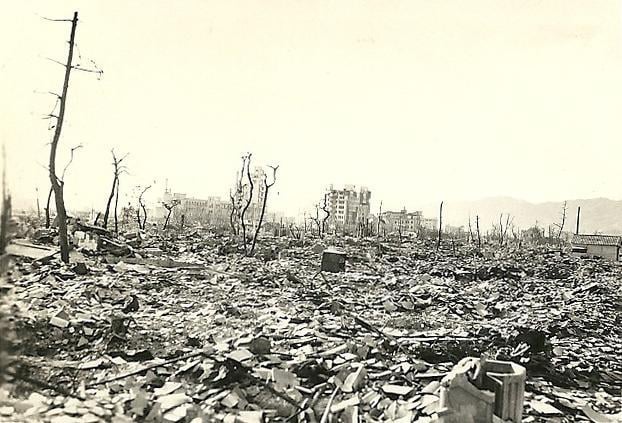
On August 6, 1945, the United States dropped an atomic bomb on Hiroshima, Japan, in the first wartime use of a nuclear weapon. The explosion destroyed much of the city, killed tens of thousands of people almost immediately, and caused many more deaths from burns and radiation in the weeks, months, and years that followed. At the time, the bombing was presented as a way to force Japan’s surrender and bring World War II to an end. It still matters today because it changed warfare, introduced the world to the full reality of nuclear destruction, and shaped international debates about military power, civilian safety, and the risk of nuclear conflict.
Get The Latest News!
Don't miss our top stories and need-to-know news everyday in your inbox.
That event sits at the center of this date in history, but August 6 has also seen turning points in empire, science, politics, popular culture, and sport. Across centuries, it has marked moments when power shifted, institutions were tested, and new ideas entered public life.
Long before the modern age, August 6, 1284 became linked with one of Europe’s most famous legends: the story of the Pied Piper of Hamelin. According to later accounts, a mysterious piper led away the town’s children after the townspeople failed to keep a promise. Historians treat the tale with caution because the surviving evidence is incomplete and shaped by folklore. Even so, the story endured for centuries because it reflected real medieval fears about migration, loss, and broken trust, and it became part of Europe’s cultural memory through literature and oral tradition.
More than two centuries later, on August 6, 1806, Emperor Francis II abdicated the imperial crown, effectively ending the Holy Roman Empire. The empire had existed in various forms for roughly a thousand years and had long connected a large part of central Europe through a loose political structure. Its final collapse came during the Napoleonic Wars, when French expansion and military pressure made the old arrangement impossible to maintain. The end of the Holy Roman Empire mattered because it cleared the way for a new political order in German-speaking Europe and showed how war could sweep away institutions that had once seemed permanent.
A very different kind of political struggle unfolded on August 6, 1825, when Bolivia declared its independence from Spanish rule. Named after Simón Bolívar, one of the leading figures in South American independence movements, the new republic emerged from years of anti-colonial conflict across the continent. Independence did not solve Bolivia’s challenges overnight; like many new states, it faced internal divisions, economic difficulties, and disputes over territory and governance. Still, the date marked an important chapter in the wider dismantling of European colonial rule in the Americas.
In the later nineteenth century, scientific change began to reshape everyday life. On August 6, 1890, at Auburn Prison in New York, William Kemmler became the first person executed in the electric chair. The method had been introduced as a supposedly more modern and humane alternative to hanging. Instead, the execution was widely reported as troubling and painful, raising immediate questions about technology, punishment, and the meaning of “progress.” The event is remembered less as a technical milestone than as an example of how new inventions can enter public life surrounded by ethical uncertainty.
The early twentieth century brought one of the clearest examples of mass political action on this date. On August 6, 1914, Serbia declared war on Germany as the European crisis that followed the assassination of Archduke Franz Ferdinand widened into World War I. Alliances, mobilizations, and mutual fears had already pushed the continent toward conflict, and declarations of war turned that tension into a global struggle. What began as a regional crisis soon drew in empires and colonies from around the world. The war transformed borders, destroyed old regimes, and left social and political scars that shaped much of the twentieth century.
Just over three decades later came Hiroshima. Three days after the bombing, Nagasaki would also be attacked with an atomic bomb, and Japan announced its surrender later in August. Historians continue to study the military, political, and diplomatic calculations behind the decision, but the human result is beyond dispute: immense destruction centered on a civilian city. Hiroshima became a lasting symbol of both the end of one world war and the beginning of the nuclear age. Since then, efforts at arms control, nonproliferation, and international diplomacy have all carried the memory of what happened there.
August 6 also holds a major place in postwar popular culture. In 1962, Jamaica gained independence from the United Kingdom. The island had a long history shaped by colonization, plantation slavery, resistance, and cultural creativity. Independence gave Jamaicans control over their own national government while leaving the country to face the practical demands of state-building and economic development. Its broader significance reaches far beyond politics alone: independent Jamaica became an influential force in music, athletics, language, and global Black culture.
Only a few years later, on August 6, 1965, the United States signed the Voting Rights Act into law. The act came after decades of organizing by civil rights activists and after repeated efforts in many southern states to block African American citizens from voting through intimidation, literacy tests, and other barriers. Federal protection of voting rights did not end all disputes over political access, but it marked a major shift in the relationship between citizenship and the law. The law remains one of the central achievements of the American civil rights movement and a reminder that formal rights often require active enforcement.
Births on this date reflect a similarly wide range of human achievement. Alfred, Lord Tennyson, born August 6, 1809, became one of the most prominent poets of the Victorian era. His work gave memorable shape to themes of grief, duty, faith, and change, and his poems remained influential in English-language literature long after his lifetime.
The artist Andy Warhol was born on August 6, 1928. Warhol helped redefine modern art by turning images from advertising, celebrity culture, and consumer goods into subjects for serious artistic attention. His work blurred the line between fine art and mass media, making him one of the central figures of pop art and a major influence on later visual culture.
From the world of politics and public life, Lucille Ball was also born on August 6, 1911. She is best remembered as a performer and television pioneer whose work on “I Love Lucy” helped shape the modern sitcom. Her importance goes beyond acting alone. As the head of Desilu Productions, she played a major role in the growth of television production in the United States and helped open space for women in entertainment leadership.
Several notable deaths on August 6 also left lasting marks on history. In 1660, the Spanish painter Diego Velázquez died after producing some of the most admired works of the Baroque period. His portraits and court paintings influenced generations of artists through their realism, composition, and careful study of light and perspective.
Taken together, the events of August 6 show how one date can hold both destruction and discovery, independence and conflict, memory and reinvention.