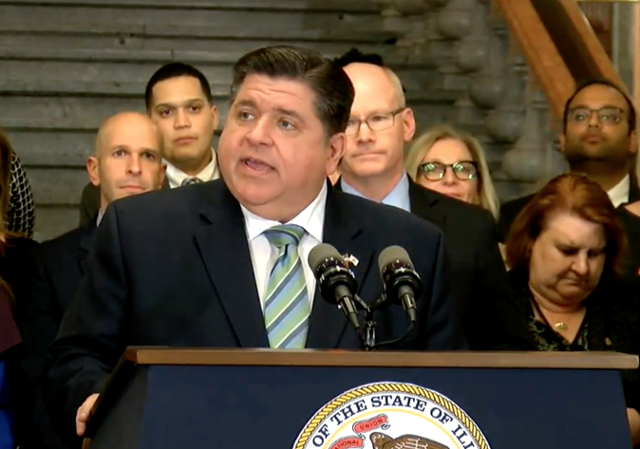
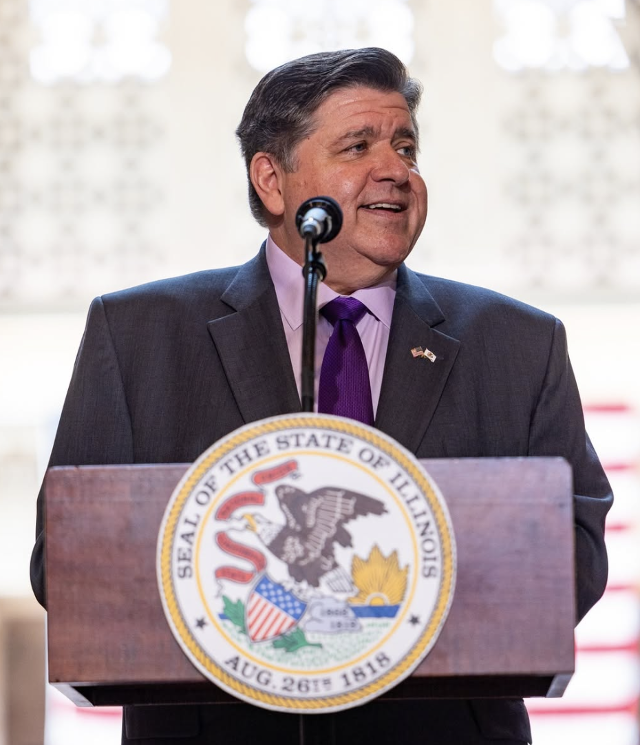
 CHICAGO – Today, Governor JB Pritzker signed into law two pieces of legislation, championed by Lieutenant Governor Juliana Stratton, that advance the health and safety of women and survivors of domestic violence in Illinois, ensuring that patients are treated by healthcare providers who are fully educated on perimenopause and menopause and domestic violence survivors are protected from emerging forms of technology-facilitated abuse.
In doctors’ offices and within the justice system, where women and survivors have historically had to advocate for themselves, the State will ensure every Illinoisan is met with informed care and legal protections that meet the moment.
Get The Latest News!
Don't miss our top stories and need-to-know news everyday in your inbox.
“One very important component of making Illinois the best place to live, work, and raise a family is protecting the health and safety of women and building communities where they are safe and supported,” said Governor JB Pritzker. “Today’s legislation protects and empowers women in two critical areas for their health and safety, strengthening menopause education so healthcare providers can give patients the information they need to navigate an important stage of life, and ensuring orders of protection meet the needs of domestic violence survivors in the modern world.”
“As Chair of the Illinois Council on Women and Girls, I’m proud to reaffirm our commitment to protecting women and girls, no matter what stage of life,” said Lieutenant Governor Juliana Stratton. “We’re also meeting people where they are, taking issues that have too often been dismissed, minimized, or misunderstood, and creating opportunities and protections so all Illinoisans can thrive.”
SB 3325 mandates that menopause education be included as an option to fulfill existing implicit bias education requirements for health care professionals. SB 3020 modernizes the Illinois Domestic Violence Act (IDVA) to include forms of harassment made possible with online location tracking features and AI, while also lowering barriers to seeking orders of protection. Both bills are supported by the Illinois Council on Women and Girls led by Lieutenant Governor Juliana Stratton.
Introducing Nation-Leading Menopause Awareness Legislation
94% of women report being inadequately informed about menopause and other common women’s health issues, and 70% of women who seek medical care for menopause symptoms do not receive necessary treatment. In a first-of-its-kind law, SB 3325 improves menopause and perimenopause care while expanding education options for healthcare professionals across Illinois.
This legislation ensures women are seen, heard, and able to access informed care at every stage of life. By expanding menopause education for healthcare providers, Illinois is taking an important step toward closing longstanding gaps in care — especially for Black and Latina women, who too often experience more severe symptoms while facing greater barriers to treatment.
Untreated menopause symptoms can increase the risk of cardiovascular disease, osteoporosis, Alzheimer's disease, and diabetes, while also contributing to workplace productivity losses estimated at $150 billion annually worldwide.
“Menopause and perimenopause affect millions of people, yet far too many patients struggle to find accurate information and proper care,” said State Senator Adriane Johnson (D-Buffalo Grove). “Greater awareness and education can help ensure women receive the support and treatment they deserve.”
“Far too many women struggle to find answers and support during perimenopause and menopause,” said Assistant Majority Leader Camille Lilly. “Improving education for health care providers will lead to better conversations, more informed care, and greater recognition of the very real physical and emotional changes women experience during this stage of life.”
“Education is a critical part of improving menopause care,” said Dr. Pauline Maki, Director of the University of Illinois Chicago’s Center for Health, Awareness, and Research on Menopause. “Importantly, this legislation recognizes the realities of modern clinical practice. Healthcare professionals face significant demands on their time, and educational needs vary across specialties. By creating an incentive for menopause education rather than a one-size-fits-all mandate, Illinois has developed a thoughtful, practical approach that expands access to training while respecting the needs of clinicians.”
Protecting Domestic Violence Survivors from Online Harassment
As technology continues to evolve our abilities to determine and track location, generate images and videos with AI, and widely share information and content online, so too must the State’s protections against the abuse of these capabilities.
SB 3020 strengthens the existing Domestic Violence Act by expanding protection orders to include digital harassment and removing barriers to receiving orders of protection against perpetrators, helping survivors feel safe wherever they are.
The bill modernizes the IDVA by:
Expanding digital protections: The IDVA’s definition of harassment now includes electronic harassment, meaning survivors are protected from tracking, monitoring, doxing, harassing messages or communication, and the nonconsensual creation and dissemination of digitally altered sexual images. It also creates a pathway to have harmful information removed or deleted.
Allowing virtual hearings for orders of protection: Victims in all Illinois counties will be able to request a virtual hearing to petition for orders of protection, instead of having to appear in court with the offender.
Clarifying orders of protection approvals and extensions: Survivors cannot be denied an order of protection only because the offender is incarcerated at the time of the issued order. Courts will be able to grant extensions for any fixed period of time upon good cause, expediting extension hearings when an order is nearing expiration and clarifying that a violation or a new incident of abuse is not required to extend an existing order.
“Our laws must evolve to reflect the realities of the digital era and the way that technology can be used against domestic violence survivors,” said State Senator Adriane Johnson (D-Buffalo Grove). “Survivors deserve laws that prioritize their safety, privacy and peace of mind. We do this by strengthening our laws to ensure that survivors are protected from threats, stalking and intimidation in all forms including digital harassment.”
“Abuse comes in many forms, and not all of them leave bruises or other outward signs,” said State Representative Maurice West. “That’s why it’s critical we build stronger guardrails, so stalkers and offenders who spam, threaten, or track survivors are held to the highest standard in court. Senate Bill 3020 takes an important first step in protecting Illinoisans from this abuse by drawing a hard line: harassment doesn't have to be physical to be real.”
“This modernization of the Illinois Domestic Violence Act will result in greater protections for survivors against tech-facilitated abuse, harassment, and stalking,” said Carrie Boyd, President & CEO of the Illinois Coalition Against Domestic Violence. “Illinois is leading the way nationwide in this modern era with remedies against online and digital abuse so that domestic violence survivors and their families can stop harmful behavior, guard their privacy, and enforce their rights.”