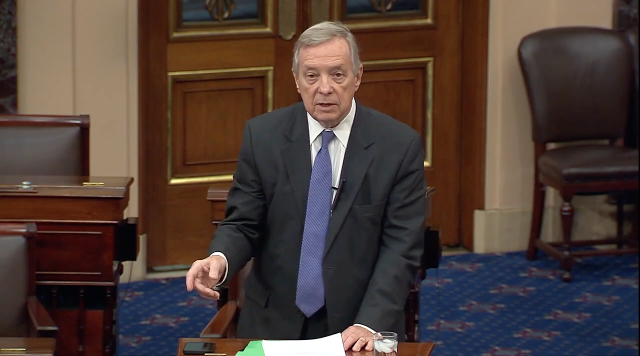
WASHINGTON – U.S. Senate Majority Whip Dick Durbin (D-IL), a member of the Senate Electrification Caucus, introduced the Responsive Energy Demand Unlocks Clean Energy (REDUCE) Act to eliminate states’ ability to “opt out” of aggregated demand response. The legislation would allow consumers nationwide to sell their energy reductions into the wholesale market.
Get The Latest News!
Don't miss our top stories and need-to-know news everyday in your inbox.
“Allowing consumers to sell their energy reductions into the wholesale market is an important step toward decarbonizing our energy sector. On top of that, it puts money back in the pockets of Americans who are doing their part to reduce their energy usage,” said Durbin. “When it comes to taking climate action, we’re all in this together. That’s why the REDUCE Act is critical to ensuring that every state is on board to cut back on our nation’s reliance on fossil fuels and deliver savings to homeowners and businesses.”
The bill would instruct the Federal Energy Regulatory Commission (FERC) to initiate a rulemaking to eliminate states’ ability to opt out of demand response, which is the sale of energy reductions back to the grid during times of peak demand. By eliminating the opt out, consumers and small businesses in every state will be able to participate in demand response, lower their energy bills, and potentially earn a profit.
Currently, 13 states, including every state that borders Illinois, opt out of demand response. In times of high energy usage, these states turn to peaker plants that rely on fossil fuels to produce energy to make up the difference. In times of need, states that opt-out of demand response often rely on states like Illinois for stability, placing undue strain on Illinois ratepayers and the state’s energy resources. By eliminating the ability to opt-out, states would see increased grid stability and flexibility, which would protect Illinoisans from volatile electricity prices caused by shortfalls in neighboring states’ electricity supply.
The 13 states that opt out include Arkansas, Iowa, Indiana, Kentucky, Louisiana, Michigan, Minnesota, Missouri, Mississippi, North Carolina, North Dakota, South Dakota, and Wisconsin.
In August, U.S. Representative Sean Casten (D-IL-6) introduced companion legislation in the U.S. House of Representatives.