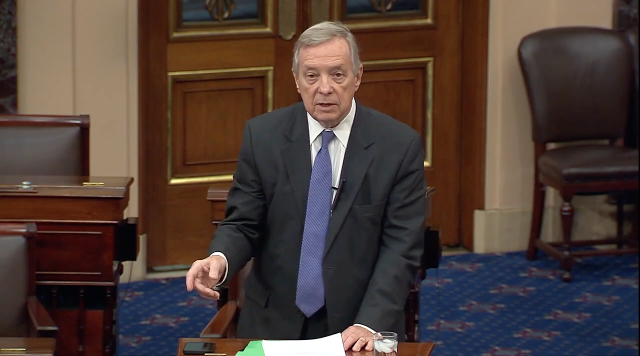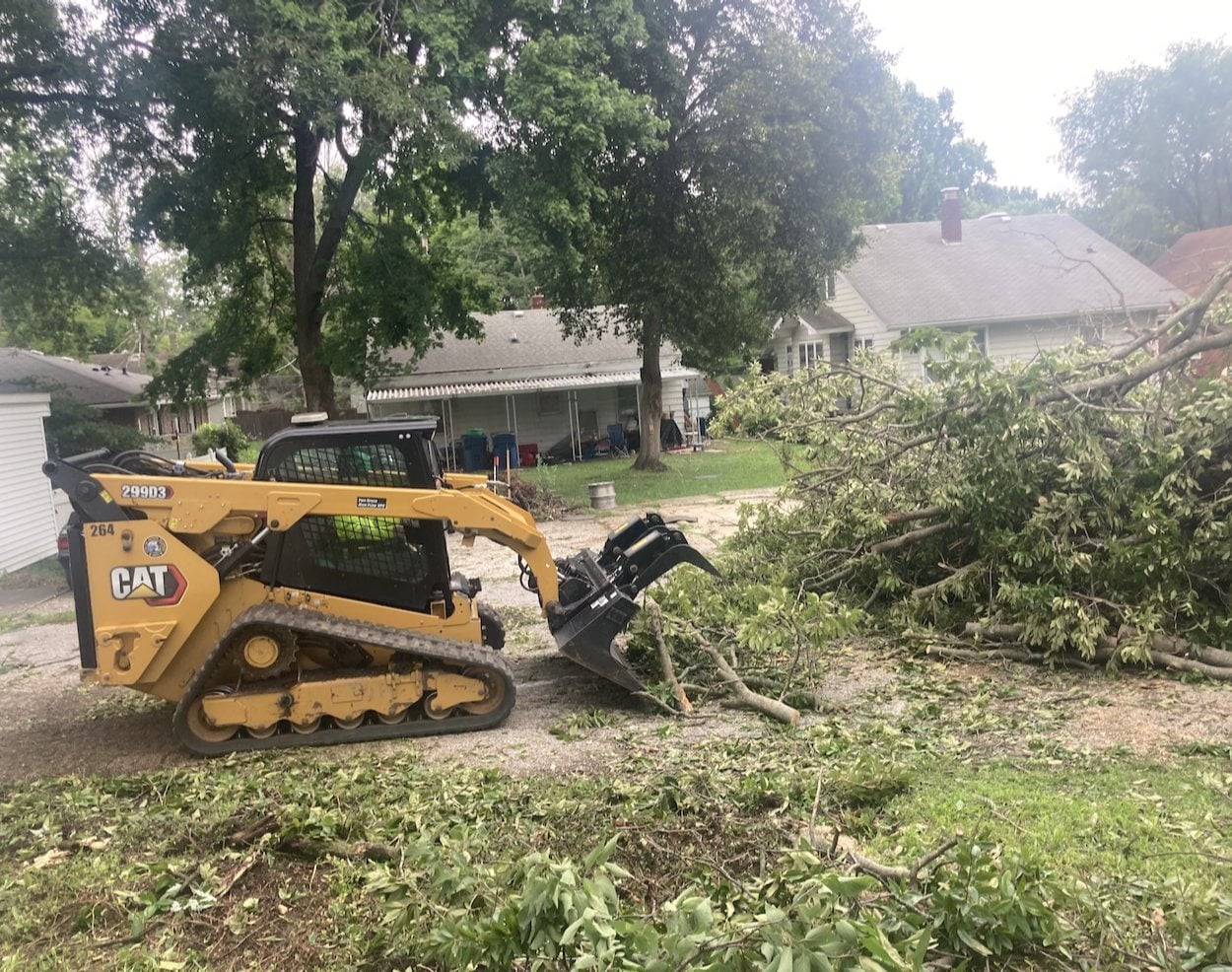

WASHINGTON – U.S. Senator Dick Durbin (D-IL) today led the Illinois congressional delegation in a letter to the Federal Emergency Management Agency (FEMA) expressing concern over the impact FEMA’s Public Assistance deductible concept will have on states’ ability to receive federal assistance after a disaster occurs. FEMA’s Public Assistance deductible would require states to meet a predetermined, annual expenditure of state emergency management funds or disaster recovery costs to qualify for FEMA Public Assistance in the event of a natural disaster, which has the potential to delay federal disaster assistance and shift additional costs to state and local governments.
Get The Latest News!
Don't miss our top stories and need-to-know news everyday in your inbox.
“While FEMA’s Public Assistance declaration review process is in need of reform, it is important to get it right,” wrote the members. “We strongly encourage you to consider the impact your deductible concept will have on states’ ability to receive federal assistance at a time when it is needed most. We urge you to follow federal law, which ensures states can rely on the federal government for help to recover after a disaster occurs.”
Along with Durbin, the letter was signed by: U.S. Senator Tammy Duckworth (D-IL) and U.S. Representatives Bobby Rush (D-IL), Robin Kelly (D-IL), Dan Lipinski (D-IL), Luis Gutierrez (D-IL), Mike Quigley (D-IL), Peter Roskam (R-IL), Danny Davis (D-IL), Raja Krishnamoorthi (D-IL), Jan Schakowsky (D-IL), Brad Schneider (D-IL), Bill Foster (D-IL), Mike Bost (R-IL), Rodney Davis (R-IL), Randy Hultgren (R-IL), John Shimkus (R-IL), Adam Kinzinger (R-IL), Cheri Bustos (D-IL), and Darin LaHood (R-IL).
Last month, Senators Durbin and Duckworth introduced the Fairness in Federal Disaster Declarations Act, which would reform FEMA’s disaster declaration process to make it more transparent and equitable to small and rural communities in larger states like Illinois.
Full text of the letter below:
April 12, 2017

Regulatory Affairs Division
Office of Chief Counsel
Federal Emergency Management Agency
500 C Street SW, 8NE
Washington, DC 20472
To Whom It May Concern:
We are writing to express concerns about the Federal Emergency Management Agency’s (FEMA) supplemental advance notice of proposed rulemaking regarding a Public Assistance deductible that would require states to meet a predetermined, annual expenditure of state emergency management funds or disaster recovery costs to qualify for FEMA Public Assistance in the event of a natural disaster. While FEMA’s Public Assistance declaration review process is in need of reform, it is important to get it right.
FEMA’s deductible concept has the potential to delay federal disaster assistance and shift additional costs to state and local governments both before and after a disaster occurs. We agree that pre-disaster mitigation efforts are of critical importance, and FEMA should play an active role in helping states carry out these efforts. However, pre-disaster mitigation should not be encouraged in lieu of providing states with federal assistance following a disaster, nor should states shoulder the entire burden of mitigation costs.
Illinois has made significant investments in long-term mitigation. For example, the state has purchased more than 4,000 flood prone properties, which has significantly reduced the impact of flooding across the state. Illinois has fewer opportunities for future mitigation efforts than states that have undertaken little or no mitigation, and because of these investments, it will be more difficult for our state to meet the cost of a proposed deductible. States that have already pursued mitigation activities will be penalized under this deductible concept.
The Robert T. Stafford Disaster Relief and Emergency Assistance Act (Stafford Act) requires that FEMA provide at least a 75 percent federal cost share to states applying for Public Assistance. If states are required to meet the cost of a deductible via disaster spending, this concept could effectively reduce this federal cost share requirement.
Additionally, we are concerned that FEMA does not currently use all of the existing criteria under the Stafford Act when making a disaster declaration recommendation to the President. In addition to the per-capita indicator, FEMA must consider the localized impact of damage, insurance coverage in force, hazard mitigation efforts, recent multiple disasters, and other types of federal assistance being offered. Future rulemaking efforts should take a holistic approach that guarantees all of these criteria are used when recommending whether or not a state should receive federal assistance.
We also urge any future proposal to take into account local economic factors such as the local accessible tax base and local sales tax, the median income as it compares to that of the state, and the poverty rate as it compares to that of the state, when making a recommendation for a Public Assistance declaration to the President.
Once again, we strongly encourage you to consider the impact your deductible concept will have on states’ ability to receive federal assistance at a time when it is needed most. We urge you to follow federal law, which ensures states can rely on the federal government for help to recover after a disaster occurs. Thank you for your time and consideration on this important matter.