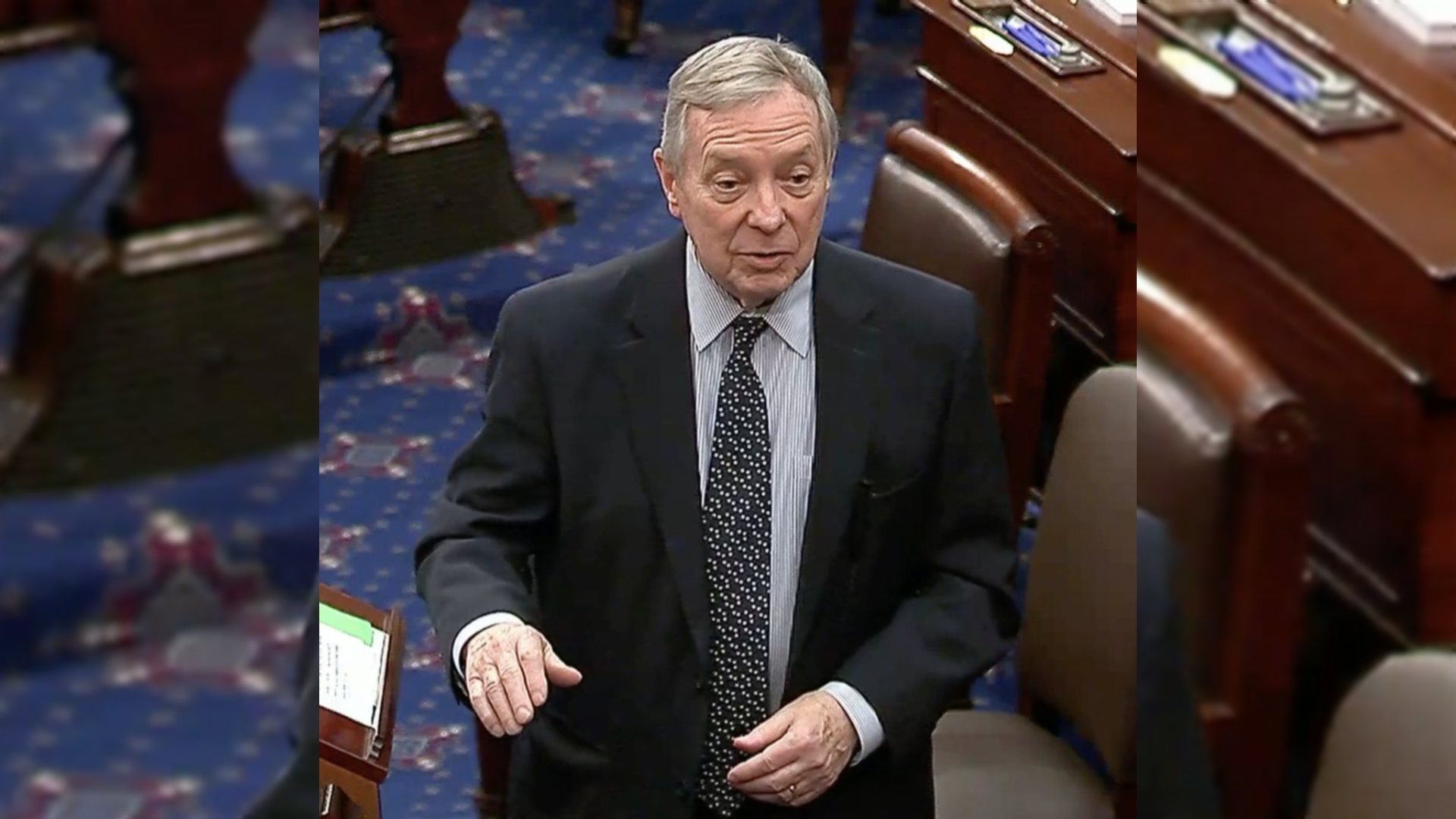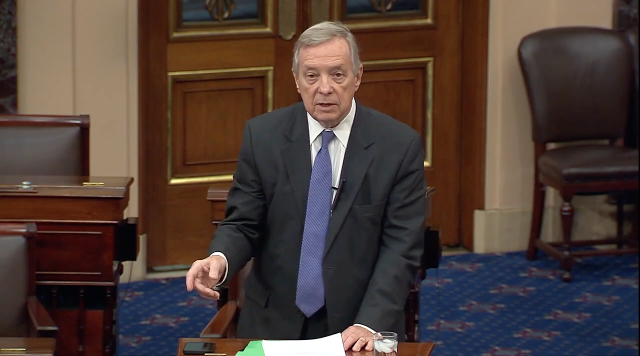

WASHINGTON – U.S. Senate Democratic Whip Dick Durbin (D-IL) and U.S. Senator Chuck Grassley (R-IA), Chairman of the Senate Judiciary Committee, introduced legislation to require open proceedings of the Supreme Court to be televised. The bipartisan Cameras in the Courtroom Act of 2017 would require the Supreme Court to permit television coverage of all open sessions of the Court, unless the Court decides, by a majority vote of the Justices, that doing so would constitute a violation of the due process rights of one or more of the parties before the Court. Today’s bill introduction coincides with “Sunshine Week,” a national initiative aimed at promoting a dialogue about the importance of open government and freedom of information.
Get The Latest News!
Don't miss our top stories and need-to-know news everyday in your inbox.
“Decisions made by the Supreme Court impact the lives of all Americans in every corner of the country, but their proceedings often don't reach beyond the four walls of the court room. And while we may disagree on the outcome of these cases, we can all agree that the American public deserves greater access to the arguments and decisions that will shape our society for years to come,” said Durbin. “It’s time for the Supreme Court to embrace technology and transparency.”

“Decisions made by the Supreme Court can resonate with Americans for generations, yet most of them will never have a chance to see the highest court in action. Opening up the Supreme Court’s public proceedings to cameras and other broadcast tools provides a window into the court for all Americans, not just those in Washington, D.C. It would also expand the people’s understanding of our judicial system,” Grassley said.
U.S. Senators Al Franken (D-MN), Richard Blumenthal (D-CT), and Amy Klobuchar (D-MN) are cosponsoring the Cameras in the Courtroom Act of 2017. U.S. Representatives Gerry Connolly (D-VA) and Judge Ted Poe (R-TX) introduced companion legislation in the House.
The Cameras in the Courtroom Act only applies to open sessions of the Supreme Court – sessions where members of the public are already invited to observe in person, but often cannot because there are a very limited number of unreserved seats in the Courtroom. Allowing public scrutiny of Supreme Court proceedings would produce greater accountability, transparency, and understanding of our judicial system.
In 2016, the Government Accountability Office (GAO) released a report highlighting the value of broadcasting video and audio coverage of Supreme Court and other appellate court proceedings. The report cites stakeholders who state that the benefits of such coverage include enhancing public access to the courts, educating the public on the judiciary, and providing a useful window into how courts think about the issues in a case.
In 2012, the bill was approved by the Senate Judiciary Committee on a bipartisan vote of 11-7. The bill was also approved by the Committee on a bipartisan vote of 13-6 in 2010.