(This is shared by Molly Peters, director of the Greene County Health Department)
Get The Latest News!
Don't miss our top stories and need-to-know news everyday in your inbox.
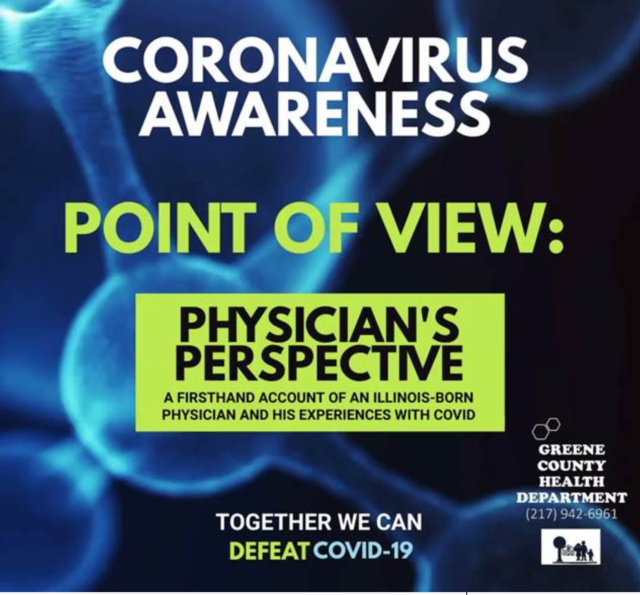
Today our Point of View comes from Dr. Rachel Unanue Rose, PT, Ph.D., a Board Certified Clinical Specialist, Associate Professor and Apple Teacher for the Physical Therapy Program at Maryville University. Dr. Rose has agreed to an interview with us to discuss her perspective on COVID as well as tell us about her experiences participating in a trial for the development of a COVID-19 vaccine. We are so appreciative of Dr. Rose and really enjoyed learning more about this process!
Hi Dr. Rose! Let's start off with the following questions: What is your professional background? Where did you complete your education and where have you worked/where are you currently working and in what role?
I received my undergraduate degree and MSPT from Washington University in St. Louis. I also have a PhD from Drexel University in Philadelphia. I have worked at St. Louis Children’s Hospital, Cardinal Glennon, and The University of Alabama at Birmingham. I currently work at Maryville University teaching in their Physical Therapy Program. Up until COVID-19, I also worked one day a week at St. Louis Children’s Hospital Specialty Care Center. When COVID-19 hit, many clinics closed during the stay at home or limited their patients, so I haven’t been back in the clinic yet (makes sense since I only work one day in the clinic).
What have your professional experiences within the last 8 months taught you about COVID-19 that would be helpful to educate our followers?
Anyone can get COVID-19. Even if you are healthy, you can get COVID-19. We are all in this together and we all need to follow the guidelines and do what we need to in order to reduce the spread. It’s simple, wear a mask, socially distance, and wash your hands as often as possible.
Many people still hold the belief that the coronavirus and the flu are the same thing. Can you explain the main differences between flu and COVID-19 for anyone that might struggle with understanding why they are not the same thing?
COVID-19 is highly transmissible compared to the flu which is why it is so easily and rapidly spread from one person to another. We are still learning about COVID even 9 months into it. There is no way to predict who is going to get a mild case versus who is going to get a more severe form or even die from it. Not everyone who has died or become severely ill from COVID has been at higher risk. Healthy people have become severely ill and even died from the disease. People who have recovered from COVID-19 can have lingering effects which does not happen with the flu. Both COVID and the flu cause respiratory infections and are transmitted from one person to another, but we have no immunity to COVID-19. We do have a vaccine for the flu which helps to reduce the spread and even reduce the severity for those who may still get the flu after being vaccinated.
For those who think COVID-19 is not a big deal because it had a high survival rate, how would you respond to that? Do you think the survival rate will decrease as time passes without a vaccine?
COVID-19 is a serious disease. The scary thing about it is that there are a number of people who are asymptomatic and can spread the disease to others. All it takes is for one person who doesn’t know they are positive to pass it along to someone else who has the potential to pass it onto a grandparent or parent who is high risk. They are developing more treatments as we learn more about the disease which can increase survival rates, but this is still a new disease. Why would you risk spreading the disease to loved ones who may get really sick or even die from it? I don’t want to take that chance with my family, so I do what I need to. I wear a mask, socially distance, and wash my hands. I haven’t eaten in a restaurant or gone shopping in a mall since March. I literally have only gone to the grocery store and Target since March. I even do all the shopping for my parents and elderly neighbors.
You decided to participate in the vaccine trial for COVID-19, can you tell us about your experience? (Where did you go, how did you you hear about the trial, what happened when you went?)
When COVID-19 hit the St. Louis area, I had told my family I would be willing to participate in a vaccine trial. I’m not sure any of them really believed me. In July, I heard on the news that both SLU and Wash U were going to have vaccine trials. They had two links online to sign up, so that’s what I did. I put my name in for both and then waited to see if I was accepted into one of the studies. It took a few weeks and then I finally heard back from one. I was asked to read the consent form and call a number if I was still interested. When I called, I was asked health questions and if I had recently received any vaccines. I had just gotten the shingles vaccine a few weeks beforehand, so they scheduled me to come in two weeks later. My first visit to the vaccination clinic took two hours. They explained the study to me in detail and allowed me to ask any questions. When I agreed to participate, I had to sign an informed consent form. The nurse took a detailed health history, one of the physicians involved in the trial gave me a quick physical, I was COVID tested, and had blood drawn. After all that, I was given an injection which was either the actual vaccine or a placebo of just saline.
The study is double-blinded meaning that I don’t know what group I am in and the people involved in the study don’t know what group I am in. After I got the injection, I had to stay there for 30 minutes to make sure I was alright. During that time, they had me download and log into an app where I tracked any symptoms daily over the next week. For that first week after the injection, I took my temperature and logged it on the app along with any symptoms I had such as pain, redness, or swelling at the injection site. My arm was a little sore the first day, but nothing that limited anything I did. I also got weekly calls from the clinic to check-in to see if I had any changes in my health or medications if I had been exposed to anyone with known COVID-19, and if I was experiencing any signs/symptoms of COVID. A month after my first injection, I went back to the clinic for my second injection. This visit was shorter. I was asked some health questions, was COVID tested, had blood drawn, and received the second injection. For the next week, I had to fill out the questions on the app and then received weekly calls for the next four weeks. I did have to return to the clinic a month after the second injection to have blood drawn. Now, I just fill out a couple of questions on the app once a week and get called monthly from the clinic. I go in for a follow-up in March. I will actually be followed for 25 months from the first injection.
What helped you make the decision when you chose to participate in this trial?
There were a couple of things that helped me to decide to participate in the trial. First, I am pretty healthy, so I felt like this was something I could do from a health standpoint. From the start of COVID, I also understood that the only way we were truly going to get back to normal was to have a vaccine. Masks, social distancing and handwashing are ways to slow the spread, but until we have a vaccine that can be disseminated to everyone, this wasn’t going to be going away. I also knew I would be increasing my exposure when I went back to work in person with my students in August, so that was another reason I felt like I was a good person to be in a vaccine trial. I happen to teach in a program where we have to do hands-on labs and can’t socially distance. We wear the appropriate PPE during these times, but my exposure is still certainly higher than it was when I was teaching fully online in the spring. Lastly, I’ll be honest part of what helped me decide to participate was that I was hoping that I got the vaccine. I have older parents and my biggest worry is passing COVID to them. I am careful, I wear my mask, socially distance, and wash/hand sanitize my hands, but the worry of catching COVID and passing it to my parents is still there.
What do you feel makes this vaccine and trial different from others?
Before COVID-19 started, I had never even thought about being in a vaccine trial. I like everyone else have taken for granted that we have all these vaccines that have reduced and even eliminated diseases. Back in March, my son was actually doing a project on smallpox. We talked about how the smallpox vaccine came about and eradicated the disease. Back then, they were actually infecting people with cow pox and then smallpox to see if they got the disease. We have come so far with vaccines and vaccine trials. With COVID-19, there has been a huge push to get this vaccine developed. The development of this vaccine has occurred in a short time frame compared to all other vaccines, but the reality is that we need a vaccine to resume our normal activities.
Why do you think this vaccine was able to be produced so quickly and what factors helped you feel safe?
Because we are in a pandemic, the development of a vaccine can be expedited. The government can bring together government agencies, academia, nonprofit organizations, and pharmaceutical companies to develop a coordinated strategy for speeding up the development of vaccines. During a pandemic, manufacturers can submit an Emergency Use Authorization to the FDA to facilitate the availability and use of the vaccine. That’s where we are right now with one company and a second soon to be doing the same. I knew this vaccine was developed quickly, but entering into a phase 3 trial, I knew that a smaller number of people had been vaccinated and the risks and side effects had been minimal.
Because of that, I was pretty comfortable entering the vaccine trial.
What is the normal process for vaccine approval?
Vaccines are developed in a lab and usually are tested on animals to see if it is likely to be safe in humans. Once they have completed the preclinical phase, they submit their information to the FDA who evaluates it to determine if it is reasonably safe for the testing to move forward in people. If approved, the vaccine begins the clinical development stage which consists of three phases under FDA oversight. The first phase is in a small number of healthy people. This phase looks at whether there are adverse reactions with different doses and how well the vaccine induces an immune response in people. If there aren’t any safety concerns, the study will move onto phase 2. In this phase, hundreds of people from different demographics are entered to look at additional safety information on side effect and risks, look at the immune response between doses, and to get more information on effectiveness. During this phase, they have a group getting the vaccine and one that gets a placebo. Because they have the two groups, the people who get the vaccine can be compared to the group that didn’t get the vaccine. Phase 3 is the last phase in developing a vaccine. During this phase, the vaccine is administered to thousands of people allowing the study to compile important information on the effectiveness and safety of the vaccine including any side effects. With this phase, those who got the vaccine are compared to those who did not get the vaccine. I was in the Phase 3 study. After they get through the phase 3 trials, the vaccine is submitted to the FDA for approval.
What are the top 5 things you think people should know about the development and safety of a COVID vaccine?
Thousands of people have already had the vaccine to determine the safety for you. We’ve taken the risk, so that you can feel comfortable getting vaccinated.
You are not being given the virus in the vaccine.
You can not get COVID-19 from the vaccine.
When a vaccine is available, get yourself vaccinated as soon as you can.
The vaccine is the only way we will be able to get back to a more normal way of life.
What would you tell someone who says they would refuse to get a vaccine even if one was available in the future?
Why wouldn’t you get vaccinated?
I would rather get vaccinated than risk getting COVID-19 even if the vaccine has mild side effects like a low-grade temperature or soreness at the injection site. If you were to get COVID, you don’t know if you will get a mild case or seriously ill or even die from it. You also don’t know what the long term consequences of the disease would be for you. Protect yourself which will indirectly protect your loved ones who may not be able to be vaccinated right away like people undergoing cancer treatments.
Do you have any final thoughts you would like to share?
THANK YOU DR. ROSE!!! You are appreciated.