 SCOTT COUNTY - The Scott County Health Department announced today it is seeking the public’s assistance in obtaining dead birds to submit to the Illinois Department of Public Health (IDPH) to test for the presence of West Nile Virus (WNV).
Please contact the Department at 217-742-8203 ex. 102, and the staff will retrieve species of “perching birds” (Passeriformes). In addition to crows, blue jays, robins, cardinals, catbirds, mockingbirds, many species of sparrows, finches, flycatchers, swallows, warblers, wrens, and small or medium-sized hawks or owls will be accepted for submission to the Veterinary Diagnostic Laboratory, School of Veterinary Medicine, University of Illinois, Urbana-Champaign for testing. Vector Control/Arbovirus Surveillance from IDPH indicates that WNV arrived in Illinois at the end of the summer of 2001.
Get The Latest News!
Don't miss our top stories and need-to-know news everyday in your inbox.
Research from the Center for Disease Control and Prevention (CDC) has found that counties with a WNVpositive bird before August 1 were twice as likely to have a human case than those who recorded a WNV-positive bird after August 1. Therefore, dead birds will be accepted for testing beginning May 1, 2023 – October 15, 2023.
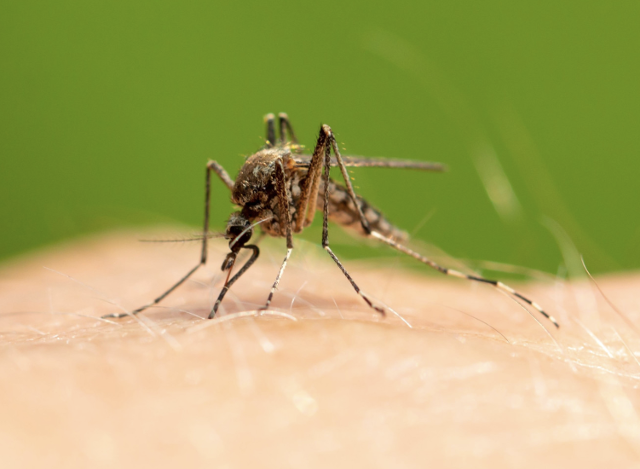
It is the Department’s goal is to detect any early season WNV activity promoted by weather conditions this spring. As the summer becomes drier, we will see an increase of Culex pipiens (the common house mosquito) population which is the disease transmitter of the West Nile Virus.
The Department is asking the community to be aware of any birds that:
• Have been dead for less 48 hours
• Died singly (birds dying from WNV are usually found singly, scattered over a wide area versus birds that die from other causes – storm mortality, food poisoning, toxicants – usually die in groups or clusters in a small area)
• NOT decomposed (strong odor present, dried/deflated eyes, maggots present or bloated with decomposition gases or damaged by scavenging animals)
• No obvious cause of death, i.e., crushed, shot, or killed by a motor vehicle.
Dead birds that do not meet the requirements should be properly disposed of by an adult by burying or double wrapping in plastic bags and and disposing properly without touching the carcass. Wash hands upon completion.
If the dead bird meets the conditions for testing or if you have any questions, please contact the Scott County Health Department.