 EAST ALTON – The National Great Rivers Research and Education Center (NGRRECsm) team is launching a multi-year microplastics initiative to understand how plastics are affecting our freshwater ecosystems.
“Scientists have only recently discovered that microplastics are found in almost all areas of the environment and are being ingested by most organisms, including humans” Large River Ecologist Jason Knouft said. “Unfortunately, we don't really know if and how these particles are affecting our health. This is likely an issue that impacts us all and requires significant attention.”
Get The Latest News!
Don't miss our top stories and need-to-know news everyday in your inbox.
Microplastics are defined as plastic pieces less than five millimeters or 0.2 inches in diameter. They have been detected in marine organisms as small as plankton, commercial seafood, and our drinking water. As of March 2022, leading health researchers have also detected microplastics in human blood.
Microplastics are becoming increasingly prevalent in the environment and are of concern for human health. Yet, in freshwater systems, there is an inadequate understanding of the environmental impacts from this contaminant.
“It's rare that a research team has sampled microplastics in all parts of a local environment. Most times, scientists will focus on one aspect of the environment, river water for example. This limits the ability to understand how microplastics move through the system” said Knouft.
This project will focus research efforts within the Piasa Creek Watershed, located in Madison County Illinois. Currently in Phase 1, the research staff are working to obtain all necessary equipment and aim to start collecting data beginning in May.
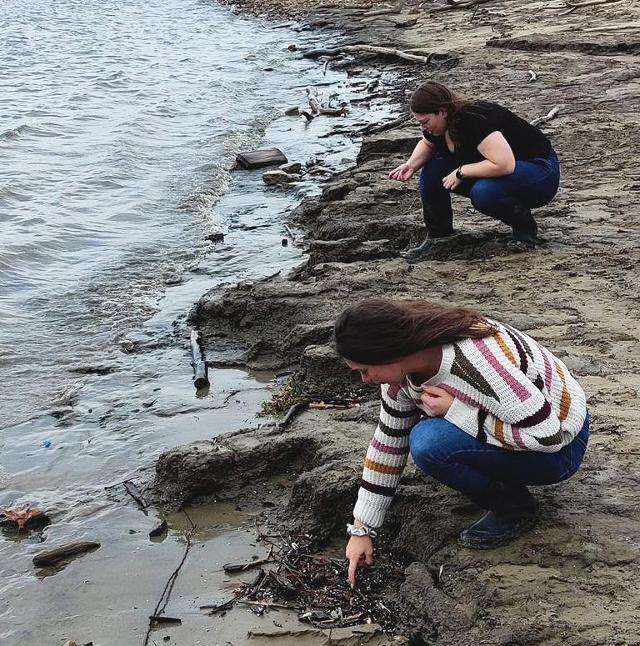
Phase 1 of this initiative will focus on collecting data from water, soil, and air in different habitats including wetlands, farmland, forests, and urban areas. This data will give NGRREC scientists a clearer understanding of the distribution of microplastics in the Piasa Creek watershed to better guide the future work being done. This first phase is crucial for determining the next steps of this project.
For more information, visit www.ngrrec.org or contact Jason Knouft at jason.knouft@slu.edu.
National Great Rivers Research and Education Center (NGRREC)
Founded in 2002 as a collaborative partnership between the University of Illinois at Urbana-Champaign and Lewis and Clark Community College, NGRREC is dedicated to the study of great river systems and the communities that use them. The center aspires to be a leader in scholarly research, education, and outreach related to the interconnectedness of large rivers, their floodplains, watersheds, and their associated communities. To learn more about NGRREC, visit www.ngrrec.org.