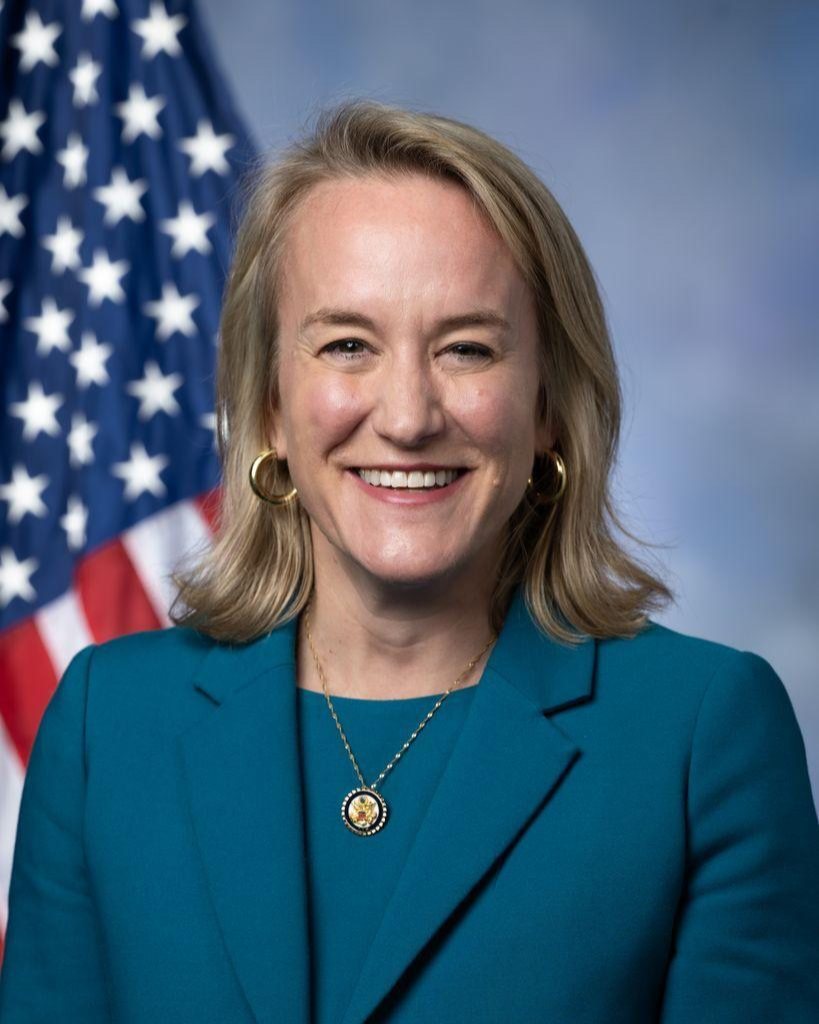
 SPRINGFIELD — This week, Congresswoman Nikki Budzinski (IL-13) led 33 of her colleagues in a letter calling on the Federal Trade Commission (FTC) to investigate reports of widespread overcharging by some of America’s most-recognized brand-name retailers.
The letter is just the latest in the Congresswoman’s continued efforts to hold Dollar General and Family Dollar accountable for widespread price discrepancies at locations nationwide. In December 2025, Budzinski led 29 colleagues in a letter to the CEOs of both companies demanding answers about deceptive pricing practices that have misled consumers. This latest development comes on the heels of the FTC, along with 20 states, filing a lawsuit against Dollar General, the nation’s largest dollar-store chain, for persistently overcharging customers at its more than 20,000 stores across the United States.
Get The Latest News!
Don't miss our top stories and need-to-know news everyday in your inbox.
Budinski sees this lawsuit as a step in the right direction and an assurance that her previous efforts are making an impact. Under Section 5 of the FTC Act, the Commission has the authority to investigate and enforce against deceptive practices, but they haven’t undertaken any sort of investigation into these particular instances.
“I’m proud that our efforts have pushed the FTC to launch this lawsuit – but more must be done. When Americans are already struggling to get by, giant corporations shouldn’t be taking advantage of them. Today’s letter is another push to ensure that not just Dollar General, but other corporate chains are held accountable for deceptive pricing and ensure consumers are protected,” said Budzinski.
A full copy of the letter is available below:
Chairman Ferguson:
We write to ask that the Federal Trade Commission (FTC) use its authority under Section 5 of the Federal Trade Commission Act (FTC Act)1 to investigate and enforce against instances of repeated price inaccuracies at retail stores nationwide. Recent investigative reporting, alongside state investigations, have found several instances of prices for household essentials listed on the shelves at retailers not being the same as the prices of these items at checkout.
A December 2025 report in The Guardian found that this shelf-to-register discrepancy was occurring repeatedly at dollar stores across the country. Per the report, “some of the biggest flops include a 76% error rate in October 2022 at a Dollar General in Hamilton, Ohio; a 68% error rate in February 2023 at a Family Dollar in Bound Brook, New Jersey; and a 58% error rate… at a Family Dollar in Lorain, Ohio.”
In September 2026, The Guardian published a second report, finding that “between 2023 and 2025, Circle K locations failed 35% of their government price-accuracy inspections in Florida, 62% in North Carolina and 82% in Columbus, Ohio. Over the same period, its larger rival, 7-Eleven, flunked 47% of inspections in both Colorado and Utah and 79% in Ontario county in upstate New York.”
Several state attorneys general have also conducted their own investigations and levied lawsuits against these stores for deceptive pricing. In December 2025, Pennsylvania Attorney General Dave Sunday announced a settlement with Dollar General Corporation and its parent company after an investigation “uncovered numerous occasions when consumers were charged higher prices at registers at Dollar General” and “revealed that Dollar General stores failed more than 40 percent of pricing accuracy inspections between 2019 and 2023.” Similar investigations and lawsuits were levied in Ohio, Missouri, and Colorado, Arizona, and Vermont, among other states.
These reports show that these incidents are not isolated to a geographic area or to a handful of stores across the country. Instead, the scale of documented violations seems to be the result of systemic failure within corporate operations, leading to customers overpaying for their groceries, potentially without knowing. Whether the product of reckless corporate understaffing and inadequate shelf-maintenance protocols or intentional bait-and switch pricing, the downstream effect is the same: consumers are systematically misled and overcharged at checkout. These price discrepancies between shelf and checkout are coming at a time when working families can least afford it. Seventy-eight percent of Americans say food prices are having the greatest impact on their monthly expenses. More than four-in-five Americans have changed their shopping behavior due to rising grocery prices, including buying less meat and fresh produce, as well as visiting multiple stores to find lower prices.
In addition to the affordability concerns widespread across our country, many of our communities suffer from a lack of grocery options within easy walking or driving distance. In many instances, the stores in question are the only viable locations to purchase everyday goods and groceries. Because these stores are often the sole option for essentials in underserved neighborhoods and rural communities, these companies occupy a unique position of trust and responsibility. It is deeply troubling to see that these limited options have been exploited to the detriment of working families as a result of negligent pricing practices or deceptive marketing.
Under Section 5 of the FTC Act, the Federal Trade Commission has clear statutory authority to police unfair and deceptive practices – standards that these systemic shelf-to-register pricing disparities clearly meet. Displaying lower shelf prices only to charge higher amounts at checkout – oftentimes with little to no recourse – misleads consumers on material pricing and inflicts economic harm, which we believe places this conduct directly within the FTC’s mandate to investigate and remedy.
We appreciate the FTC’s recent action on this front, including filing a complaint alongside 20 states “alleging that Dollar General has, for years, repeatedly mislabeled prices, overcharged consumers and failed to correct the issue despite extensive corporate knowledge of the problem.”
While this step is positive, the widespread nature of the issue revealed by public reports and state inquiries warrants a full-scope probe. As such, we call on the FTC to investigate these price discrepancies on behalf of consumers across the country who have been impacted or who may be impacted in the future, and to utilize the Commission’s statutory enforcement authority as appropriate. We look forward to working with you on this matter.