BLACKBURN COLLEGE AND THE LOVEJOY TRAGEDY:
 CARLINVILLE - Abolitionists were not in the mainstream of 1830s society in Illinois. But some of the early leaders of Blackburn College met the challenge head-on, and helped place the school on the right side of history.
Get The Latest News!
Don't miss our top stories and need-to-know news everyday in your inbox.
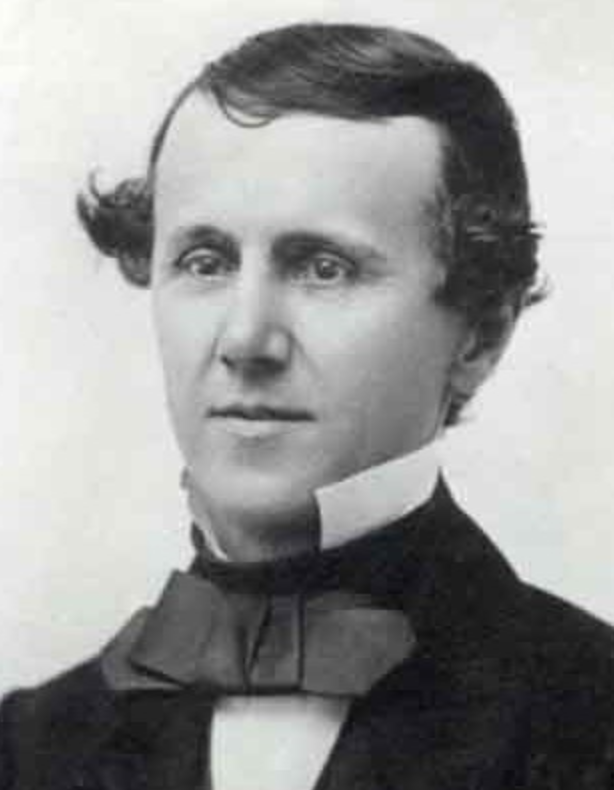
Winthrop Gilman, one of the founding trustees of Blackburn, was one of the defenders of abolitionist editor Elijah Lovejoy, whose murder in Alton on Nov. 7, 1837 remains a flashpoint in the slavery debate in Illinois. Gilman’s actions on that fateful night displayed both physical and moral courage, and reflect his own convictions.
Days before, Rev. Gideon Blackburn, the College founder, was named president of an anti-slavery convention in Alton that was organized by Lovejoy. Like Gilman, Blackburn’s role in the convention indicates his dedication to a cause that was unpopular – and dangerous – at the time.
*****
The Lovejoy episode remains a dark chapter in the history of Illinois, and still defines the social values of the era.
Though diversity is a front-line issue today, the world was much different 180 years ago. In the early-to-mid 1800s, abolition was an unpopular view in much of Illinois and elsewhere, even those with varying degrees of opposition to slavery. In 1837, the state Senate unanimously passed resolutions against abolitionism, and many politicians distanced themselves from the mere mention of the word.
Men like Gilman and Blackburn didn’t care about popular opinion, and neither did Elijah Lovejoy. Born in Maine, the 35-year-old Lovejoy moved west to St. Louis and founded a classical high school before undergoing some sort of religious transformation. As a result, he went back east, earned a divinity degree from Princeton Theological Seminary, and returned to St. Louis in 1833.
There, he edited the Observer, a top Presbyterian journal that Lovejoy revamped as an abolitionist newspaper. A fluent and passionate writer, his editorials were increasingly heated, much to the anger of the pro-slavery public. In response to his writings on the lynching of a free black man in St. Louis, a mob broke into his office in July 1836 and tore apart his printing press.
Alarmed, Lovejoy moved his wife and infant son across the Mississippi River to Alton, considered by many the most progressive city in Illinois. Still, plenty in Alton had no use of Lovejoy. When the remnants of his press arrived in town, a group of proslavery locals dumped it into the river.
Lovejoy, however, was unmoved. In his first edition of the new Alton Observer in September 1836, he declared “the system of Negro slavery is an awful evil and sin.” His editorials only flared from there, and he gradually lost support within the city.
On Aug. 21, 1837, an angry crowd broke into the Observer office and destroyed Lovejoy’s printing press once again. Eastern anti-slavery supporters contributed to a third press, which arrived a month later and was quickly pushed into the river by another mob.
*****
As the tensions mounted in Alton, city leaders tried to force Lovejoy out of town, and a series of contentious meetings were held to discuss the matter. Lovejoy, ever defiant, was undeterred. In October, he invited other abolitionists, including Rev. Blackburn, to Alton to establish an anti-slavery society in Illinois.
Just five months before, Rev. Blackburn had founded the school in Carlinville that bears his name with Gilman and the others. That Rev. Blackburn was even in Alton speaks to his convictions. At age sixty-five, he was elderly for his time, and the forty-mile trip would have been by horseback or carriage, as railroads would not connect Carlinville and Alton for another fifteen years.
As he rode into Alton, he was trotting into a tinderbox. The hostilities between Lovejoy and his many enemies were growing by the day, and Blackburn’s stance on abolition would not have been popular with the masses.
Lovejoy’s group, formally christened the “Illinois Antislavery Congress,” met in the Presbyterian Church in Upper Alton on the afternoon of Oct. 26, 1837. Lovejoy named Rev. Blackburn as the temporary chairman.
While Lovejoy, Blackburn, and the others expected that morality would prevail, they were sorely disappointed. The massive opposition, led by state attorney general Usher Linder of Alton, overran Lovejoy’s convention with pro-slavery advocates. Though their positions were clear, they misrepresented themselves in the opening hours of the convention, pledging their support of the proceeding.
The opposition had also bullied the trustees of the church into a resolution that the church could not be used for the convention, unless all who wanted to participate were able to attend. Because of this deceit, Linder’s forces were allowed inside.
On the second day of the gathering, Blackburn was elected permanent chairman in an acrimonious vote over Alton physician Thomas Hope. It was one of the few victories for the abolitionists at the convention. With a growing crowd on his side, Linder and his forces argued for the proslavery resolutions, which were adopted later that day.
Thanks to the manipulation of Linder and his friends, U.S. Senator and Illinois historian Paul Simon wrote in 1994 that “the proslavery forces scored a clear victory” by their sheer numbers, as “they had made the whole purpose of the convention meaningless.” Simon adds that four members of the convention “would later claim credit for killing Lovejoy.”
Despite the setback, Rev. Blackburn’s position remains a stalwart moment in the saga in Alton, and shows the determination of the early Blackburn College leaders to fight for what was right.
*****
Eleven days later, Winthrop Gilman was at the forefront of the Lovejoy saga. And he was a man with everything to lose.
Along with business partner Benjamin Godfrey, Gilman was a towering economic presence in the Alton area, and controlled a significant portion of the city’s business.
Godfrey and Gilman had a diverse portfolio of interests, including ownership of massive amounts of storage. Among their holdings was the large, stone-built riverfront warehouse that housed Lovejoy’s fourth printing press.
The previous year, Gilman was one of several Lovejoy supporters, including Rev. Blackburn, who had signed a pledge to cover Lovejoy’s financial losses for a two-year period.
Not surprisingly, Lovejoy struggled to finance his newspaper, and Gilman continued to back him. Simon quoted an Alton man who stated Lovejoy “was advised by Mr. Gilman to follow the dictates of his own judgment, which he did.” Simon continued that Gilman was “among the few to stand up strongly for Lovejoy during the final days a year later.”
*****
Lovejoy’s new press arrived at the warehouse at 3 a.m. on Nov. 7, 1837, which he determined to protect with armed guards. That evening, another angry mob assembled outside, and violence erupted as the crowd opened fire and threw heavy stones at the building.
Lovejoy was joined by supporters inside the warehouse, including Gilman. The Observer reported that Gilman “appeared in the door of the second story, and addressed the mob in his peculiarly kind and impressive manner. He earnestly and affectionately advised them to desist from violence, told them that the property was left with him on storage, [and] that he was bound to protect it.”
Though Gilman promised that “nobody in the building had any ill will against [the crowd],” he added that “he and his associates would defend [the press] at the risk and sacrifice of their lives.” In response, the Observer wrote that “he was answered by a fresh volley of stones.”
Gilman described the gathering as “a mob with arms and hootings, with tin horns blowing, and plenty of liquor flowing among them.” One observer remembered that Gilman was the only unarmed man in the warehouse that night.
Obviously, Gilman was risking it all for Lovejoy and morality, but the outcome was predictable. Lovejoy was eventually shot five times, dying in front of the warehouse. The mob again destroyed the press.
Incredibly, Gilman was one of twelve Lovejoy supporters who were indicted by Linder for inciting the riot. Gilman became the lead defendant in a celebrated court proceeding that followed in early 1838, but no one was prosecuted. Because of his consistent actions throughout the Lovejoy tragedy, Usher Linder goes down as one of the great villains of the slavery fight in Illinois.
By contrast, Winthrop Gilman’s courage on the night of Lovejoy’s murder remains a hallmark of the tragedy, though he is frequently overlooked today. Gideon Blackburn’s prominence at the antislavery convention is indisputable as well. Because of their willingness to stand in the face of danger and reprisal, they ensured Blackburn College’s place on the right side of history.
Tom Emery is a freelance writer and historical researcher from Carlinville, Ill. He may be reached at 217-710-8392 or ilcivilwar@yahoo.com.