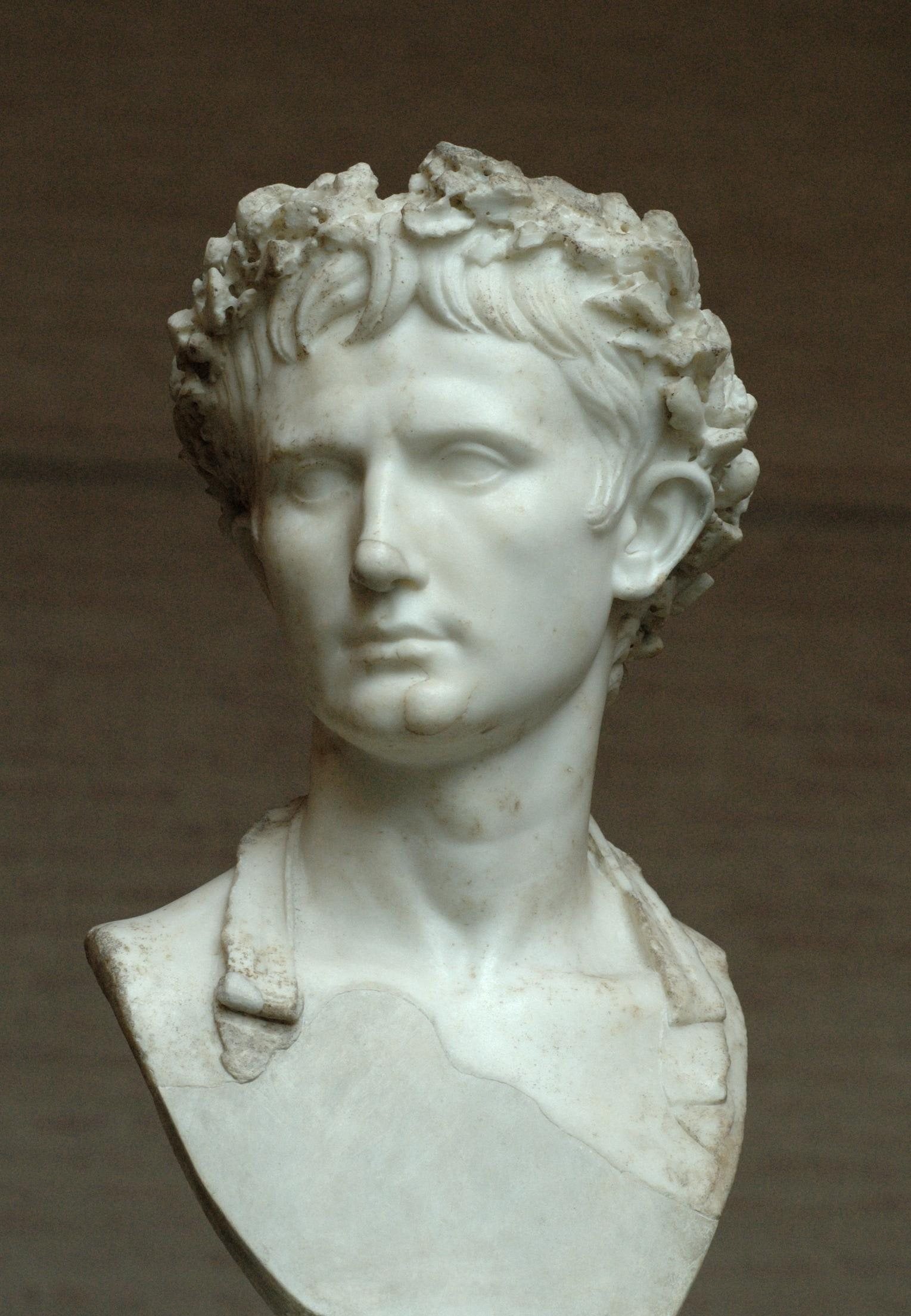
 On August 19, 14 CE, Augustus, the first Roman emperor, died and brought an end to one of the most important political lives in ancient history. His death mattered because he had transformed Rome from a republic shaken by civil war into an empire with a more stable central government. That change affected law, military organization, taxation, public building, and the way power was passed on. It still matters today because the Roman Empire shaped later ideas about citizenship, state authority, infrastructure, and imperial rule across Europe, North Africa, and the Middle East.
Augustus was born Gaius Octavius and rose to power after the assassination of his adoptive father, Julius Caesar. In the long struggle that followed, he defeated rivals and gradually gathered power into his own hands while preserving some republican forms. By the time he died at Nola in southern Italy, Rome had entered a long period of relative peace often called the Pax Romana. His chosen successor, Tiberius, inherited a system that would influence government for centuries. The date marks more than the death of one ruler; it marks the moment when Rome’s imperial structure proved it could survive its founder.
Get The Latest News!
Don't miss our top stories and need-to-know news everyday in your inbox.
A very different kind of event took place in 1692 during the Salem witch trials in colonial Massachusetts. On August 19 of that year, five people were executed after being convicted of witchcraft: George Burroughs, Martha Carrier, George Jacobs Sr., John Proctor, and John Willard. The trials grew out of fear, local tensions, religious belief, and weak standards of evidence. They remain important because they show how panic and suspicion can overpower fairness and due process. In later generations, Salem became a lasting warning about mass accusation and the dangers of legal systems driven by fear.
The 19th century brought conflict on another continent. In 1812, during the War of 1812, the USS Constitution defeated HMS Guerriere in a famous naval battle in the Atlantic. For the young United States, the victory carried symbolic weight far beyond the size of the engagement. It boosted morale at a time when the country faced a stronger naval opponent, and it gave the Constitution its enduring nickname, “Old Ironsides,” after British shot seemed to bounce off its hull. Naval warfare was changing in this period, and the battle became part of the larger story of national identity and maritime power.
Not every important event on this date came through war. In 1909, the first Indianapolis Motor Speedway race event began in Indiana. Early automobile racing was often dangerous, but it also helped draw public attention to engineering, speed, and the growing car industry. The speedway later became one of the most famous motorsport venues in the world. Its history reflects a broader shift in the 20th century as the automobile changed cities, labor, travel, and leisure.
Space exploration gave the date a modern scientific milestone. In 1960, the Soviet Union launched Sputnik 5, carrying the dogs Belka and Strelka along with other living organisms. Unlike earlier missions, this flight returned its passengers safely to Earth. The mission mattered because it helped prove that living beings could survive orbital flight and return, an essential step toward human space travel. It came during the intense competition of the Space Race, but its scientific importance reached beyond that rivalry. Within a year, Yuri Gagarin would become the first human in space.

Only a few years later, the date became linked to a major social turning point in Europe. On August 19, 1991, hardline Soviet officials attempted a coup against President Mikhail Gorbachev. They opposed his reforms and feared the weakening of central Soviet control. The coup failed after public resistance, division within the state, and the visible defiance of Russian leaders including Boris Yeltsin. Its collapse accelerated the breakup of the Soviet Union, which formally ended later that year. The event matters because it changed global geopolitics, ended one of the 20th century’s two superpowers, and reshaped the political map of Eurasia.
This date also carries the memory of notable births. In 1883, fashion designer Coco Chanel was born in France. She became one of the most influential figures in modern clothing design, known for simpler lines and a new vision of women’s fashion that moved away from heavier and more restrictive styles. Her impact reached far beyond luxury branding; she helped change the look and language of 20th-century dress.
A very different kind of creative influence arrived with Gene Roddenberry, born in 1921. The American television writer and producer created Star Trek, a series that blended science fiction with questions about exploration, ethics, and human cooperation. Its cultural reach has lasted for decades, influencing television storytelling, fan culture, and even the way some people imagine the future of science and space travel.
Orville Wright, born on this date in 1871, was one of the two brothers who helped achieve powered flight. His work with Wilbur Wright transformed transportation and warfare and opened the age of aviation. Their achievements changed how people and goods moved around the world.
Among notable deaths, Blaise Pascal died on August 19, 1662. The French mathematician, physicist, and writer made important contributions to geometry, probability, fluid mechanics, and philosophy. He stands as one of the great early modern thinkers, linking scientific inquiry with broader reflection on human reason and belief.
The date also marks the death of Linus Pauling in 1994. Pauling was an American chemist whose work on chemical bonding changed modern chemistry. He received the Nobel Prize in Chemistry and later the Nobel Peace Prize for his efforts against nuclear weapons testing. His legacy joined scientific achievement with public advocacy, showing how researchers sometimes shape both knowledge and public debate.
Examining August 19 through history, the day brings together empire, war, science, art, and public life.