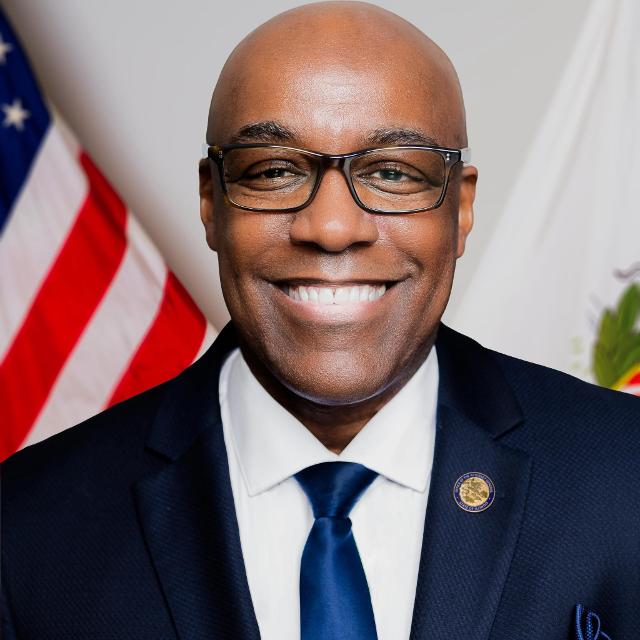
Chicago – Attorney General Kwame Raoul today expressed support for the proposal by advocacy group Student Defense to reinstate and improve upon the automatic closed school discharge rule. Automatic closed school discharge has benefitted tens of thousands of student borrowers in Illinois and across the country, but was rescinded by the U.S. Department of Education.
Get The Latest News!
Don't miss our top stories and need-to-know news everyday in your inbox.
“The Department of Education is unfairly limiting relief that should be automatically available to students who took out loans to pay for a school that is now closed,” Raoul said. “Through no fault of their own, students have been unfairly burdened with overwhelming debt loads and left without a degree. Student Defense’s commonsense proposal would protect students from predatory institutions, provide faster relief for student borrowers, and provide automatic relief to students already facing unprecedented financial hardships and economic uncertainty because of the COVID-19 pandemic.”
Closed school discharge is a federal student loan program that allows for the discharge of all loans a student used to pay for a school when the school shuts down and the student is unable to complete their program. Under the borrower defense to repayment rule implemented by the Department of Education in 2016, discharge of the loans is automatic, provided the student does not transfer the credits earned at the school to complete a similar degree. The department, however, changed course, issuing a new version of the rule in 2019 that eliminates automatic discharge, requiring students to apply. Historically, many students in the midst of a school closure are unaware of the right to discharge and thus would not know they need to apply to discharge their student loans.
If implemented, Student Defense’s proposal would immediately impact Illinois borrowers. For example, because the proposal calls for a shorter waiting period for automatic relief to kick in – down from three years to one year – many student borrowers whose schools closed more than one year ago would receive immediate, automatic relief. In addition, this rule would protect thousands of Illinois students who attend schools that may close in the future, an outcome that is increasingly likely due to the financial pressures caused by the COVID-19 pandemic.
The department’s new rule took effect in July 2020, meaning borrowers who attended schools that closed on or after July 1, 2020 will not be eligible for automatic relief. That same month, Attorney General Raoul’s office joined a coalition of 23 attorneys general in filing a lawsuit to stop the repeal of the 2016 rule and thereby keep automatic closed school discharge.
In June 2019, Raoul’s office called on the U.S. Department of Education to use its discretion to change the closed school discharge eligibility date for students who attended the Illinois Institute of Art. The Illinois Institute of Art lost accreditation in January 2018, but deceived students as to its accreditation until June 2018. It closed in December 2019 but only a handful of its students were eligible for closed school discharge because many had withdrawn six months earlier when the loss of accreditation was exposed. In June of 2019, Raoul’s office called on the Department of Education to move back the closed school discharge date to the date the school lost accreditation, January 2018. The department granted the request in Feb. 2020, making hundreds of former Illinois Institute of Art students eligible for closed school discharge. Because the automatic closed school discharge rule was in effect at that time, those students’ loans will be discharged without an application from the students, provided they do not transfer the credits to pursue a similar course of study.
The Illinois Attorney General’s office has long been a national leader in investigating and enforcing consumer protection violations in the higher education field. Attorney General Raoul has overseen the rollout of the state’s first Student Loan Ombudsman, a position created by the Student Loan Servicing Rights Act, to provide resources for student borrowers who are struggling to make student loan payments. Student borrowers who have questions or are in need of assistance can call the Attorney General’s Student Loan Helpline at 1-800-455-2456. Borrowers can also file complaints on the Attorney General’s website.