ALTON - Three weeks after a deadly 7.8 magnitude earthquake hit Nepal last spring, people were trying to pick up the pieces. Many were still fearful, as more than 100 aftershocks rocked the country.
Get The Latest News!
Don't miss our top stories and need-to-know news everyday in your inbox.
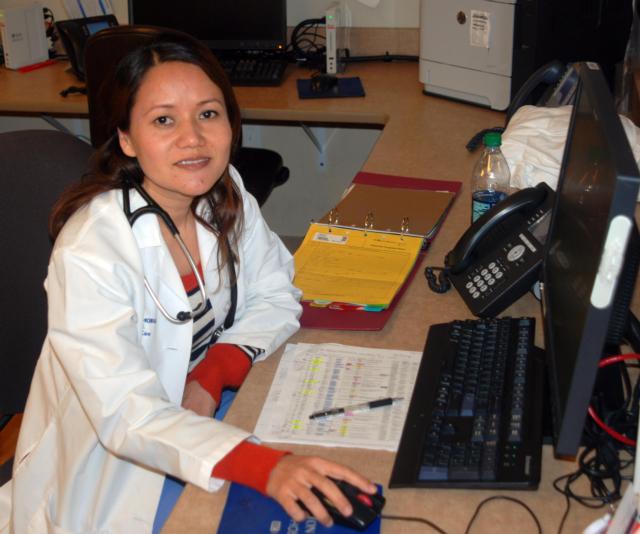
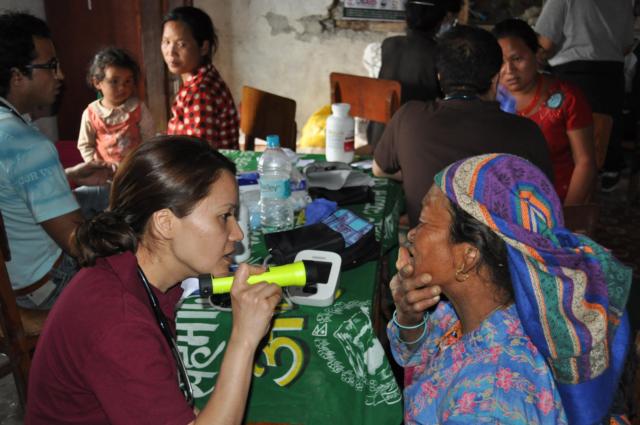
But many people were trying to return to their normal lives. Children were back at school, adults were back at work and Puja Gurung, MD, a BJC Medical Group hospitalist at Alton Memorial Hospital and a native of Nepai, was volunteering as a medical doctor in rural areas with her husband and sister.
Then, the biggest aftershock hit. A 7.3 magnitude shock shook the temporary shelters where Dr. Gurung and the team were volunteering. Everyone was running to the open areas, trying to get out of the shelters and far away from buildings. After experiencing how quickly an earthquake can destroy everything in sight, Dr. Gurung, her husband and her sister thought about ending their trip early because of the danger.
“After that, people were anxious that another big one would hit,” says Dr. Gurung. “Everyone was in fear. But we needed to keep helping and complete our mission. There were people who needed our help.”
After hearing about the devastation from the April quake from friends and family still living in Nepal, Dr. Gurung knew she could use her medical skills and expertise when her home country needed it most. She knew many people were working long days in overcrowded hospitals, and this was where Dr. Gurung saw her opportunity.
“I thought, ‘If I could go with a few friends from the U.S. and back home, at least we could go to remote areas and actually set up some medical camps and then see a few patients,’ ” Dr. Gurung says. “Then, at least, the main hospitals wouldn’t be that busy.”
Partnering with four different organizations, including Wildlife Conservation Nepal (WCN), the American Language Center (ALC), Bibeksheel Nepali Medical Group and the Laaliguras Youth Club of Gorkha, Dr. Gurung, her husband and her sister joined Team Alpha. The organizations were already helping in remote areas and Team Alpha became their medical support. This team was made up of four doctors, one team leader from the U.S. and three nurses from Nepal.
Paying all of their own expenses and buying all of their medical and non-medical supplies, the team volunteered in remote areas that hadn’t received much relief. Every day they would drive, sometimes four to seven hours, and then set up an aid location. Once the location was set up, they would treat patients until 7 or 8 p.m. Then they would wake up and do it all again the next day.
Since they arrived about three weeks after the earthquake, they mainly treated minor injuries, like lacerations, sprains, gastroenteritis, pneumonia, COPD, hypertension and other chronic conditions. Harder symptoms to treat were from psychological conditions like the acute stress reaction many people had to the earthquake and aftershocks.
In one of the villages, Dr. Gurung met students who had witnessed their school collapse before their eyes during the earthquake. Fortunately, all of the students had just exited for recess and no one was inside the building. Yet watching the building crumble before their eyes was devastating and terrifying. When the earthquake ended, the children had to dig through the rubble to find their books and other personal items. To watch their school completely collapse was traumatizing for many students, and Dr. Gurung helped explain to parents why their children were still in shock, not talking or eating.
Volunteering in remote areas meant they also stayed in the local villages. This left a big impression on Dr. Gurung because many of the areas they visited were devastated.
“We stayed in one area where 53 of the 55 houses were destroyed,” Dr. Gurung says.. In another, “only 150 of the original 1,200 houses were left standing.”
The devastation in Nepal is not something that can simply be fixed with a few months of volunteering and donations. Dr. Gurung is working with an organization to set up temporary learning centers for children, and she plans to return to Nepal to continue volunteering with her husband. Her advice to others is to use their skills to help.
“It could be months or years later, but Nepal will still need the help,” Dr. Gurung says. “We should focus on rehabilitation now, building the community up and building schools and hospitals. Everybody can help in their own little way.”
As a part of relief efforts, BJC donated $25,000 to the Red Cross in addition to the more than $10,000 donated by employees. Dr. Gurung says she is grateful that her employer and co-workers have the same passion to help as she does.
Like Alton Memorial Hospital on Facebook.