 Nov. 9
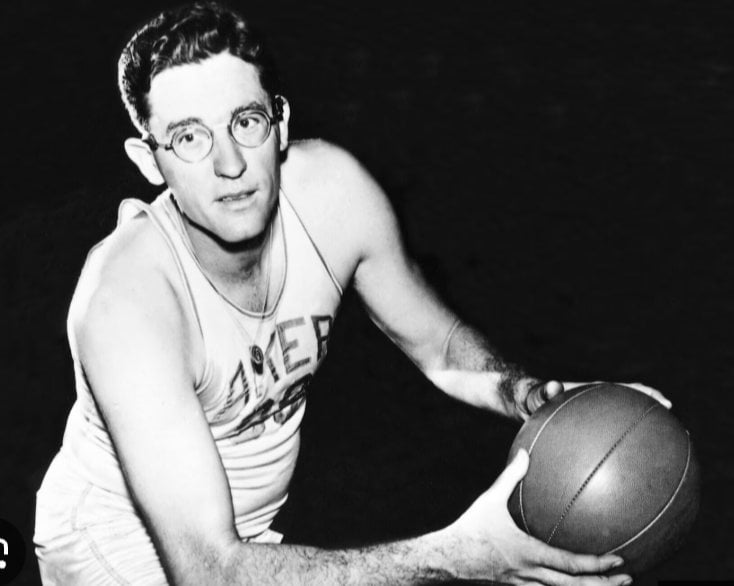
On Nov. 9, 1946, George Mikan made his professional basketball debut for the Chicago American Gears in a 66-61 loss to the Oshkosh All-Stars. The National Basketball League game began a professional career that would help establish the importance of the dominant center.
Get The Latest News!
Don't miss our top stories and need-to-know news everyday in your inbox.
Mikan's roots were firmly in Illinois. Born in Joliet, he starred at DePaul and helped the school win the 1945 National Invitation Tournament. At 6-foot-10, he combined size with scoring ability and mobility, setting a standard for the big men who followed. His professional career eventually included five BAA/NBA championships with the Minneapolis Lakers. The loss in Oshkosh was a modest opening for a player who became one of basketball's foundational stars
One of the most important victories in sports on Nov. 9 came through a vote rather than a final score. In 1961, the PGA of America removed its whites-only membership restriction, ending a formal racial barrier in professional golf. The decision changed who could belong to the organization, even though the work of making the game accessible extended beyond rewriting its rules.
That milestone anchors a date that also includes a championship-shaping football showdown, the professional arrival of a basketball pioneer, a hockey scoring landmark and two memorable changes at the top of world competition.
On Nov. 9, 1946, No. 1 Army and No. 2 Notre Dame played to a 0-0 tie at Yankee Stadium in New York. Both teams entered undefeated, and Army carried a 25-game winning streak into the matchup. The result ended that winning streak without handing the Black Knights a defeat.
Notre Dame had lost the previous two meetings 59-0 and 48-0, making its defensive performance a striking reversal. Johnny Lujack's tackle of Army star Doc Blanchard helped preserve the shutout. Although neither offense produced a point, the game had lasting championship consequences: Both teams finished unbeaten with one tie, but Notre Dame finished first in The Associated Press poll. A scoreless afternoon became a defining result of the college football season.
Also, on Nov. 9, 1961, PGA delegates meeting in Hollywood, Florida, voted to remove the organization's racial membership restriction. They also eliminated the geographic restriction that had limited membership to golfers from North and South America. The changes opened membership to qualified golfers regardless of race or country.
The distinction between membership and tournament participation matters. Black golfers, including Charlie Sifford, already had played in professional tournaments before the vote. The action did not mark the first time a Black player competed in a PGA-sanctioned event; it removed an explicit exclusion from the organization's governing rules. The U.S. Golf Association identifies the repeal as a significant moment in golf's history of breaking barriers.
On Nov. 9, 1972, Boston Bruins forward Johnny Bucyk became the seventh player in NHL history to reach 1,000 career points. He scored a goal in Boston's 8-3 victory over the Detroit Red Wings, joining a small group whose production had reached four figures.
The milestone stood out even during a strong offensive era for Boston. Bucyk finished the 1972-73 season eighth in NHL scoring, while teammate Phil Esposito won the scoring title and Bobby Orr finished third. The Bruins recorded their third consecutive season with at least 50 victories. Bucyk's achievement gave that successful team an individual landmark measured across a career rather than a single season.
On Nov. 9, 1985, Garry Kasparov defeated Anatoly Karpov in the final game of their world chess championship match in Moscow. Kasparov won the 24-game match 13-11 and, at 22, became the youngest world champion to that point. The victory completed a demanding pursuit of the title against the established champion.
Their previous match had been halted after 48 games without a winner. For the new contest, the format limited play to 24 games, with Karpov retaining the championship if the score finished tied. Kasparov instead won the concluding game and took the title outright, ending an extraordinary two-match struggle that required 72 games to produce a new champion.
On Nov. 9, 1996, Evander Holyfield upset Mike Tyson in Las Vegas, winning the WBA heavyweight championship with an 11th-round technical knockout. Holyfield knocked Tyson down in the sixth round before finishing the fight in the 11th. He became only the second boxer, after Muhammad Ali, to win a heavyweight championship three times.
The same date brought a quieter ending to an NHL era with a direct St. Louis connection. Craig MacTavish scored his final NHL goal in the Blues' 3-2 victory at Calgary. Because he was the league's last helmetless player, it also became the final NHL goal scored by a player without a helmet. MacTavish qualified for an exemption from the requirement applied to incoming players in 1979. His goal closed a chapter in hockey equipment history while helping St. Louis earn a victory.
Nov. 8
Frank Robinson completed a season that changed both his career and the Baltimore Orioles’ fortunes on Nov. 8, 1966. His unanimous selection as the American League’s Most Valuable Player made him the first player to win the award in both major leagues, following his 1961 National League honor with Cincinnati. It was an unprecedented achievement and a fitting finish to his first year in Baltimore.
As Nov. 8, 2026, marks the 60th anniversary of that announcement, Robinson’s season remains a striking example of a trade transforming a franchise. The Reds had sent him to Baltimore after the 1965 season for pitchers Milt Pappas and Jack Baldschun and outfielder Dick Simpson. Robinson answered by winning the AL Triple Crown with a .316 batting average, 49 home runs and 122 RBIs.
The individual numbers helped produce a breakthrough for the team. Baltimore won its first AL pennant and swept the Los Angeles Dodgers in the World Series. Robinson also earned World Series MVP honors. His November award recognized more than a successful adjustment to a different league: He had become the central addition to a championship club, delivering elite production immediately after Cincinnati decided to move him.
Four years later, Nov. 8 brought an NFL record that required just one final swing of a leg. On that date in 1970, New Orleans Saints kicker Tom Dempsey made a 63-yard field goal on the last play against Detroit at Tulane Stadium. The kick changed a 17-16 deficit into a 19-17 victory and extended the league’s distance record by 7 yards.
The play began with two seconds remaining, leaving no chance for a second attempt. Dempsey’s kick therefore carried two tests at once: It had to travel farther than any successful field goal in NFL history, and it had to win the game. Both were settled when the ball cleared the crossbar, turning the Saints’ desperate final opportunity into a lasting football milestone.
Dempsey was born without toes on his right foot or fingers on his right hand and used a specially designed kicking shoe. That shoe became part of the Pro Football Hall of Fame’s collection. His achievement was remarkable not simply because he reached the NFL despite those physical differences, but because he pushed one of its measurable limits well beyond the previous standard.
On Nov. 8, 1986, another long sports story began in far less triumphant fashion. Alex Ferguson managed Manchester United for the first time in a league match at Oxford United. The debut ended in defeat, an unpromising opening to a tenure that would eventually reshape the English soccer club. Ferguson had replaced Ron Atkinson, inheriting the immediate task of improving results rather than an established championship team.
The significance of that afternoon became clear only over time. Ferguson eventually led United to 13 Premier League championships, beginning with the inaugural Premier League season in 1992-93. That first title ended the club’s 26-year wait for an English top-flight championship. He retired after the 2012-13 season, having turned an uncertain beginning into more than two decades of sustained league success.
Basketball supplied the next record-setting Nov. 8 performance in 1994. Detroit guard Joe Dumars made 10 3-pointers against Minnesota, matching Brian Shaw’s NBA single-game record. Dumars finished with 40 points as the Pistons won 126-112. It was not merely a high-scoring night: His accuracy from long range placed him alongside the league’s established standard for an entire game.
Dumars attempted 18 shots from beyond the arc and only one from inside it. He missed that lone 2-point attempt but made all 10 of his free throws, meaning every point came either from long distance or at the line. The performance also came with important rules context: The NBA was using a shortened 3-point arc that season. That detail helps place the record in its own era rather than treating every shooting milestone as identical.
On Nov. 8, 2022, the NBA marked the date with an intentional absence of competition. The league left Election Day without games to encourage voting and civic participation. Instead, all 30 teams played the previous day, when the league promoted election information and encouraged fans to make voting plans. The scheduling decision made the day noteworthy for what did not appear on the scoreboard.
Unlike the individual awards, dramatic kick and shooting record associated with earlier Nov. 8 milestones, this moment came through a leaguewide decision. The NBA shifted attention away from its games for a day and toward participation in the midterm elections, making its calendar part of a broader civic-engagement effort.
 Nov. 7
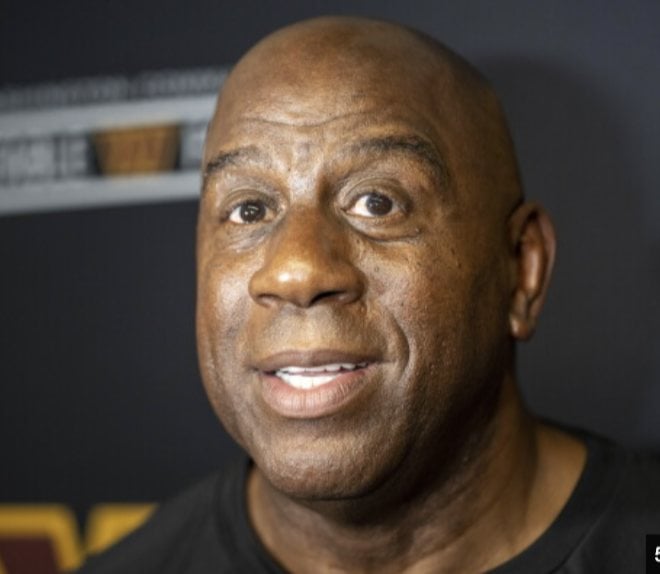
Thirty-five years ago, Magic Johnson delivered news that reached far beyond basketball. On Nov. 7, 1991, the Los Angeles Lakers star announced that he had tested positive for HIV and was retiring immediately. His disclosure brought a familiar face to an illness surrounded by fear and stigma, and his subsequent advocacy made the announcement a turning point in public awareness.
The history of Nov. 7 also includes major achievements close to home: an MVP award for a St. Louis Cardinals cornerstone, a six-goal outburst by a Blues center and important beginnings for two future Chicago Bulls champions. Those moments, along with a landmark pitching award and a shooting record, give the date a place in several sports’ histories.
On Nov. 7, 1967, Cardinals first baseman Orlando Cepeda was named the National League’s Most Valuable Player by unanimous vote. He became the league’s first unanimous MVP since New York Giants pitcher Carl Hubbell in 1936. The honor recognized the cleanup hitter at the center of a St. Louis lineup that had just helped deliver a World Series championship.
Cepeda batted .325 with 25 home runs and a league-leading 111 RBIs that season. His production was especially meaningful after a knee injury had cost him most of the 1965 season and raised questions about his future. Two years later, he was helping the Cardinals defeat the Boston Red Sox in a seven-game World Series. The unanimous award confirmed both his comeback and his importance to a championship team.
One year later, on Nov. 7, 1968, Red Berenson delivered an extraordinary performance for another St. Louis franchise. The Blues center scored six goals in an 8-0 road victory over the Philadelphia Flyers at the Spectrum. A team still establishing itself in the NHL suddenly had a scoring achievement that would become a defining part of its early history.
Berenson entered the game with only three goals in the season’s first 11 games. He scored late in the first period, then added four goals in roughly nine minutes of the second period. After two periods, he alone had supplied the Blues’ entire 5-0 lead. His sixth goal completed a night in which an individual scorer accounted for three-quarters of his team’s offense. For St. Louis fans, the result was more than a lopsided victory: It was an enduring showcase for one of the young franchise’s leading players.
On Nov. 7, 1979, Chicago Cubs reliever Bruce Sutter won the National League Cy Young Award. Sutter led the major leagues with 37 saves, matching the NL record at the time. He finished 6-6 with a 2.22 ERA in 62 appearances and edged Houston Astros pitcher Joe Niekro 72-66 in the voting.
Sutter became the second NL reliever and third reliever overall to win a Cy Young Award, an important recognition of the value of late-inning pitching. His split-fingered fastball helped turn a once-uncertain professional career into a Hall of Fame career. The award also connects two regional baseball followings: Sutter earned it with the Cubs before later helping the Cardinals win the 1982 World Series, saving two games in that series, including Game 7.
On Nov. 7, 1987, Scottie Pippen and Horace Grant made their NBA debuts in Chicago’s 104-94 victory over the Philadelphia 76ers. Both rookies came off the bench. Pippen contributed 10 points, four assists and two steals in 23 minutes, while Grant scored three points in 13 minutes. Michael Jordan led Chicago with 36 points.
The significance of that opener became clearer over time. Pippen and Grant helped form the supporting foundation around Jordan as Chicago developed into a championship team. Both were part of the Bulls’ three consecutive titles in 1991, 1992 and 1993. Their shared debut marked the beginning of two Chicago careers that would become central to the franchise’s rise.
Four years later came Johnson’s announcement. The five-time NBA champion’s retirement interrupted one of basketball’s most celebrated careers, but it did not end his involvement in the game. He returned for the 1992 All-Star Game, scoring 25 points and adding nine assists to earn MVP honors. He also won Olympic gold with the U.S. men’s team in Barcelona that summer.
Johnson later returned to the Lakers as a player in 1996, appearing in 32 games. Alongside his work promoting HIV and AIDS awareness, those appearances gave his story a different ending from the abrupt departure announced in 1991.
On Nov. 7, 2016, Stephen Curry supplied a different kind of basketball landmark, making a then-NBA-record 13 3-pointers in Golden State’s 116-106 victory over New Orleans. He scored 46 points and shot 13 of 17 from beyond the arc, breaking the previous single-game mark of 12 that he had shared with Kobe Bryant and Donyell Marshall.
The performance came immediately after an unusually difficult shooting game. Three days earlier, Curry had missed all 10 of his 3-point attempts against the Lakers, ending his record streak of 157 games with at least one made 3-pointer. Against the Pelicans, he moved from a scoreless night beyond the arc to a record-setting one, making the historic 13th shot with 2:23 remaining.