
On September 12, one of the most far-reaching events in global history took place in 1683, when the Battle of Vienna ended with the defeat of the Ottoman siege of the city. At the time, the battle mattered because Vienna was a major political and military center in central Europe, and its fall would likely have changed the balance of power across the region. The victory by the combined forces of the Habsburg monarchy, the Polish-Lithuanian Commonwealth, and other allies helped halt Ottoman expansion into central Europe. It still matters today because historians often see it as a turning point in the long struggle between large empires competing over trade, territory, religion, and influence in Europe.
Get The Latest News!
Don't miss our top stories and need-to-know news everyday in your inbox.
That struggle had been building for decades. The Ottoman Empire remained one of the world’s strongest powers in the 17th century, and Vienna represented both a strategic target and a symbol of Habsburg resistance. When the city came under siege, a relief force led in part by Polish King John III Sobieski arrived and attacked the Ottoman army on September 12. The battle ended the siege and opened the way for a long Habsburg counteroffensive in southeastern Europe. In the years that followed, the Ottomans lost ground, and the political map of the region began to shift in lasting ways.
More than four centuries earlier, another important September 12 event had shaped the medieval Mediterranean. In 490 BCE, the Battle of Marathon was fought between the Athenians and the Persian Empire. Although the exact date is debated in modern scholarship because of calendar differences, the battle is traditionally associated with this day. Its immediate importance was that a smaller Athenian force defeated a Persian invasion army, preserving the independence of Athens at a fragile moment. Over time, Marathon became remembered not only as a military victory but also as part of the story of how the Greek city-states developed politically and culturally in the classical era.
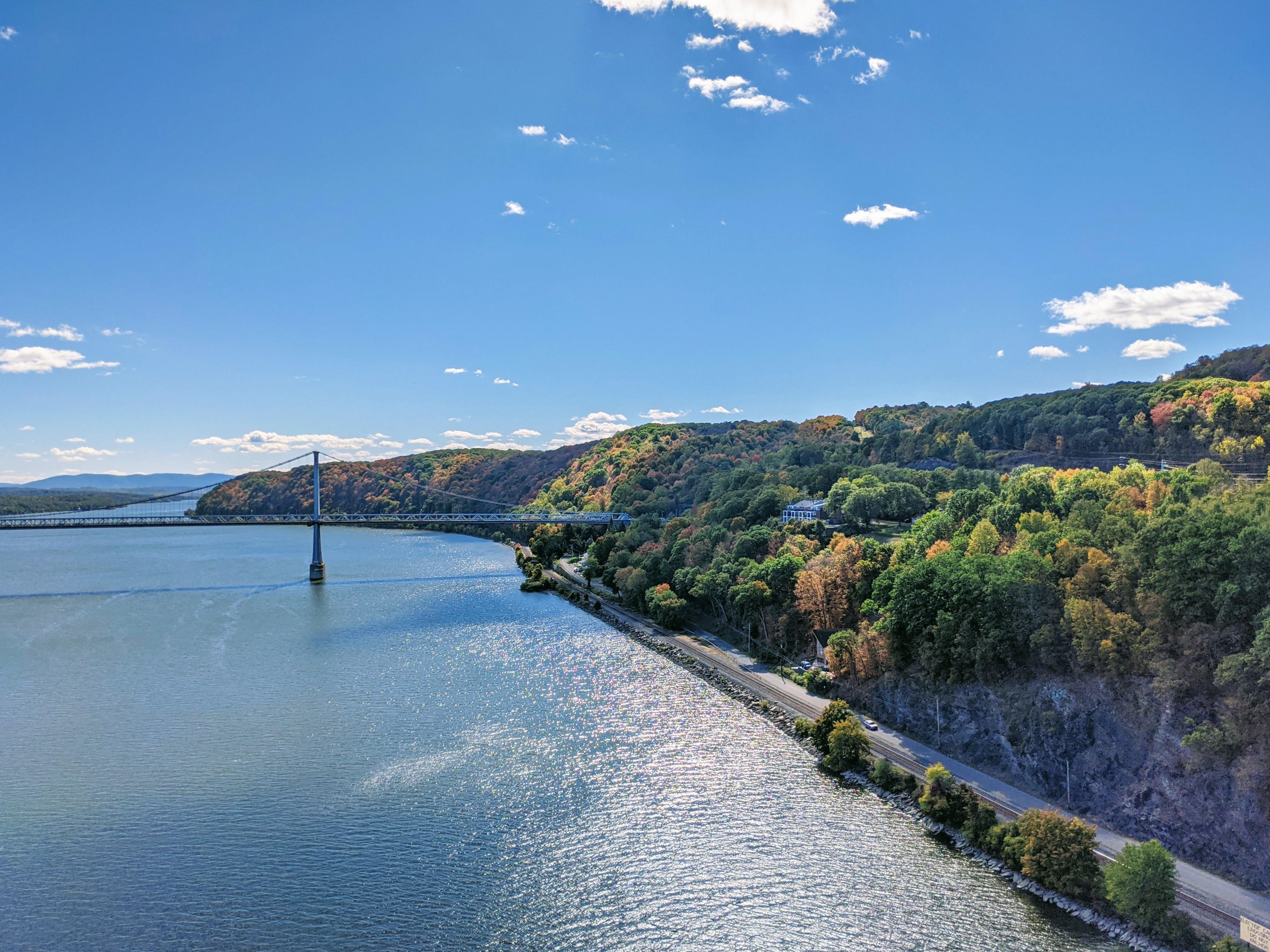
The early modern Atlantic world also changed on this date. In 1609, English navigator Henry Hudson sailed into the river that now bears his name while searching for a route to Asia. He was working for the Dutch East India Company, and although he did not find the passage he sought, his voyage helped lay the groundwork for Dutch claims in North America. Those claims later led to the colony of New Netherland and the settlement of New Amsterdam, which would eventually become New York City. The voyage shows how exploration, trade, and empire were closely tied together.
A very different kind of turning point came in 1848, when Switzerland adopted its modern federal constitution. This move followed a short civil conflict known as the Sonderbund War and transformed the country from a loose confederation into a stronger federal state. The constitution created national institutions while preserving important local autonomy. Its long-term significance lies in the stability it gave Switzerland and in the development of a political system known for federalism, neutrality, and direct democratic traditions.
By the late 19th century, technology was remaking daily life. On September 12, 1890, Salisbury in England became one of the first places in the world to use electric street lighting on a broad scale. While it was not a single dramatic invention, it represented a larger change taking place across industrial societies. Electric light extended business hours, changed public space after dark, and became a visible sign of modernization. It also reflected the growing networks of power generation and urban infrastructure that defined the age.
The 20th century brought moments of conflict and moments of shared achievement. In 1940, the Lascaux cave paintings were discovered in southwestern France by four teenagers and their dog. Inside were thousands of prehistoric images, including animals painted with remarkable skill. The find transformed understanding of early human creativity and symbolic life. It reminded the modern world that people living many thousands of years ago observed nature closely, developed artistic traditions, and left behind evidence of complex thought.
Just eight years later, on September 12, 1948, Margaret Chase Smith of Maine was elected to the United States Senate, becoming the first woman to serve in both houses of Congress. Her election marked an important step in the long history of women’s political participation. While women had already won voting rights in many countries and had entered public office in some places, representation remained limited. Smith’s career became part of the broader story of gradual change in public life and access to leadership.
In 1953, future U.S. president John F. Kennedy married Jacqueline Bouvier in Newport, Rhode Island, an event widely covered in the press and later remembered because of the couple’s public role in American political culture.
International politics shifted again in 1974, when Emperor Haile Selassie of Ethiopia was deposed by the Derg, a military committee that took control during a period of economic hardship, social unrest, and dissatisfaction within the armed forces. His removal ended the Ethiopian monarchy’s long imperial tradition. The change led to a new and often violent era in Ethiopian history, showing how internal pressures and global Cold War conditions could combine to reshape a state.
The late 20th century brought a moment of broad diplomatic importance in 1990, when the Treaty on the Final Settlement with Respect to Germany was signed in Moscow. Often called the “Two Plus Four Agreement,” it involved East Germany, West Germany, and the four Allied powers of World War II. The treaty cleared the way for full German reunification after decades of division during the Cold War. Its importance reached beyond Germany because it helped define the peaceful end of one of the central political conflicts of the postwar world.
September 12 is also the birthday of several notable figures from different fields. In 1494, Francis I of France was born. He became one of the leading monarchs of the French Renaissance, supporting art, architecture, and learning while also competing fiercely with other European rulers. His reign linked political ambition with cultural patronage in a way that left a strong mark on French history.
The 20th century added major names in music, politics, and sport. Maurice Chevalier, born in 1888, became one of France’s most recognizable entertainers, known for his songs, stage presence, and film career. In 1913, Jesse Owens was born in Alabama. He became one of the most celebrated athletes in modern history after winning four gold medals at the 1936 Berlin Olympics. His achievements made him a lasting symbol of excellence in sport and of the ability of athletic performance to challenge ideas of racial hierarchy. Also born on this day, in 1957, was Hans Zimmer, the German-born composer whose film scores have shaped the sound of modern cinema across several decades.
Several historically important figures also died on September 12. In 1213, Peter II of Aragon was killed at the Battle of Muret, a conflict tied to the Albigensian Crusade in southern France. His death affected the balance of power in the western Mediterranean and the future of both Aragon and Occitania. Centuries later, in 1977, Steve Biko died in South Africa after being detained by police. He was a major voice in the Black Consciousness Movement, which encouraged dignity, self-reliance, and resistance under apartheid. His death drew international attention to conditions in South Africa and became an important moment in the history of anti-apartheid activism.
Another loss came in 2003 with the death of Johnny Cash, one of the most influential figures in American music. His work crossed country, folk, gospel, and popular music, and his songs often focused on work, faith, sorrow, and redemption. Cash’s long career and distinctive voice gave him a place not just in entertainment history but in the wider cultural life of the 20th century.
Taken together, the events of September 12 show how one date can hold battles that changed empires, discoveries that deepened human knowledge, inventions that altered daily life, and cultural moments that continued to echo long after they first appeared. The people born and remembered on this day add another layer, linking leadership, art, science, and public life across many centuries. Seen as a whole, the day reflects the variety of human history: conflict and creativity, ambition and reform, endings and beginnings, all part of the larger story people continue to inherit and shape.


