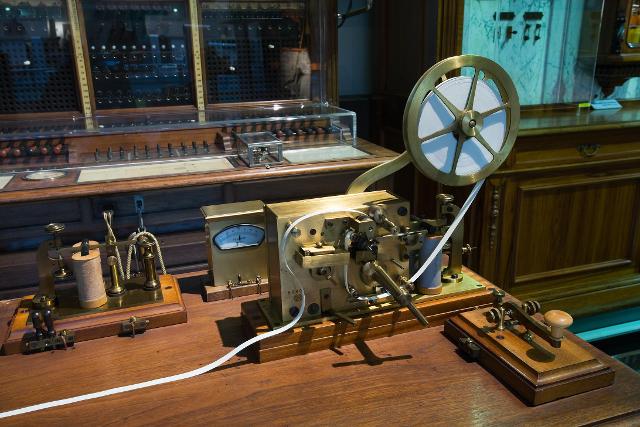
On May 24, the most far-reaching event in world history is often traced to 1844, when Samuel Morse sent the first official long-distance telegraph message from Washington, D.C., to Baltimore. The short message, “What hath God wrought,” marked the start of a new age in communication. For the first time, information could travel much faster than any person, horse, ship, or train. At the time, that changed government, business, journalism, and daily life by shrinking distances in a practical way. It still matters today because the telegraph laid the foundation for the connected world that later produced the telephone, radio, television, the internet, and instant global messaging.
Get The Latest News!
Don't miss our top stories and need-to-know news everyday in your inbox.
That breakthrough did not appear out of nowhere. Early nineteenth-century societies were growing more complex, with expanding trade, larger states, and rising demand for faster news. Morse and other inventors worked on ways to send coded signals over wires, but the 1844 demonstration proved that such a system could work over distance and in public use. Once telegraph networks spread across North America, Europe, and beyond, they transformed how wars were directed, how markets responded to events, and how newspapers gathered reports. The idea that communication could be nearly immediate became one of the defining expectations of modern life.
More than three centuries earlier, May 24, 1543, saw the death of Nicolaus Copernicus, the astronomer whose work helped reshape humanity’s understanding of the universe. Around the time of his death, copies of his major work, On the Revolutions of the Heavenly Spheres, were reaching readers. In it, he argued that Earth and the other planets move around the Sun. This heliocentric model challenged long-standing assumptions and opened the way for later scientists such as Kepler, Galileo, and Newton. Its importance was not only scientific. It also changed how people thought about observation, evidence, and humanity’s place in nature.
A very different kind of milestone followed in 1607, when English settlers established Jamestown in present-day Virginia. It became the first permanent English settlement in North America. Jamestown struggled with disease, hunger, conflict, and weak planning, but it survived and became a base for further English colonization. The settlement mattered at the time because it linked imperial competition, trade, and migration across the Atlantic. Its long-term significance is broader and more complex, tied to the expansion of English power, the displacement of Indigenous peoples, and the growth of plantation labor systems that would shape later American history.
By the nineteenth century, May 24 was also connected to moments of empire. In 1883, the Brooklyn Bridge opened in New York City after years of construction. Designed by John A. Roebling and completed under the direction of Washington Roebling, with essential leadership from Emily Warren Roebling, the bridge was a major engineering achievement of its era. It linked Manhattan and Brooklyn across the East River and became a symbol of modern urban infrastructure. More than a local project, it reflected a wider age of industrial confidence, steel construction, and growing cities.
The date also carries weight in major conflicts of the twentieth century. On May 24, 1941, during the Second World War, the German battleship Bismarck sank the British battlecruiser HMS Hood in the Battle of the Denmark Strait. The destruction of the Hood, one of Britain’s most famous warships, was a major shock in wartime Britain. It highlighted both the danger of naval warfare and the symbolic importance attached to national fleets. The hunt for the Bismarck that followed became one of the best-known naval episodes of the war and showed how control of sea routes remained vital in a global conflict.

Another turning point came on May 24, 1962, when astronaut Scott Carpenter orbited Earth aboard Aurora 7 as part of NASA’s Mercury program. His flight was the second American orbital mission. Although the mission faced technical and navigational difficulties, it added to growing knowledge about human spaceflight. At the height of the Cold War space race, these missions mattered because they demonstrated technological ability and national ambition. Their wider legacy lies in how they advanced engineering, expanded scientific understanding, and made space exploration part of public imagination around the world.
In Europe, May 24, 1993, marked the death of Cardinal Juan Jesús Posadas Ocampo, the Roman Catholic archbishop of Guadalajara, who was killed in a shooting at the Guadalajara airport in Mexico. His death drew broad attention because it took place during a period of concern about organized crime, public security, and state institutions in Mexico. The event had religious, political, and social impact, showing how violence could reach even highly visible public figures. It remains part of modern Mexican history and public memory.
Culture and media also have their place on this date. On May 24, 1941, singer and songwriter Bob Dylan was born, a figure who would become one of the most influential voices in popular music. Decades later, his work would connect folk traditions, rock music, and lyric writing in new ways. Through songs tied to personal reflection, social change, and cultural identity, Dylan helped show that popular music could carry literary ambition and historical weight. His long career influenced artists across many countries and genres.
Sports history adds another chapter. On May 24, 1936, the first games of the Major League Baseball Hall of Fame were held in Cooperstown, New York, as part of celebrations around the sport’s early legends. Baseball was already deeply rooted in North American culture, and the Hall of Fame helped formalize public memory around the game. While its influence was strongest in the United States, the broader idea of preserving sports history through museums and halls of fame has since become common worldwide.
Several notable people were born on May 24. Queen Victoria, born in 1819, ruled the United Kingdom for more than sixty-three years. Her reign saw industrial growth, imperial expansion, political reform, and major social change. The period often associated with her name shaped not only Britain but also many regions connected to the British Empire. Her historical importance lies less in direct personal rule than in how her long reign became identified with a transformative era.
Jean-Paul Marat, born in 1743, remains one of the best-known figures of the French Revolution. A journalist and political activist, he used print media to shape revolutionary debate in a period of intense instability. His life and death reflected the passions and dangers of revolutionary politics, and his image has remained part of how later generations remember that period.
Among notable deaths, Copernicus stands out most clearly because of his lasting effect on science and human thought. Also remembered on this date is John Foster Dulles, who died in 1959. As U.S. Secretary of State during much of the 1950s, he was a central figure in early Cold War diplomacy. His policies influenced alliances, military planning, and international relations during a tense period in world affairs. Another significant death came in 1974 with the passing of Duke Ellington, the American composer, pianist, and bandleader whose work helped define jazz in the twentieth century. Ellington’s music blended orchestration, improvisation, and deep knowledge of Black musical traditions, leaving a lasting mark on world culture.
Seen together, the events of May 24 show how history moves through many kinds of change at once.